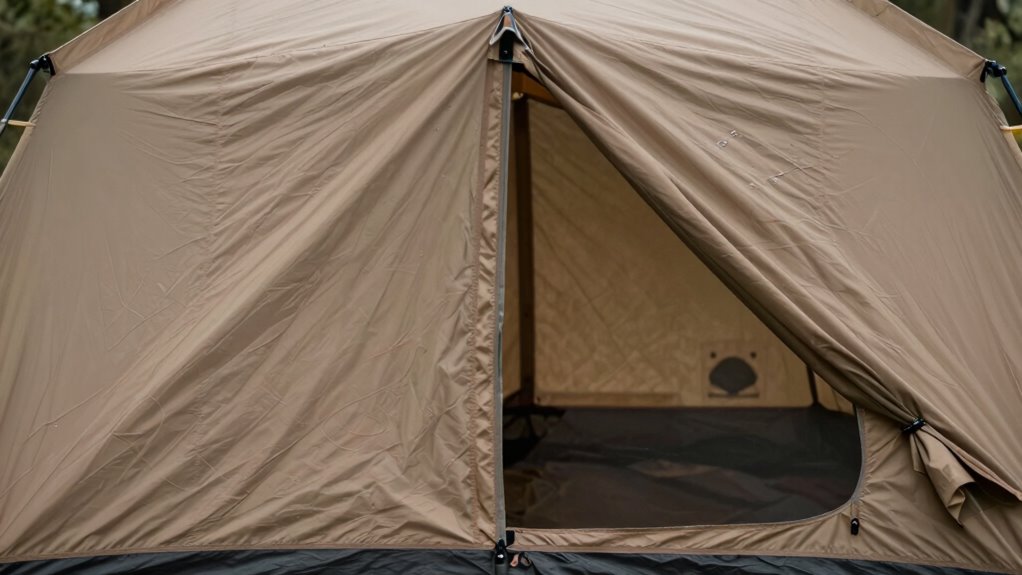
When sidewalls are fully closed on your tent, you trap heat, moisture, and fumes inside, creating dangerous conditions. Without proper airflow, temperatures can rise quickly, increasing fire risks and making it hard to breathe. Moisture from breathing, cooking, or damp gear can lead to mold and discomfort. Maintaining some ventilation helps prevent these hazards, keeping you safe and comfortable. If you want to learn more about how to balance safety and protection, keep exploring these essential tips.

Get pool and patio gear delivered free — and shop member deals
- Fast, free delivery on millions of items
- Access to Prime Big Deal Days deals on October 6–7
- Prime Video, Amazon Music and more included
Key Takeaways
- Fully closed sidewalls trap heat and moisture, increasing fire risks and condensation buildup inside the tent.
- Restricted airflow in sealed tents leads to dangerous temperature rises and poor air quality.
- Lack of ventilation causes moisture accumulation, promoting mold, mildew, and fabric deterioration.
- Enclosed environments hinder the dispersal of smoke, fumes, and airborne pollutants, risking health hazards.
- Proper ventilation with adjustable openings balances protection and airflow, preventing unsafe and unhealthy conditions.
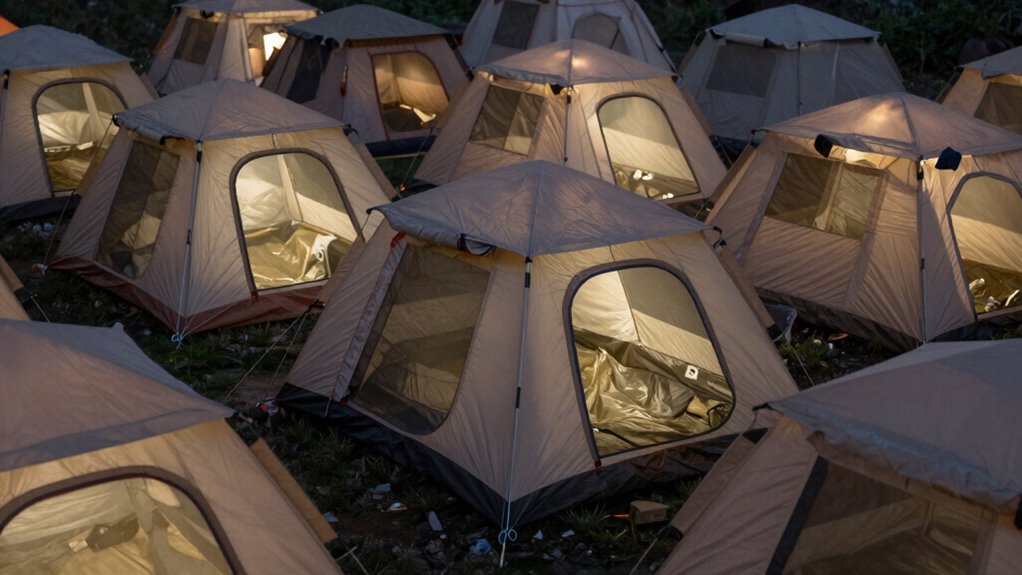
Have you ever wondered how proper sidewalls and ventilation work together to keep your space safe and comfortable? When you set up a tent or temporary shelter, the goal is to create a protected environment without sacrificing safety. But if you close off sidewalls entirely, you risk turning a cozy space into a dangerous one. One of the essential issues with closed tents is the increased potential for fire hazards. Without adequate airflow, any small spark or heat source can quickly become a serious fire risk. Fire hazards are often underestimated in enclosed spaces, especially when people use heaters, cooking devices, or other heat-producing equipment inside. Without proper ventilation, heat can build up, making it easier for fires to ignite and spread.
Proper ventilation reduces fire risk in enclosed tents by preventing heat buildup and ensuring airflow.
Condensation control is another vital factor affected by closed environments. When sidewalls are sealed tightly, moisture from breath, cooking, or even damp clothing doesn’t escape easily. This excess moisture condenses on the inner surfaces of the tent, creating a damp environment that can lead to mold, mildew, and deterioration of the fabric. Over time, this moisture buildup not only damages your tent but can also make the interior uncomfortable and unhealthy to occupy. Proper ventilation helps to regulate humidity levels, allowing moist air to escape and fresh air to circulate. This balance is key to preventing condensation from becoming a problem and ensuring the space remains dry and safe.
Closing off sidewalls may seem like a good way to protect against wind and rain, but it often backfires. When ventilation is restricted, heat and moisture become trapped inside, transforming what should be an airy shelter into a humid, stagnant space. The lack of airflow also means any smoke, fumes, or airborne pollutants linger longer, increasing health risks. Plus, with poor ventilation, excess heat from equipment or body heat can cause temperatures to rise dangerously, heightening the risk of fire or heat-related issues. Ensuring adequate airflow is crucial to maintaining a safe environment inside your shelter.
To keep your space safe and comfortable, you need to strike a balance. Proper sidewalls should be designed to allow airflow while still providing protection from the elements. Ventilation options like vents, windows, or adjustable openings help regulate temperature and humidity, reducing fire hazards and controlling condensation. Remember, an enclosed space might seem secure, but without adequate airflow, it can quickly become unsafe and unhealthy. Prioritize good ventilation and partial sidewall coverage to ensure your environment remains both safe and comfortable.
As an affiliate, we earn on qualifying purchases.
Frequently Asked Questions
Can Sidewalls Be Safely Removed During Rain or Snow?
Yes, you can remove sidewalls during rain or snow, but only if your rainproof tenting is designed for it. Make certain the tent’s ventilation is adequate to prevent condensation buildup. Consider snow load considerations—removing sidewalls in heavy snow can risk structural stability. Always check your tent manufacturer’s guidelines, and if in doubt, keep the sidewalls on to maintain safety and protect against weather elements.
How Do Ventilation Needs Change With Tent Size?
As your tent size increases, your ventilation needs grow to maintain proper airflow. Larger tents require better ventilation design to prevent condensation and ensure fresh air circulation. You should prioritize tent airflow by adding adjustable vents or opening sidewalls strategically. This helps prevent dangerous buildup of carbon dioxide and moisture, making your camping experience safer and more comfortable. Always adjust ventilation based on tent size and weather conditions to stay safe.
Are Some Fabrics Better for Ventilation Than Others?
Think of fabrics as your tent’s lungs—some breathe better than others. Breathable fabrics and moisture-wicking materials are top choices because they allow air to flow and draw moisture away, preventing condensation buildup. These fabrics help keep your tent dry and comfortable, especially in colder or damp conditions. So, when selecting your tent, opt for those with breathable, moisture-wicking fabrics to guarantee proper ventilation and reduce the risk of dangerous humidity.
What Are Signs of Poor Airflow Inside a Tent?
You’ll notice poor airflow inside your tent when condensation buildup appears on the walls or ceiling, making everything damp and uncomfortable. You might also feel stuffiness or notice a damp smell, indicating airflow restrictions. If ventilation isn’t sufficient, moisture can’t escape, leading to increased condensation. Poor airflow can also cause a feeling of stuffiness, making it harder to breathe and increasing the risk of carbon monoxide buildup if using fuel-powered devices inside.
Do Sidewalls Affect Insulation in Cold Weather?
Ever wondered if sidewalls impact your tent’s insulation? They do, by limiting airflow and trapping warm air, which can boost insulation effectiveness in cold weather. But, if you seal the tent too tightly without proper ventilation, it can cause condensation and reduce overall temperature regulation. So, while sidewalls can help keep heat in, you need to balance insulation with good airflow to stay warm and dry.
Conclusion
So, next time you set up your tent, think twice about closing those sidewalls completely. It might seem like a good idea to keep out the elements, but the danger hidden inside can escalate faster than you expect. Will you risk it? Or will you prioritize safety and keep those vents open? Remember, a little ventilation can be the difference between a comfortable night and a deadly one. Stay alert — your life might depend on it.
Fall Picks
fall essentials
As an affiliate, we earn on qualifying purchases.