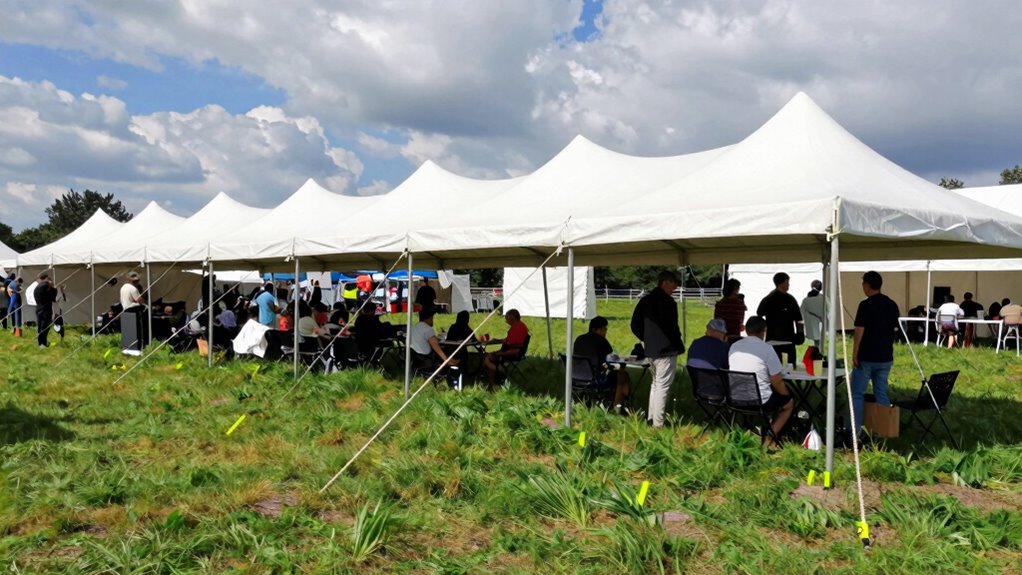

To keep everyone safe during windy conditions, you need to properly anchor your event tent by using strong ground stakes driven at a 45° angle, especially in soft or hard terrain. Tensioning guy lines and adding extra anchors like weights can enhance stability. Regularly check and tighten lines to prevent sway or lift. If you follow these wind-load principles carefully, you’ll create a secure environment. The best practices to guarantee maximum safety and stability are explained next.

Get pool and patio gear delivered free — and shop member deals
- Fast, free delivery on millions of items
- Access to Prime Big Deal Days deals on October 6–7
- Prime Video, Amazon Music and more included
Key Takeaways
- Choose appropriate stakes based on ground type and expected wind load for maximum holding power.
- Drive stakes at a 45° angle away from the tent to enhance stability.
- Use tensioned guy lines attached to stakes to prevent sway and uplift during gusts.
- Regularly inspect and tighten lines and stakes throughout the event for consistent security.
- Incorporate additional anchoring methods like weights or tie-downs in high-wind conditions.

Have you ever wondered how event tents stay firmly in place amid wind and weather? The secret lies in effective anchoring, which involves more than just setting up the tent and hoping for the best. Proper anchoring techniques ensure your tent can withstand wind loads and stay secure, keeping everyone safe and comfortable. One of the most critical elements in this process is using ground stakes. These sturdy metal or heavy-duty stakes are driven deep into the ground, resisting the force of gusts and preventing the tent from shifting or collapsing. When installed correctly, ground stakes provide essential wind resistance, anchoring the tent firmly to the earth. The size and type of stakes you choose depend on the ground conditions and the expected wind load. For softer soil, longer and thicker stakes are necessary to achieve maximum hold, while harder ground might require specialized stakes designed for that terrain. Properly spaced stakes create a network of anchoring points that distribute wind pressure evenly across the tent’s structure, reducing the risk of tears or collapse. Using the correct ground anchoring methods helps optimize stability and safety during your event.
To maximize wind resistance, you should ensure each stake is driven at the correct angle—typically around 45 degrees away from the tent—to offer optimal holding power. It’s also vital to tighten the guy lines attached to the stakes, as loose lines can compromise the entire anchoring system. When tension is properly maintained, these lines help stabilize the tent, preventing it from swaying excessively or lifting off the ground during strong gusts. Keep in mind that wind loads vary depending on your location, tent size, and event duration. For high-wind areas, additional anchoring methods, such as weights or tie-downs, can supplement ground stakes for added security. Regularly inspect your stakes and guy lines throughout the event, especially if weather conditions change, to ensure everything remains tight and secure.
In short, securing your event tent with quality ground stakes is essential for withstanding wind resistance. It’s not just about pushing stakes into the ground; it’s about choosing the right type, installing them correctly, and maintaining tension on your lines. When you pay attention to these details, you’ll create a stable environment that keeps your event safe and enjoyable, no matter what the weather throws at you. Proper anchoring isn’t complicated, but it’s crucial—your guests, your equipment, and your peace of mind all depend on it.
heavy-duty ground stakes for tents
As an affiliate, we earn on qualifying purchases.
As an affiliate, we earn on qualifying purchases.
Frequently Asked Questions
How Do I Choose the Right Tent Anchoring System?
You choose the right tent anchoring system by considering tent material and anchoring technology comparisons. Opt for sturdy anchors compatible with your tent’s material, like stakes for fabric or weights for hard surfaces. Evaluate different anchoring technologies such as stakes, weights, or guy lines based on wind conditions and ground type. This guarantees stability and safety, so pick a system that suits your specific event location and tent design.
What Are Signs of Inadequate Tent Anchoring?
If your tent starts slipping or shifting unexpectedly, it’s a clear sign of inadequate anchoring. You might notice the tent pulling away from stakes or the anchors failing under wind pressure. These issues indicate that your tent isn’t securely anchored, risking collapse or damage. To prevent this, check for loose stakes, broken anchors, or signs of movement, and reinforce with stronger or additional anchors immediately.
Can Anchoring Methods Vary by Tent Size?
You’ll find that anchoring methods do vary by tent size considerations. Larger tents demand more robust anchoring techniques, such as heavier stakes or additional weights, because they catch more wind and exert greater force. Smaller tents can often rely on standard stakes and guy lines. It’s a case of not putting all your eggs in one basket; tailoring your approach guarantees safety and stability for any event.
Are There Specific Anchoring Techniques for Different Terrains?
Yes, you should adapt anchoring techniques based on terrain. For stable ground, use stakes or weights, but on rocky or uneven surfaces, opt for concrete anchors or screw-in anchors. Always assess ground stability first, then choose appropriate anchor types to guarantee secure tent setup. Properly tailored anchoring methods prevent accidents and keep everyone safe, regardless of terrain challenges.
How Often Should Tent Anchors Be Inspected After Installation?
Think of your tent anchors like a trusted friend; regular check-ups keep them reliable. You should inspect your tent anchors daily during a multi-day event and after any strong wind or weather change. Follow a maintenance schedule and use an inspection checklist to make sure they’re secure. This proactive approach prevents issues before they start, just like tending a garden keeps it thriving and safe for everyone involved.
Conclusion
Remember, securing your event tent is like anchoring a ship in rough waters—you need sturdy, reliable ties to keep everything steady. I once saw a tent sail away during a sudden gust, reminding me how vital proper anchoring is. With wind loads increasing each year, investing time in the right anchoring methods ensures your event stays safe and enjoyable, no matter what the weather throws your way. Stay prepared, stay grounded, and your event will be a success.
Fall Picks
fall essentials
As an affiliate, we earn on qualifying purchases.