
TL;DR

Get pool and patio gear delivered free with Prime
- Fast, free delivery on millions of items
- Prime Video, Amazon Music and more included
- Member-only deals all year
A Gardening Know How report says vinegar is not a universal deck cleaner: Trex permits white vinegar for hard-water deposits on certain current composite boards, while other surfaces need their maker’s care instructions. For ordinary dirt, the report recommends warm soapy water and a brush suited to the decking, with care to keep runoff away from plants and waterways.
A Gardening Know How report says vinegar should not be treated as an all-purpose deck cleaner: Trex approves white vinegar for hard-water deposits on some current composite boards, but advice differs by brand, board type and finish. The distinction matters because acid in the cleaner can affect some deck surfaces and harm plants reached by runoff.
For Trex composite decking, the company’s care guidance lists white vinegar as an option for chalky hard-water deposits, which can form where sprinklers repeatedly wet the boards. The report says to rinse the boards well afterward and test a small, inconspicuous area first. Trex warns that products containing acid or bleach can lighten board color. For everyday dirt, it recommends warm, soapy water and a soft-bristle brush worked into the board’s grain.
Other products have different care rules. The report says TimberTech’s guide does not list vinegar and directs owners to its diluted deck cleaner or, for railings, a pH-neutral detergent. On wood, the topcoat matters: cleaning a stained or painted deck with vinegar may fall outside the finish maker’s directions. The report advises checking the instructions for the specific decking and finish before applying a cleaner.
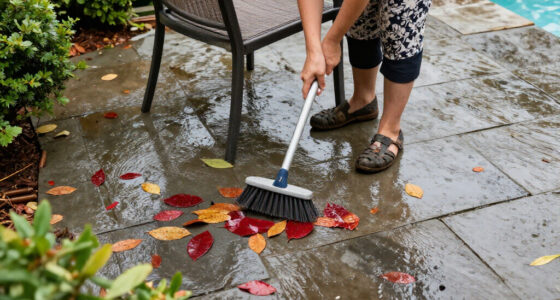
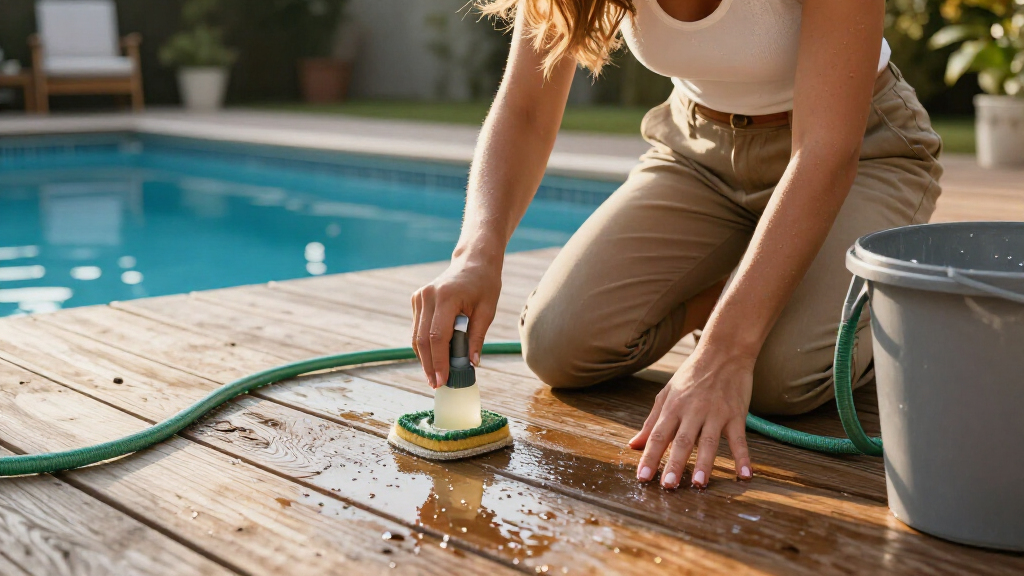
For routine grime, the report suggests sweeping first, then washing with warm water and dish soap and scrubbing one section at a time. Brush type varies: Trex calls for soft bristles, while TimberTech specifies medium-to-stiff nylon for its composite. For mildew or gray weathering on wood, an oxygen-based wood cleaner may be appropriate if its label and the deck’s care instructions allow it.
Cleaner Runoff Can Affect Plants
The decision is not only about whether a cleaner removes a mark. Household vinegar is typically about 5% acetic acid, which can damage leaf tissue on contact. Runoff from a deck can reach garden beds, seedlings, lawn edges, a pond or a storm drain. The report says broadleaf plants and seedlings may be particularly vulnerable; a product described as natural is not necessarily harmless to nearby vegetation.
Using the wrong cleaner can also change a deck’s appearance or affect its finish. A small test area and the product maker’s care guide can help owners avoid applying an unapproved substance across the whole surface. Cleaning regularly with milder methods may reduce the need for stronger treatments.
Products Worth Considering

Roborock F25 GT Set Cordless Wet Dry Vacuum Cleaner and Mop with 2 Brushes

Shark Navigator Lift-Away Upright Vacuum Cleaner, NV356E

Dyson Car+Boat Cordless Handheld Vacuum
As an affiliate, we earn on qualifying purchases.
Deck Materials Follow Different Rules
Deck-care advice depends on the material and its condition. Composite brands set their own instructions, and a cleaner approved for one job or product line is not automatically suitable for another. For wood, bare boards and boards covered in paint or stain are also different cases. Oxalic acid brighteners may be used in preparation for refinishing bare wood, but that does not establish that vinegar is suitable for a finished deck.
The report says Trex recommends seasonal cleaning to remove pollen and leaf litter, which can hold moisture against boards and contribute to mold growth. It also cautions that pressure-washer limits differ by brand and product line: Trex gives limits for some boards but advises against pressure washing early-generation lines, while TimberTech sets a lower pressure limit and says to use the spray for rinsing along the grain. Owners should check the instructions for their exact boards before using a pressure washer.
“Products containing acid or bleach can lighten the color of its boards.”
— Trex care guidance, as described in the Gardening Know How report
Check the Exact Deck Instructions
The guidance summarized in the report does not establish that vinegar is safe for every Trex board, composite product, wood species or painted and stained finish. TimberTech’s guide does not approve vinegar, but the report does not describe a test of vinegar on every TimberTech surface. It is also not clear how a particular finish will respond to repeated vinegar cleaning when its maker has not approved that use. The product label and current care guide for the exact deck remain the relevant sources.
Runoff effects depend on the cleaner used, how much water is applied and where it flows. The report identifies risks to plants and aquatic life but does not quantify the effects for individual gardens or water features.
Check Care Guides Before Washing
Before cleaning, identify the decking and, for wood, the finish; then consult the manufacturer’s current care instructions. Start with sweeping and a mild wash when the guide permits it. If using an approved cleaner, test a small area, follow its label and control where rinse water flows. Avoid pressure washing unless the board maker permits it and specifies a safe method. No further product guidance or testing is provided in the supplied report.
Key Questions
Can I use vinegar on Trex decking?
Trex lists white vinegar for hard-water deposits on some current composite boards, according to the report. Rinse well, test a small spot first and check the instructions for your exact board line.
Can vinegar be used on TimberTech decking?
The report says TimberTech’s care guide does not mention vinegar. It points owners to its diluted deck cleaner, so check the current guide rather than assuming vinegar is approved.
What should I use for ordinary deck dirt?
The report recommends warm soapy water and a brush suited to the decking. Sweep leaves first, scrub one section at a time and rinse before the suds dry.
Can deck-cleaning runoff hurt plants or pond life?
It can. The report says vinegar’s acetic acid can damage leaves it contacts and advises considering runoff near garden beds, ponds and storm drains. Follow cleaner labels and manage where rinse water goes.
Source: gardeningknowhow.com