To build a simple off-grid multi-barrier water filtration system, start by collecting rainwater from your roof with a clean catchment surface, using a storage tank to hold the water. Install a solar-powered pump to transport water through each filtration stage: a pre-filter for debris, sediment and carbon filters for particles and chemicals, and finishing with UV sterilizers or reverse osmosis units for safety. If you explore further, you’ll discover how to optimize your setup for continuous, safe drinking water.
Key Takeaways
- Collect rainwater from a clean roof surface using a rainwater harvesting system with a storage tank.
- Install a pre-filtration mesh or screen to remove large debris before water enters the filtration stages.
- Use sediment and carbon filters in sequence to remove particles, sediments, and improve water taste and odor.
- Incorporate UV sterilizers or reverse osmosis units for final purification and pathogen removal.
- Power pumps with solar energy to ensure eco-friendly, off-grid water movement through the filtration barriers.
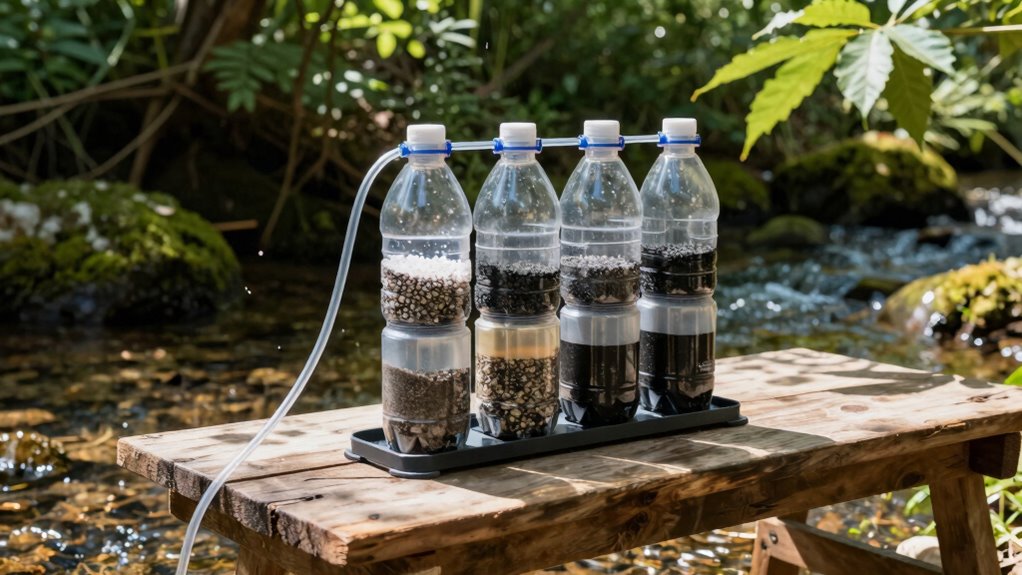
Ever wondered how to guarantee clean, safe water when you’re off the grid? One practical approach is to set up a simple multi-barrier system that combines various filtration methods, ensuring you get fresh, drinkable water without relying on municipal systems. A great starting point is rainwater harvesting, which allows you to collect rainwater directly from your roof or other surfaces. To do this effectively, you’ll need a clean catchment area, a storage tank, and a way to transport the water. Here, solar powered pumps become invaluable. They provide an eco-friendly, cost-effective way to move water from your collection point to your filtration system without needing electricity or fuel. Solar pumps are quiet, reliable, and easy to install, making them perfect for off-grid setups.
Once you’ve captured rainwater, you should filter it through a multi-stage process to remove impurities. Your first barrier is a pre-filtration screen or mesh that blocks large debris like leaves, twigs, and dirt. This prevents clogging and protects your subsequent filters. Next, you can use a sediment filter to remove smaller particles, such as sand and silt, which can cause cloudiness and carry bacteria. After this, a carbon filter can notably improve water taste and odor by removing chemicals, chlorine, and volatile organic compounds. This step is essential because rainwater, especially from rooftops, can pick up contaminants.
The final barrier in your system is often a UV sterilizer or a small, reliable reverse osmosis unit. A UV sterilizer uses ultraviolet light to kill bacteria, viruses, and other pathogens, ensuring your water is safe to drink. Reverse osmosis systems can remove dissolved solids, heavy metals, and additional toxins. When selecting equipment, focus on energy-efficient models that suit your off-grid lifestyle. Solar powered pumps can help circulate water through these stages seamlessly, preparing your water for consumption.

Harvesting Rainwater for Your Homestead: Build Self-Sufficient and Off-Grid Systems by Bringing Rainwater to Your Homestead Quickly and Cheaply
As an affiliate, we earn on qualifying purchases.
As an affiliate, we earn on qualifying purchases.
Frequently Asked Questions
Can I Use Rainwater for My Filtration System?
Yes, you can use rainwater for your filtration system. Start by collecting rainwater through rainwater harvesting, ensuring your catchment surface is clean. Store the water in a secure, covered water storage tank to prevent contamination. Before using it, run it through your filtration system to remove debris, pathogens, and chemicals. Regular maintenance and proper storage are essential to keep the rainwater safe for drinking or other uses.
What Are the Maintenance Requirements for a Multi-Barrier System?
You’ll want to keep your system in tip-top shape—think of it as a spa day for your filters. Regularly check the filter media lifespan and replace media before it’s exhausted. Don’t forget system sanitization; disinfect every few months to keep bacteria at bay. By staying proactive, you guarantee clean water and avoid costly repairs, turning maintenance into a simple routine rather than a dreaded chore.
How Often Should I Replace the Filtration Media?
You should replace the filter media based on its lifespan and your replacement schedule, which varies depending on usage and water quality. Typically, granular media like activated carbon lasts 6 to 12 months, while sand or gravel can last longer, up to 2-3 years. Regularly inspect your system, monitor water clarity, and follow manufacturer recommendations to guarantee effective filtration. Staying proactive keeps your water safe and system efficient.
Is Off-Grid Water Filtration Effective Against Chemical Contaminants?
You might find off-grid water filtration pleasantly surprising, as it can effectively handle chemical removal with the right setup. Multi-barrier systems incorporate contaminant screening stages that target chemical contaminants, reducing their presence. While they excel at filtering microbes and sediments, some chemicals, like heavy metals or pesticides, may require specialized filters. Regularly maintaining and upgrading your system guarantees continuous, effective protection against chemical contaminants.
What Is the Cost Comparison Between DIY and Commercial Systems?
You’ll find that DIY water filtration systems are generally more affordable than commercial ones, thanks to lower material costs and your hands-on approach. A thorough cost analysis shows you save on labor and parts, making DIY options quite budget-friendly. While commercial systems offer convenience and tested reliability, they tend to be pricier. Overall, for affordability comparison, building your own filtration setup is a smart choice for off-grid living.
Conclusion
Building a simple multi-barrier off-grid water filtration system is like creating your own little fortress against contaminants. With just a few basic components and some DIY spirit, you can enjoy clean, safe water anytime, anywhere. Remember, each barrier acts as a shield, working together to make your water crystal clear. So, roll up your sleeves and start building—because having fresh water on demand is as invigorating as a cool breeze on a hot day.