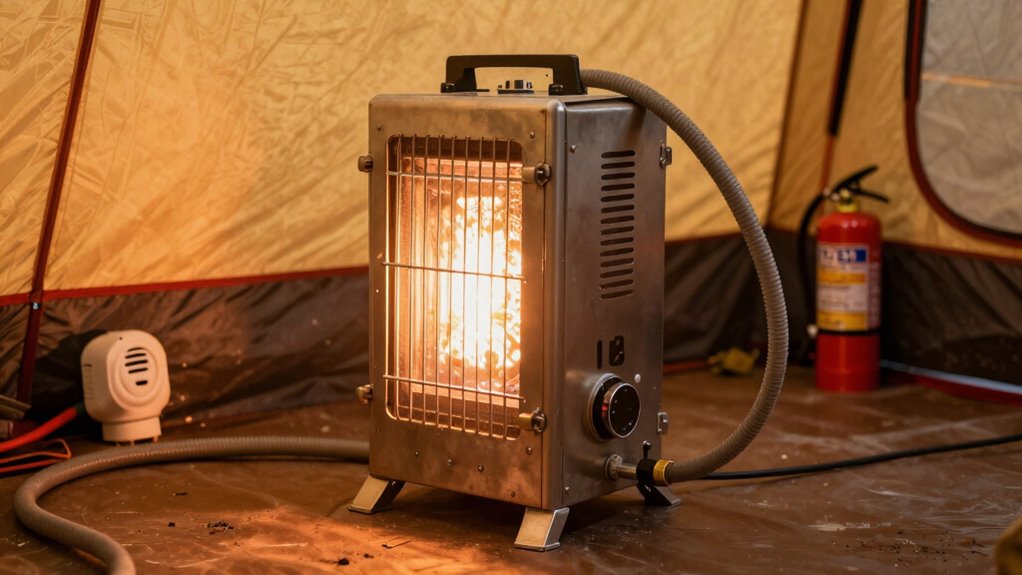
When using forced-air tent heaters, you must prioritize ventilation to prevent dangerous carbon monoxide buildup. Position your heater in a central or slightly off-center location on a stable surface, away from flammable materials, and guarantee unobstructed airflow. Open one or more vents or windows to facilitate fresh air intake and exhaust gases, adjusting as needed for comfort and safety. For detailed tips to keep everything safe, continue exploring the best practices for your setup.

Get pool and patio gear delivered free — and shop member deals
- Fast, free delivery on millions of items
- Access to Prime Big Deal Days deals on October 6–7
- Prime Video, Amazon Music and more included
Key Takeaways
- Ensure at least one or two vents are open for continuous fresh air intake and exhaust.
- Position heaters centrally or slightly off-center on stable, level surfaces away from flammable materials.
- Keep heaters away from tent walls, fabric, and objects that could obstruct airflow or cause fire hazards.
- Follow manufacturer guidelines for ventilation requirements and safe heater placement.
- Regularly assess interior conditions and adjust ventilation to prevent condensation and carbon monoxide buildup.
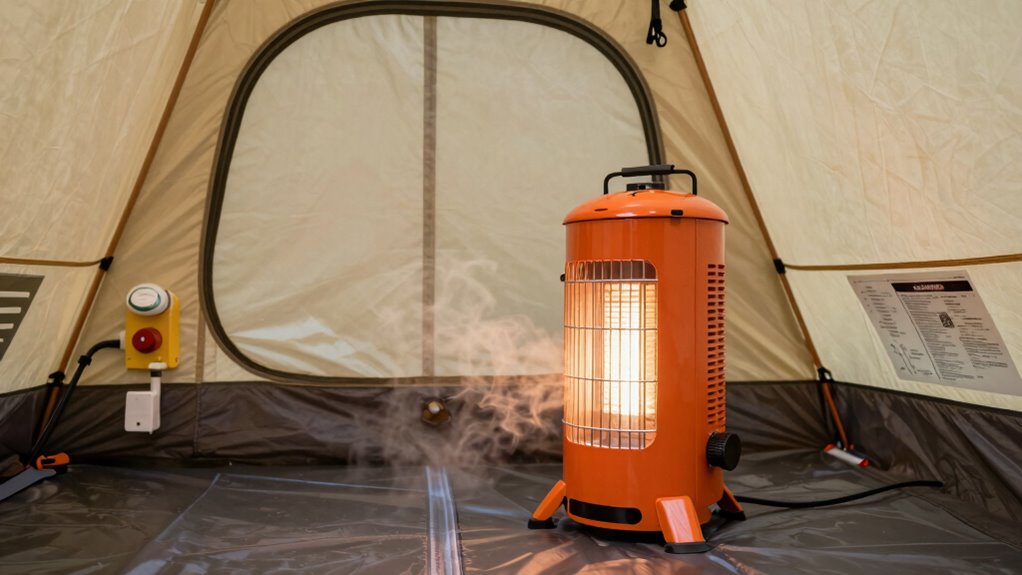
When you need to keep your tent warm in cold conditions, forced-air tent heaters offer an efficient solution. These heaters quickly circulate warm air, making them ideal for maintaining a comfortable environment in outdoor or temporary setups. However, guaranteeing proper ventilation is essential for safety, especially when operating a heater inside a confined space. Ventilation requirements are not just suggestions—they’re vital to prevent dangerous buildup of carbon monoxide and to maintain fresh air flow. Before turning on your heater, evaluate the tent’s size and airflow capacity to determine how much ventilation is needed. Small tents might require minimal adjustments, but larger spaces often need dedicated vents or openings to guarantee proper air exchange.
Next, consider heater placement carefully. Position the heater in a way that maximizes warmth without blocking airflow or creating safety hazards. Avoid placing it near tent walls, fabric, or any flammable materials, as heated surfaces can ignite or cause damage. Keep the heater on a stable, level surface to prevent tipping, and maintain a safe distance from people and gear. Proper placement also involves positioning the heater where it can distribute warm air evenly across the space. Typically, placing it near the center of the tent or slightly off-center works well, but always ensure it’s not obstructed by objects that could hinder air circulation or pose a fire risk. Additionally, understanding the ventilation importance and how it interacts with heater operation is crucial for maintaining indoor air quality.
Place heaters centrally on stable surfaces, away from flammable materials, for even warmth and safety.
In addition to heater placement, pay attention to the ventilation pathways. You should have at least one or two vents or windows open to facilitate continuous airflow. If your tent has built-in ventilation features, use them to your advantage. If not, create temporary openings that allow fresh air to enter and exhaust gases to escape. Remember, running a forced-air heater without adequate ventilation can quickly lead to dangerous carbon monoxide buildup, which is odorless and deadly. Regularly monitor the tent’s interior for signs of poor air quality or condensation, and adjust ventilation as needed.
Finally, always follow the manufacturer’s instructions regarding ventilation requirements and heater placement. Each model may have specific guidelines to optimize safety and efficiency. By combining thoughtful heater placement with proper ventilation, you guarantee a warm, safe environment inside your tent. Taking these precautions helps prevent accidents and keeps you comfortable during cold weather adventures or work conditions. Proper planning and vigilance are your best defenses when using forced-air tent heaters, making sure you stay warm without risking safety.
forced air tent heater with ventilation
As an affiliate, we earn on qualifying purchases.
As an affiliate, we earn on qualifying purchases.
Frequently Asked Questions
Can Forced-Air Heaters Be Used Indoors Safely?
Yes, you can use forced-air heaters indoors safely if you prioritize indoor air quality and proper heater placement. Make sure to place the heater in a well-ventilated area, away from walls and flammable materials, to prevent carbon monoxide buildup and improve airflow. Always follow manufacturer instructions, and consider installing carbon monoxide detectors to guarantee safety while maintaining good indoor air quality.
What Are Common Signs of Poor Ventilation With These Heaters?
You’ll notice signs of poor ventilation with forced-air heaters when you experience stuffy air, lingering odors, or dizziness. These are ventilation indicators that carbon monoxide could be building up, especially if you feel headaches or nausea. Always monitor these signs closely, guarantee proper airflow, and use detectors to prevent dangerous carbon monoxide accumulation. Adequate ventilation keeps your space safe and prevents health risks associated with poor air quality.
How Often Should I Check Ventilation Systems During Use?
You should check your ventilation systems regularly during use, ideally every 15 to 30 minutes. This guarantees airflow maintenance and allows you to spot any issues early. Keep an eye on ventilation monitoring devices if available, and listen for unusual noises or signs of poor airflow. Frequent checks help prevent dangerous buildup of fumes and maintain a safe environment inside the tent.
Are There Specific Safety Certifications for Ventilation Equipment?
You should look for ventilation equipment with safety certifications like UL, CSA, or CE, which guarantee it meets strict safety standards. These certifications verify the equipment complies with relevant ventilation standards, reducing risks of hazards like carbon monoxide buildup or fire. Always choose units with proper safety certifications, and regularly verify these labels to ensure your ventilation system remains compliant and safe during use.
What Backup Ventilation Methods Are Recommended in Emergencies?
In emergencies, you should rely on backup ventilation methods like portable exhaust fans or manual ventilation systems. Guarantee you regularly perform ventilation system maintenance so these backups work effectively when needed. Follow emergency ventilation procedures by quickly opening windows, vents, or using battery-operated fans to reduce CO2 buildup and ensure safety. Always familiarize yourself with these procedures beforehand to act swiftly and keep your tent environment safe during crises.
Conclusion
As you pack up your tent, remember that a safe heater is like a trusted guardian, quietly watching over your warmth. Keep your ventilation clear as if breathing life into your shelter, and stay vigilant like a vigilant lighthouse guiding you safely through the dark. When you respect these safety steps, your camping experience becomes a cozy fire in your heart, not a wildfire threatening your adventure. Stay safe, stay warm, and let your journey glow brightly.
Fall Picks
fall essentials
As an affiliate, we earn on qualifying purchases.