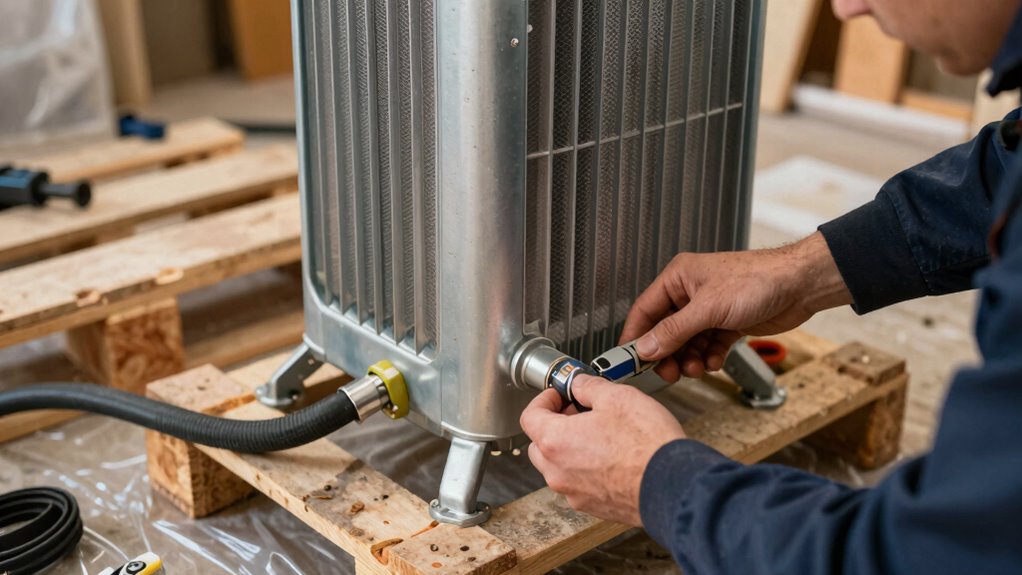

To reduce smells when using diesel heaters in temporary spaces, position the heater near an exhaust vent or outlet to direct fumes outside. Install exhaust pipes that extend beyond the structure and use exhaust fans to guarantee continuous airflow. Seal any gaps around the heater and vents to prevent fumes from escaping indoors. Regularly clean filters and maintain equipment, and consider air purifiers with charcoal filters. Keep exploring for more tips on effective installation and odor control.
Key Takeaways
- Position heaters near exhaust outlets and install outdoor exhaust pipes to effectively direct fumes outside.
- Seal all gaps around heaters and ventilation outlets to prevent fumes from leaking indoors.
- Use air purifiers with charcoal filters and regularly clean exhaust systems to absorb odors and maintain air quality.
- Choose high-quality diesel fuel and properly store it to reduce combustion odors and contamination.
- Incorporate dedicated outdoor ventilation fans to ensure continuous airflow and efficient fume dispersal.
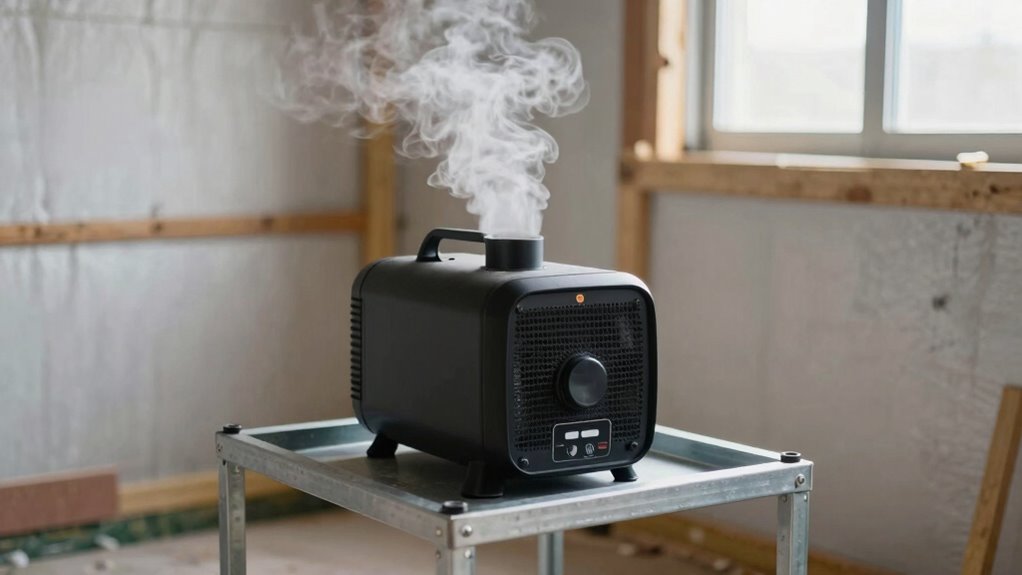
Are you looking for an efficient way to heat temporary spaces like construction sites, event tents, or mobile offices? If so, diesel heaters can be a practical solution, but managing the smell they produce is vital to ensure safety and comfort. Proper setup, especially focusing on ventilation strategies and odor control techniques, makes a significant difference. Before installing your diesel heater, plan your ventilation carefully. Good airflow helps disperse exhaust fumes and reduces the buildup of odors, keeping the space safer and more pleasant. Position the heater close to an exhaust vent or a dedicated outlet to guarantee fumes are directed outside immediately. Installing exhaust pipes that extend beyond the structure’s boundaries prevents fumes from lingering indoors and minimizes odor issues. When selecting ventilation strategies, consider using exhaust fans or high-capacity vents that promote continuous airflow, especially in enclosed or semi-enclosed spaces. This not only disperses fumes but also helps regulate temperature and maintains air quality. Another essential step involves sealing any potential leak points around the heater and ventilation outlets. Gaps or poorly sealed areas can allow fumes to escape into the occupied space, creating unwanted odors and health hazards. Proper sealing combined with a well-designed ventilation plan guarantees fumes are expelled efficiently, reducing the smell indoors. Odor control techniques also include using air purification systems or air scrubbers fitted with charcoal filters. These devices absorb and neutralize smells before air circulates back into the main space. Regular maintenance of your diesel heater is equally important. Dirty filters or clogged exhaust pipes can increase emissions and odors, making it harder to keep the environment fresh. Always check and clean these components according to the manufacturer’s instructions. Additionally, choose high-quality diesel fuel and store it properly, as contaminated fuel can contribute to foul smells and inefficient combustion. When operating the heater, avoid running it continuously for long periods. Instead, use intermittent heating cycles combined with proper ventilation breaks to prevent fumes from accumulating. If possible, set up a dedicated, outdoor exhaust system with a fan to blow fumes away from the structure. This not only enhances odor control but also improves overall ventilation strategies, ensuring the space remains comfortable and safe. Incorporating innovative ventilation solutions tailored for diesel heaters can further improve odor management and air quality. To conclude, reducing diesel heater odors involves thoughtful planning of ventilation strategies, sealing leak points, employing odor control techniques like air purifiers, and maintaining your equipment regularly. These steps work together to create a healthier environment, allowing you to enjoy efficient heating without the unpleasant smell often associated with diesel heaters.

78.7" Diesel Heater Exhaust Pipe,ID 1 Inch Exhaust Pipe Kit with Noise Reduction Diesel Heater Muffler Upgraded,Stainless Steel Flexible Exhaust Tubing Car Accessories
- Complete Kit Includes: Exhaust hose, muffler, clamps, screws
- Noise Reduction Design: Upgraded muffler with porous, S-shaped tube
- Secure Seal: Hose clamp ensures tight, noise-absorbing connection
As an affiliate, we earn on qualifying purchases.
As an affiliate, we earn on qualifying purchases.
Frequently Asked Questions
How Often Should I Perform Maintenance on My Diesel Heater?
You should perform maintenance on your diesel heater every 50 to 100 hours of use or at least once a season. Keep a regular maintenance schedule to verify it runs efficiently and reduces odors. Always use high-quality fuel, as poor fuel quality can cause buildup and odors. Regularly check and clean filters, nozzles, and combustion chambers to prevent issues and keep your heater operating smoothly.
Can Diesel Heaters Be Safely Used Indoors Without Ventilation?
No, you shouldn’t use diesel heaters indoors without proper ventilation. Indoor safety depends on ventilation concerns, as diesel fumes can be hazardous. Always guarantee good airflow to prevent dangerous build-up of fumes and carbon monoxide, risking health and safety. Ventilate well, use carbon monoxide detectors, and follow manufacturer guidelines. Prioritize safety first—never compromise indoor safety by neglecting proper ventilation when operating diesel heaters indoors.
What Are the Signs of a Diesel Heater Malfunction?
If your diesel heater malfunctions, you might notice unusual odors, inconsistent heating, or strange noises. During heater troubleshooting, check for signs like smoke or persistent smell, which indicate odor mitigation issues. Also, observe if the heater shuts off unexpectedly or displays error codes. Address these signs promptly to guarantee safe operation, and always verify proper ventilation to prevent indoor air quality problems. Regular maintenance helps prevent malfunctions and keeps your space safe.
Are There Eco-Friendly Diesel Heater Options Available?
Yes, there are eco-friendly alternatives to traditional diesel heaters. You can choose sustainable heating options like bio-diesel heaters, which use renewable fuels, or look for models with advanced emission controls that reduce pollutants. These options help lower your environmental impact while providing effective warmth. By opting for eco-friendly diesel heater options, you support sustainable heating practices and minimize your carbon footprint during temporary space heating needs.
How Does Altitude Affect Diesel Heater Performance?
At higher altitudes, your diesel heater’s performance impacts can occur because of lower oxygen levels. You should perform altitude adjustment to maximize combustion, ensuring efficient heating and reduced emissions. Without this adjustment, your heater might struggle to operate effectively, leading to reduced heat output and increased fuel consumption. Regularly check and calibrate your heater for altitude changes to maintain ideal performance and minimize smell issues caused by incomplete combustion.
Conclusion
By following these setup steps, you can guarantee your diesel heater operates efficiently and minimizes odors. Some believe that proper ventilation and regular maintenance can completely eliminate smell, making diesel heaters a clean choice for temporary spaces. While this might seem too good to be true, evidence suggests that with the right setup, you can enjoy warm, odor-free comfort. So, give these tips a try—your space and nose will thank you.