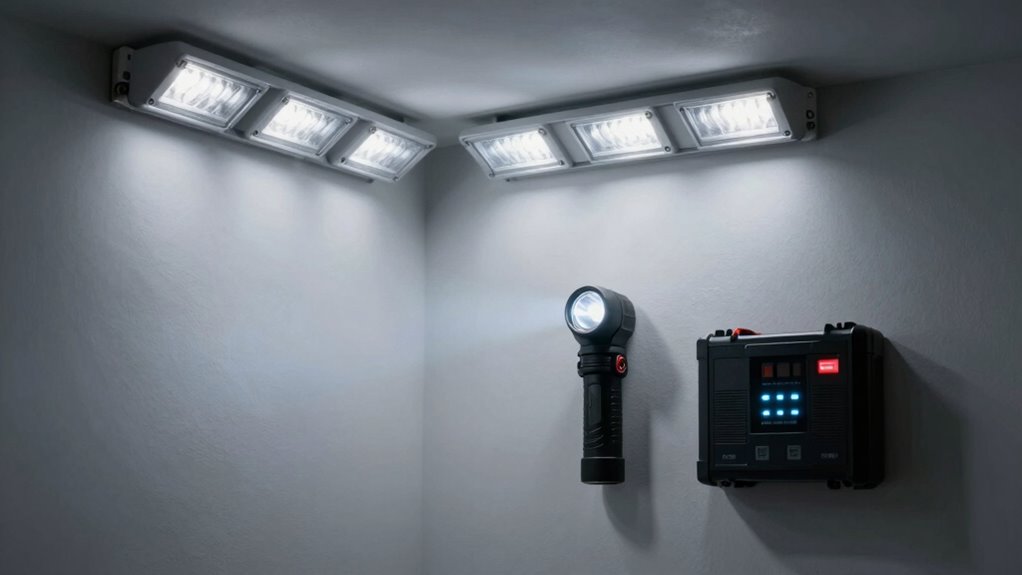

When the power goes out, emergency lighting kicks in automatically to guide you safely to exits and prevent accidents. It relies on batteries—like sealed lead-acid or lithium-ion—that power lights for at least 90 minutes. Proper placement, regular testing, and compliance with safety standards guarantee these lights work instantly when needed. Understanding these basics helps you stay prepared—if you want to learn more about keeping your emergency lighting reliable, keep exploring.
Key Takeaways
- Emergency lighting activates automatically during power outages to provide safe evacuation paths.
- It relies on batteries, such as lead-acid or lithium-ion, to power lights for at least 90 minutes.
- Proper installation and regular testing ensure system reliability and compliance with safety standards.
- Regulatory standards specify activation time, illumination duration, and placement requirements for safety.
- Maintenance and timely upgrades are essential to keep emergency lighting functional and compliant.
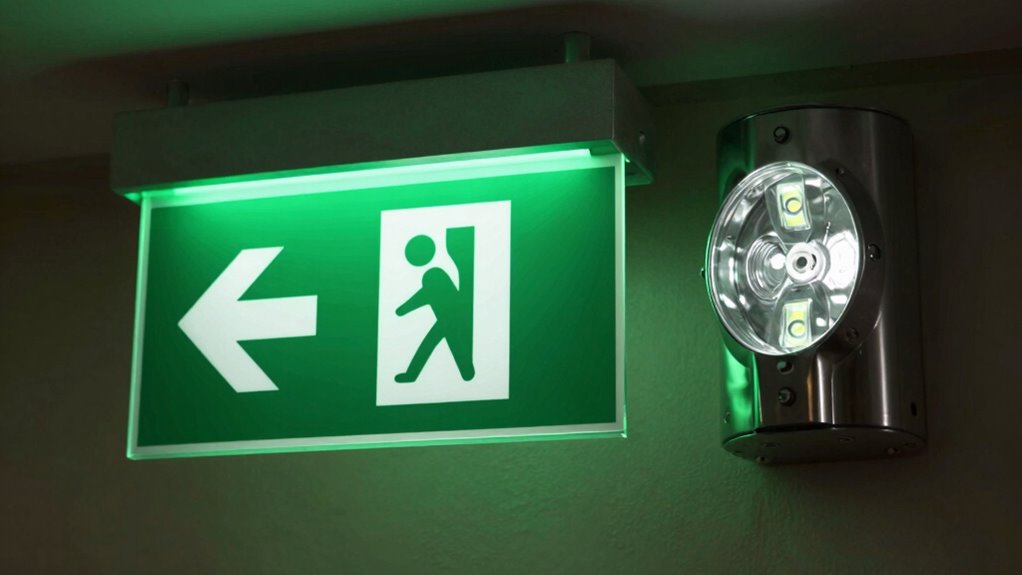
Have you ever wondered what keeps buildings safe during power outages? The answer lies in the emergency lighting systems that activate instantly when the main power fails. These systems rely heavily on battery backups to provide illumination, guaranteeing safe evacuation and access to essential areas. Understanding the different battery types used in emergency lighting is vital. You might encounter sealed lead-acid batteries, which are common due to their affordability and reliability. They’re durable and have a proven track record, but they require regular maintenance and proper disposal because of their chemical composition. Lithium-ion batteries are becoming increasingly popular because they offer a longer lifespan, are more compact, and have a higher energy density. They can handle more charge cycles and generally require less maintenance, making them a preferred choice in many modern systems. There are also nickel-cadmium batteries, which are known for their resilience in extreme temperatures and ability to deliver consistent power over time, though they are less common due to environmental concerns related to cadmium. Additionally, battery performance**** plays a crucial role in ensuring emergency lighting functions correctly during outages.
Beyond the technical specifics of battery types, it’s vital to realize that emergency lighting systems must meet strict regulatory standards to guarantee safety and reliability. Regulatory standards, set by organizations like the National Fire Protection Association (NFPA) or local authorities, specify the minimum requirements for emergency lighting performance, installation, and maintenance. These standards mandate that emergency lights should turn on within a specific time frame after power loss, typically within 10 seconds, and should provide sufficient illumination for a designated period, often at least 90 minutes. They also specify the placement and number of emergency lights needed in different building zones, ensuring every corridor, stairwell, and exit route is adequately lit during an outage. Compliance isn’t just about following rules; it’s about safeguarding lives. Regular inspections and testing are mandated to verify that the batteries and lights function correctly when needed. If they don’t, it’s a serious safety risk, and regulatory bodies can impose penalties or require immediate upgrades.
In essence, understanding the types of batteries used and adhering to regulatory standards form the backbone of an effective emergency lighting system. It’s a carefully designed safety net that kicks in automatically, giving building occupants enough light to evacuate safely or reach help. When you’re aware of these essentials, you’re better equipped to appreciate the importance of a well-maintained emergency lighting system—one that complies with standards and utilizes the right battery technology to keep everyone safe during unforeseen power outages.

Lithonia Lighting Basics LED Emergency Light, Adjustable Heads 120/277V 1Pk
- Emergency Backup Duration: 90-minute backup power
- Adjustable LED Heads: Dual 1W adjustable LED lamps
- Versatile Lighting: Focuses 3-6 ft paths with high clarity
As an affiliate, we earn on qualifying purchases.
As an affiliate, we earn on qualifying purchases.
Frequently Asked Questions
How Long Should Emergency Lighting Last During a Power Outage?
You should guarantee your emergency lighting lasts at least 90 minutes during a power outage. The battery duration is vital, as it determines how long the lights stay on to guide you safely. Many standards recommend a minimum lighting duration of 90 minutes, but some facilities may require longer. Regularly test your emergency lighting to confirm it provides the necessary battery duration, so you’re prepared when the power goes out.
Are There Specific Regulations for Emergency Lighting in Commercial Buildings?
Yes, there are specific regulations for emergency lighting in commercial buildings. You must follow building codes and occupancy requirements that dictate the placement, brightness, and duration of emergency lighting. These regulations guarantee safety during power outages by providing adequate illumination. Make sure your emergency lighting system complies with local standards, which often specify minimum lighting levels and testing procedures to keep occupants safe and compliant.
What Are the Differences Between Emergency Lighting Types?
You might think all emergency lights are the same, but they differ mainly in battery types and installation requirements. Exit signs often use sealed lead-acid batteries, while LED emergency lights tend to have lithium-ion options, offering longer life. Some require hardwired installation, while others are portable. Understanding these differences helps you choose the right type for your space, ensuring reliable illumination during power outages and compliance with safety standards.
How Often Should Emergency Lighting Systems Be Tested?
You should test your emergency lighting systems monthly to make certain they work properly. During testing, perform battery maintenance checks and follow specific testing procedures to verify that batteries are holding charge and lights activate correctly. Regular testing helps identify potential issues early, ensuring your system will function reliably during a power outage. Keep detailed logs of each test to maintain compliance and ensure ongoing safety.
Can Emergency Lighting Be Integrated With Smart Building Systems?
Yes, emergency lighting can be integrated with smart building systems. You can use smart sensor integration to automatically activate emergency lights during power outages or detect potential issues. Building automation systems enable centralized control, monitoring, and maintenance of your emergency lighting, ensuring compliance and safety. This integration streamlines management, reduces manual checks, and enhances responsiveness, making your facility safer and more efficient during emergencies.
Conclusion
So, next time the lights go out unexpectedly, you’ll be glad you paid attention to emergency lighting basics. After all, it’s ironic how something so simple can make all the difference when everything else is dark and uncertain. Don’t wait until it’s too late—be prepared, because a little extra effort now can save you from chaos later. Remember, in the end, the brightest moments often come from the light you’ve already set in place.