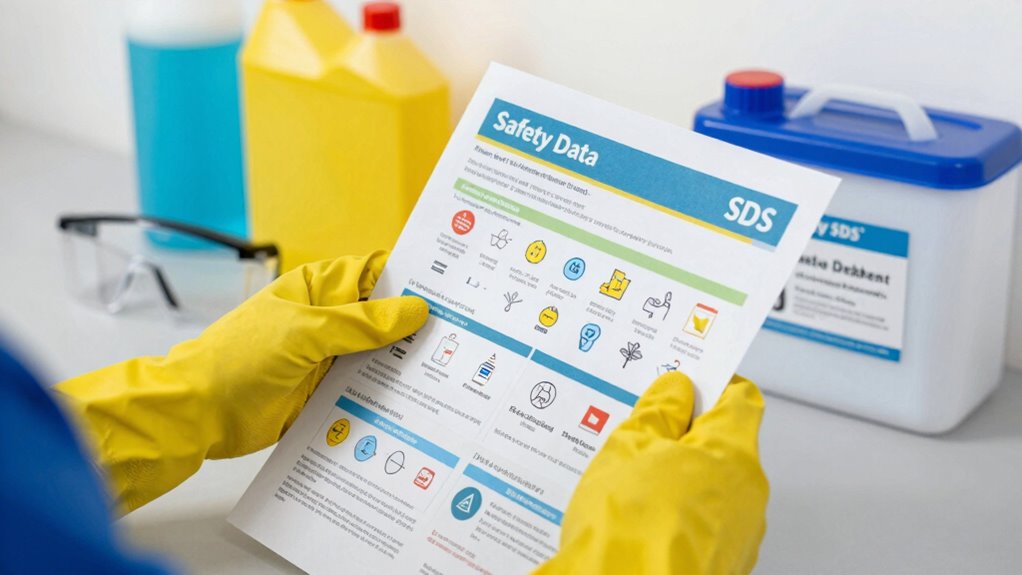

To prevent injuries with cleaning chemicals, it’s crucial you always follow the SDS guidelines and guarantee labels clearly display hazards and safety instructions. Proper labeling helps you quickly identify risks like toxicity or flammability, while storing chemicals correctly reduces accidents. Use proper ventilation and personal protective equipment when handling these substances. Staying up-to-date on SDS recommendations and safety procedures keeps you safer and minimizes hazards. Keep scanning to discover essential tips that can further protect you in your environment.
Key Takeaways
- Always review the Safety Data Sheet (SDS) before handling cleaning chemicals to understand hazards and proper precautions.
- Follow proper labeling protocols to ensure containers display current hazard symbols and safety instructions.
- Store cleaning chemicals in designated, well-ventilated areas away from incompatible substances.
- Use appropriate personal protective equipment (PPE) when cleaning or cleaning up spills to prevent chemical exposure.
- Regularly inspect storage areas and update safety procedures to maintain compliance and reduce injury risks.
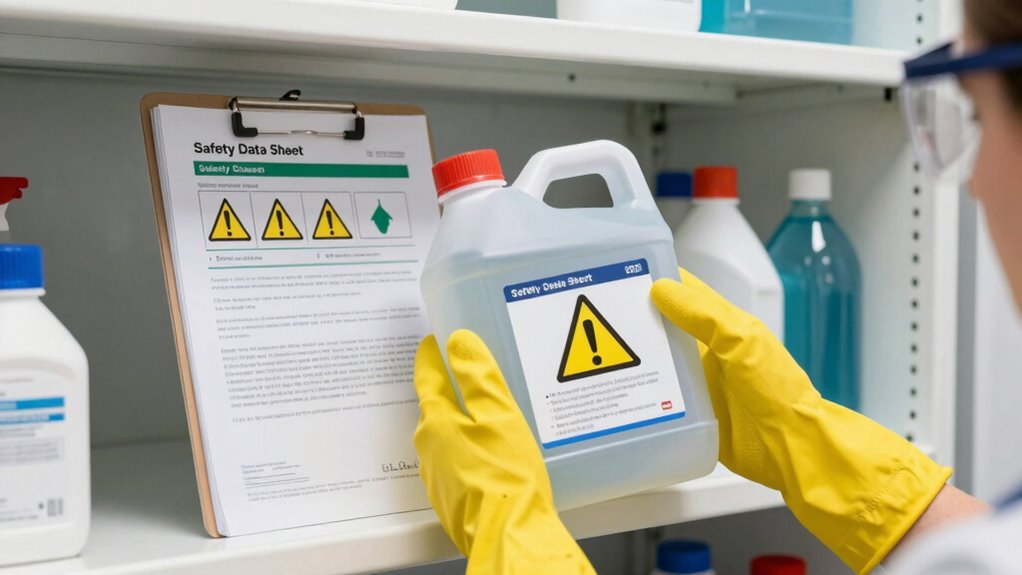
Have you ever considered the risks associated with cleaning chemicals? Many people overlook how dangerous these substances can be if not handled properly. Proper labeling is your first line of defense. When you buy or store cleaning chemicals, ensure every container clearly displays the product name, hazard symbols, and safety instructions. Proper labeling isn’t just a formality; it’s a vital safety step that helps you and others quickly identify hazards, understand proper handling procedures, and avoid accidental misuse. Labels should be legible, up-to-date, and include information about potential risks such as corrosiveness, toxicity, or flammability. By paying close attention to labels, you reduce the chances of mishandling chemicals, which can lead to injuries, respiratory issues, or chemical burns.
Equally important is following strict storage protocols. You should store cleaning chemicals in a designated area that’s well-ventilated, away from heat sources, and out of reach of children or unauthorized personnel. Always keep incompatible chemicals separated—like acids from alkalis or oxidizers from flammable liquids—to prevent dangerous reactions. Use sturdy, leak-proof containers and ensure lids are tightly sealed after each use. Implementing proper storage protocols minimizes the risk of spills, leaks, or accidental mixing, which can result in toxic fumes or even explosions. Regularly inspect storage areas for signs of deterioration or leaks, and clean up any spills immediately using appropriate protective gear.
Additionally, utilizing proper ventilation systems helps disperse fumes and reduces the risk of inhaling hazardous vapors during cleaning. Keeping these safety measures top of mind helps you create a safer environment and prevents injuries. When you adhere to proper labeling practices, you quickly identify hazards and handle chemicals correctly. Following storage protocols ensures chemicals stay contained and stable, reducing the chance of accidents. It’s a simple routine, but one that can save lives and prevent costly damage. Always remember, the goal is to maintain a safe workspace where everyone is aware of the dangers and knows how to respond appropriately. This means taking the time to update labels if information changes and regularly reviewing storage procedures to stay aligned with safety standards. Ultimately, establishing a habit of careful labeling and disciplined storage protects not just you but everyone around you. It’s a proactive approach that transforms potentially hazardous cleaning chemicals into manageable and safe substances—if you respect the guidelines and stay vigilant.

How To Read A Safety Data Sheet (SDS/MSDS) Poster, 24 x 33 Inch, UV Coated Paper (Poster)
- Promotes Workplace Safety: Includes detailed safety guidance for workers
- Durable & Long-Lasting: Made with high-quality, easy-to-clean material
- Highly Visible: Large 24 x 33-inch size with bright colors
As an affiliate, we earn on qualifying purchases.
As an affiliate, we earn on qualifying purchases.
Frequently Asked Questions
How Often Should SDS Sheets Be Reviewed and Updated?
You should review and update SDS sheets at least annually, or whenever there’s a change in chemical storage or formulation. Regular updates guarantee that your safety procedures, including using personal protective equipment, stay current. Staying proactive helps prevent accidents and ensures compliance. Keep track of any new safety information and make updates promptly, so your team always has the latest data to handle chemicals safely and avoid injuries.
What Are the Signs of Chemical Exposure to Watch For?
You should watch for chemical symptoms like skin irritation, coughing, or difficulty breathing as signs of exposure. Pay attention to exposure indicators such as dizziness, nausea, or unusual odors. If you notice any of these symptoms or indicators, act quickly by removing yourself from the area, rinsing affected skin or eyes, and seeking medical help immediately. Recognizing these signs early helps prevent serious health issues.
Can SDS Sheets Be Accessed Offline During Emergencies?
Like a modern-day oracle, SDS sheets can be accessed offline during emergencies, ensuring you’re prepared when network issues strike. You should download and keep copies of SDS sheets on your device or in a secure physical location as part of your emergency preparedness plan. This way, you can quickly find essential safety information about chemicals, minimizing risks and ensuring you respond effectively even without internet access.
How Should SDS Information Be Stored for Quick Access?
You should organize SDS information for quick access by storing physical copies in clearly labeled, easily reachable locations like a designated safety cabinet. Additionally, guarantee digital access by saving SDS files on your computer or cloud storage with dedicated folders. Regularly update and review both physical and digital storage to prevent delays during emergencies, making sure you have immediate access to critical safety data whenever needed.
Are There Language Barriers in Understanding SDS Labels?
Like a translator bridging worlds, multilingual labels help you overcome language barriers in understanding SDS. If you encounter language barriers, guarantee labels are available in your language or use visual aids. Clear, multilingual labels make safety information accessible, so you can promptly recognize hazards and follow proper procedures. Don’t rely solely on English; embracing language diversity ensures everyone can stay safe and informed around cleaning chemicals.
Conclusion
By making reviewing the Safety Data Sheet a daily routine, you gently steer clear of potential mishaps. Think of it as a quiet safeguard—an unspoken promise to keep your workspace safe and your well-being intact. Embracing this simple habit not only shields you from harm but also nurtures a culture of awareness. In doing so, you create a safer environment where accidents are less likely to quietly cast their shadow.