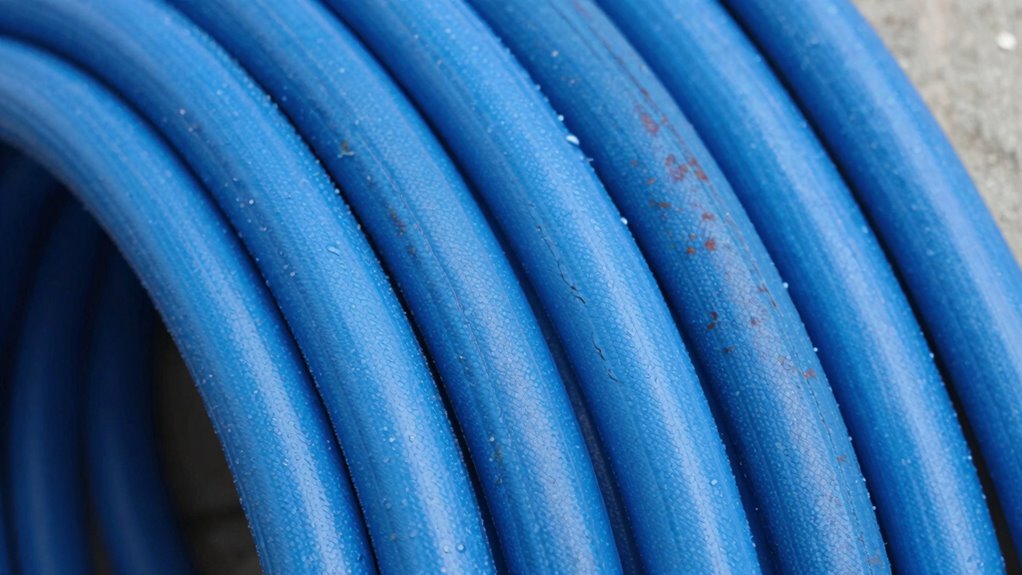

Using hoses not designed for potable water can unknowingly introduce harmful chemicals and contaminants that jeopardize your health. Many people overlook the importance of selecting food-grade, BPA-free materials, or fail to store hoses properly, leading to bacterial growth or material degradation. These mistakes often go unnoticed until health issues arise. To protect your water quality, make certain you choose the right hose and maintain it correctly — there’s more to prevent hidden risks than you might think.
Key Takeaways
- Using hoses made from non-food-grade or unapproved materials can leach toxins into drinking water.
- Inadequate storage, such as exposure to sunlight or dirt, accelerates hose degradation and contamination risks.
- Failing to inspect or replace damaged hoses allows bacteria and chemicals to enter potable water supplies.
- Rinsing hoses before storage prevents residual contaminants from affecting water quality.
- Neglecting proper material selection and storage practices can lead to unseen contamination hazards.
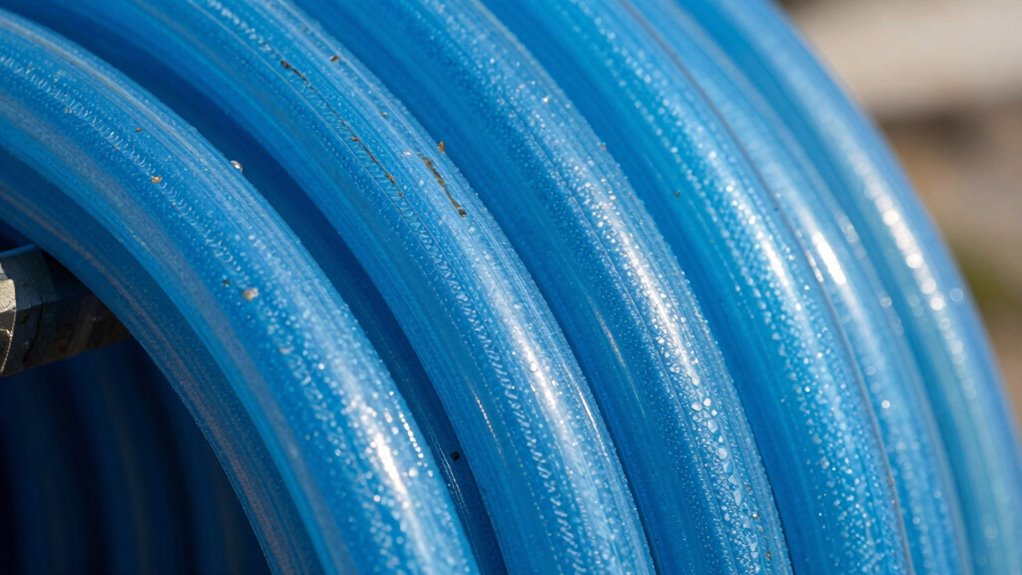
Have you ever wondered how to guarantee safe drinking water on the go? The answer often lies in understanding the importance of selecting the right potable water hoses and following proper storage practices. Many people overlook the fact that not all hoses are created equal, especially when it comes to materials used. A hose made from cheap or incompatible materials can introduce harmful contaminants into your water supply, putting your health at risk. When shopping for a potable water hose, always check the hose material. Look for hoses specifically designed for potable water use—these are typically made from food-grade, BPA-free, and non-toxic materials that won’t leach chemicals into the water. Avoid hoses that contain rubber or synthetic compounds not labeled as safe for drinking water, as these can degrade over time and release toxins. The right hose material ensures that your water remains pure from the source to your destination, especially when used in outdoor or mobile settings like RVs, boats, or camping sites. Proper material selection is essential to prevent chemical leaching and ensure safe drinking water.
Storage practices are equally critical in maintaining water safety. Even the best hose can become a source of contamination if not stored properly. After each use, you should drain the hose completely to prevent stagnant water from sitting inside, which can breed bacteria or mold. Once drained, store the hose in a cool, dry place away from direct sunlight, chemicals, or dirt. Exposure to UV rays can degrade hose material, making it more porous and susceptible to contamination. Keep your hoses off the ground and in a clean storage container or hanging on a hose reel. This not only prolongs the lifespan of the hose but also minimizes the risk of introducing dirt, insects, or microorganisms into the water supply. If you’ve used the hose for potable water, it’s wise to rinse it thoroughly with clean water before storage. Regularly inspecting your hoses for cracks, leaks, or signs of wear helps prevent potential contamination points. Remember, even minor damages can harbor bacteria or allow external pollutants to enter the water system.

Camco TastePURE 50-Ft RV Drinking Water Hose – Contains No Lead, No BPA & No Phthalate – Features Diamond-Hatch Reinforced PVC Design – 5/8” Inside Diameter, Made in the USA (22793)
Premium-Grade RV Drinking Water Hose 50ft: Camco's premium-grade RV fresh water hose is constructed with NSF/ANSI 61 certified…
As an affiliate, we earn on qualifying purchases.
As an affiliate, we earn on qualifying purchases.
Frequently Asked Questions
How Often Should Potable Water Hoses Be Replaced?
You should replace potable water hoses every 1 to 3 years, depending on hose material and usage. Rubber hoses may need more frequent replacement due to wear and tear, while reinforced or silicone hoses last longer. Regularly inspect for cracks, leaks, or mold, and substitute immediately if you notice any issues. Proper maintenance and timely replacement help prevent contamination and ensure safe drinking water.
Are There Specific Brands Recommended for Safety?
You’re better off sticking to brands with solid safety certifications like NSF/ANSI 61, which ensure quality and safety. Brands like Camco, Valterra, and Camco are trusted options; they’ve earned a good reputation for safety and durability. Don’t just take a chance—do your homework and choose hoses with proven track records. When it comes to potable water, it’s preferable to be safe than sorry, so pick wisely.
Can Contaminated Hoses Be Disinfected Effectively?
Yes, contaminated hoses can be disinfected effectively if you follow proper hose cleaning techniques and contamination prevention steps. Use food-grade disinfectants and thoroughly flush the hose with clean water to eliminate bacteria and other contaminants. Regularly inspect and clean your hoses after each use to prevent buildup. Remember, consistent hose cleaning is essential for contamination prevention, ensuring safe drinking water and avoiding health risks.
What Signs Indicate a Potable Water Hose Is Unsafe?
Imagine your hose as a silent guardian, standing watch over clean water. If the hose material shows signs of cracking, discoloration, or a persistent moldy smell, it’s a warning. Poor storage practices, like leaving it in direct sunlight or in a damp place, can also signal danger. These signs mean your potable water hose is unsafe, risking contamination that you can’t see but must address for safe drinking water.
Are There Regulations Governing Potable Water Hose Use?
Yes, there are regulations governing potable water hose use. You must verify your hoses meet specific regulatory standards and have proper safety certifications, like NSF/ANSI 61. These standards verify that the hoses are safe for drinking water and prevent contamination. Always check for certification labels before using a hose, and follow manufacturer guidelines to stay compliant with safety regulations and protect public health.
Camco TastePURE 50-Ft RV Drinking Water Hose – Contains No Lead, No BPA & No Phthalate – Features Diamond-Hatch Reinforced PVC Design – 5/8” Inside Diameter, Made in the USA (22793)
Premium-Grade RV Drinking Water Hose 50ft: Camco's premium-grade RV fresh water hose is constructed with NSF/ANSI 61 certified…
As an affiliate, we earn on qualifying purchases.
As an affiliate, we earn on qualifying purchases.
Conclusion
Remember, even the best-quality hoses can hide little surprises if not cared for properly. By giving your potable water hoses a little extra attention—like rinsing them out and storing them correctly—you’re gently ensuring your water stays crisp and safe. Think of it as a small act of kindness for your health and comfort. With just a bit of mindful maintenance, you can keep enjoying clean, invigorating water without worry, turning a simple task into a quiet safeguard for your well-being.

Camco EvoFlex2 50-ft Drinking Water Hose – RV Drinking Water Hose Reinforced with Fabric & Ultra Lightweight – Contains No Lead, No BPA & No Phthalate – Abrasion Resistant (22579)
Professional Elite Drinking Water Hose for RV: The Camco EvoFlex2 RV water hose delivers premium quality and safety,…
As an affiliate, we earn on qualifying purchases.
As an affiliate, we earn on qualifying purchases.

Camco TastePURE 25-Ft Water Hose – RV Drinking Water Hose Contains No Lead, No BPA & No Phthalate – Features Diamond-Hatch Reinforced PVC Design – 5/8” Inside Diameter, Made in the USA (22783)
Premium-Grade RV Drinking Water Hose 25ft: Camco's premium-grade RV fresh water hose is constructed with NSF/ANSI 61 certified…
As an affiliate, we earn on qualifying purchases.
As an affiliate, we earn on qualifying purchases.