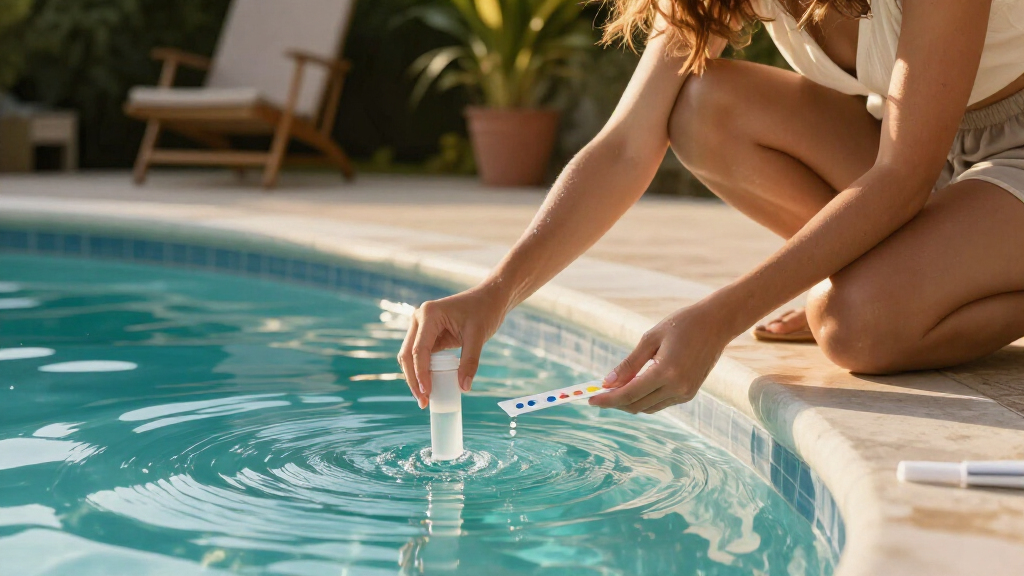

Pool water test kits range from quick dip strips to reagent kits that give more detailed readings. My best overall pick is the Taylor K-2006C for pool owners who want a broader, more hands-on picture of water chemistry; the 7-in-1 strips suit routine checks, while the AquaDoc Eagle Ray adds a digital reader for people who prefer app-guided results. The main tradeoff is convenience versus testing detail: strips are fast, while liquid kits ask for more steps but can offer more control over how readings are interpreted. Test parameter coverage, included supplies, and ease of reading also vary across this lineup. Read on for the full comparison and guidance on matching a kit to your pool and testing habits.

Get pool and patio gear delivered free with Prime
- Fast, free delivery on millions of items
- Prime Video, Amazon Music and more included
- Member-only deals all year
Complete the kit


Key Takeaways
- The Taylor K-2006C stands apart for detailed routine management: its reagent-based format makes more sense for owners who want to track chemistry closely than for people seeking the fastest check.
- Strip kits prioritize speed and volume: several 150-count options suit frequent screening, but their convenience does not replace careful color matching or a follow-up test when a result looks unusual.
- Digital readers offer a different kind of convenience: the AquaDoc Eagle Ray and Wynvex pair strips with digital interpretation, appealing to buyers who find color charts difficult to read.
- Taylor’s lineup spans distinct testing needs: the K-2006C, K-2005, K-1005, and K-1004 differ in scope and format, so choosing by model number alone can lead to a kit that does not fit your routine.
- Simple kits still have a place: options focused on chlorine and pH or a smaller set of checks can suit basic upkeep, but buyers managing a pool and spa should verify that the included tests match both uses.
| LUPO 3-in-1 Pool Test Kit for Swimming Pools, Spas, and Hot Tubs |  | Best for Simple Routine Checks | Tests: Total chlorine, total bromine, and pH | Test capacity: 100 tests | Compatible water: Freshwater and saltwater | VIEW LATEST PRICE | See Our Full Breakdown |
| Taylor K-2006C Complete Pool Water Test Kit |  | Best for Detailed Water-Balance Testing | Tests for: Free and combined chlorine, bromine, pH, acid and base demand, calcium hardness, total alkalinity, and cyanuric acid | Item form: Liquid | Reagent bottle size: 2 oz bottles | VIEW LATEST PRICE | See Our Full Breakdown |
| Pool Test Strips with App 7-in-1 (150 Strips) – Easy & Accurate Testing |  | Best for App-Based Tracking | Brand: Bliss Pool | Manufacturer: Bliss Water Care | Test format: 7-in-1 pool test strips | VIEW LATEST PRICE | See Our Full Breakdown |
| Poolmaster 5-Way Pool and Spa Water Test Kit |  | Best Mid-Range Reagent Kit | Tests: Chlorine, bromine, pH, acid demand, and total alkalinity | Reagents: Solutions #1, #2, and #3 (1 oz each); Solutions #4 and #5 (1/2 oz each) | Included components: Reagents, test block, and storage case | VIEW LATEST PRICE | See Our Full Breakdown |
| AquaDoc Eagle Ray Digital Water Test Kit for Pool and Spa with 30 Test Strips |  | Best for Digital Readouts | Parameters tested: Total chlorine, free chlorine, bromine, total hardness, cyanuric acid, total alkalinity, and pH | Included components: Digital water testing reader and test strips | Test strips included: 30 | VIEW LATEST PRICE | See Our Full Breakdown |
| 7-in-1 Pool and Spa Test Strips, 150 Count |  | Best High-Capacity Strip Kit | Parameters: 7 | Measured parameters: Chlorine, bromine, pH, hardness, alkalinity, and cyanuric acid | Strip count: 150 | VIEW LATEST PRICE | See Our Full Breakdown |
| Lupo 6-in-1 Pool Test Kit |  | Best Reagent-Based Pick | Parameters tested: Total chlorine, total bromine, pH, base demand, acid demand, and total alkalinity | Reagent capacity: Up to 100 tests | Testing system: Reagents, sample tube, and color-coded comparator | VIEW LATEST PRICE | See Our Full Breakdown |
| Taylor Technologies K-2005 DPD 9-in-1 Pool and Spa Test Kit |  | Best for Broad Reagent Testing | Model: K-2005 | Parameters tested: Free and total chlorine, bromine, pH, acid demand, base demand, total alkalinity, calcium hardness, and cyanuric acid | Number of reagents: 13 | VIEW LATEST PRICE | See Our Full Breakdown |
| Wynvex 7-in-1 Digital Pool Water Test Kit with 150 Test Strips |  | Best Digital Readout | Model: WN02 | Parameters tested: Total chlorine, free chlorine, bromine, total hardness, cyanuric acid, total alkalinity, and pH | Included test strips: 150 | VIEW LATEST PRICE | See Our Full Breakdown |
| EASYTEST 7-Way Pool Test Strips, 150 Count | 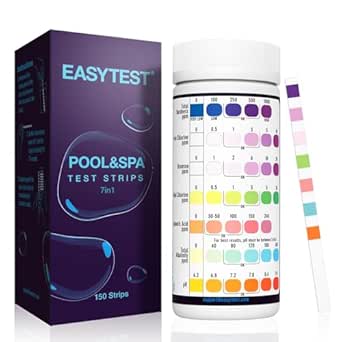 | Best Fast-Read Strip Kit | Quantity: 150 test strips | Parameters tested: Bromine, total alkalinity, pH, free chlorine, total hardness, cyanuric acid, and total chlorine | Dip time: 1 second | VIEW LATEST PRICE | See Our Full Breakdown |
| Taylor Technologies K-1005 DPD 9-in-1 Pool and Spa Test Kit |  | Best Broad-Coverage Manual Kit | Brand: Taylor Technologies | Model: K-1005 | Test method: DPD | VIEW LATEST PRICE | See Our Full Breakdown |
| XtremepowerUS 5‑Way Swimming Pool Test Kit – pH, Chlorine, Bromine, Alkalinity |  | Best Straightforward Five-Parameter Pick | Brand: XtremepowerUS | Model number: 71101 | Part number: 71101 | VIEW LATEST PRICE | See Our Full Breakdown |
| Taylor Technologies K-1004 DPD 6-in-1 Pool Test Kit |  | Best for Routine Core Checks | Brand: Taylor | Model: K-1004 | Test method: DPD | VIEW LATEST PRICE | See Our Full Breakdown |
| WWD POOL Swimming Pool and Spa Water Test Kit for Chlorine and pH |  | Best Simple Chlorine-and-pH Check | Brand: WWD POOL | Model number: 11029 | Tests: Chlorine and pH | VIEW LATEST PRICE | See Our Full Breakdown |
| Taylor Pool Water Test Kit – Complete Swimming Pool, Hot Tub and Spa Test Kit for Chlorine, pH, and Alkaline Levels (1-Pack) |  | Best Professional-Style Chemistry Coverage | Brand: Taylor | Manufacturer: Taylor Technologies | Model: K-2006 | VIEW LATEST PRICE | See Our Full Breakdown |
| pool water test kit | Brand | Included components |
|---|---|---|
| LUPO 3-in-1 Pool Test Kit for | LUPO | — |
| Taylor K-2006C Complete Pool W | Taylor Service | — |
| Pool Test Strips with App 7-in | Bliss Pool | 150 7-in-1 pool test strips |
| Poolmaster 5-Way Pool and Spa | — | Reagents, test block, and storage case |
| AquaDoc Eagle Ray Digital Wate | AquaDoc | Digital water testing reader and test strips |
| 7-in-1 Pool and Spa Test Strip | bestprod | — |
| Lupo 6-in-1 Pool Test Kit | Lupo | Storage case, waterproof instructions, comparator, sample tube, OTO, Phenol Red, BD, AD, and ALK reagents |
| Taylor Technologies K-2005 DPD | Taylor Technologies, Inc. | Test kit with comparator, reagents, illustrated instructions, and storage case |
| Wynvex 7-in-1 Digital Pool Wat | Wynvex | Digital reader, test strips, and storage case |
| EASYTEST 7-Way Pool Test Strip | EASYTEST | — |
| Taylor Technologies K-1005 DPD | Taylor Technologies | Comparator, storage case, test reagents |
| XtremepowerUS 5‑Way Swimming P | XtremepowerUS | — |
| Taylor Technologies K-1004 DPD | Taylor | Comparator, color-coded instructions, storage case |
| WWD POOL Swimming Pool and Spa | WWD POOL | Chlorine solution, pH solution, plastic tester, carrying case |
| Taylor Pool Water Test Kit | Taylor | Carrying case, water comparator, water balance calculator, base demand reagent, and other reagents |
More Details on Our Top Picks
LUPO 3-in-1 Pool Test Kit for Swimming Pools, Spas, and Hot Tubs
The LUPO 3-in-1 keeps testing focused on total chlorine, total bromine, and pH, making it a straightforward choice for owners who want quick checks without a digital reader or a wider chemistry panel. Its color-coded comparator and four-step instructions make the process approachable, while the included reagents cover 100 tests. It works with freshwater and saltwater pools as well as spas and hot tubs, a useful range for households with more than one water setup. Compared with the Poolmaster 5-Way, LUPO tests fewer parameters, leaving out acid demand and total alkalinity; that makes it simpler, but less useful for diagnosing broader water-balance problems. Reagents need seasonal replacement, and refills are sold separately, so this is best for basic monitoring rather than an all-in-one long-term supply.
Pros:- Checks total chlorine, total bromine, and pH
- Includes reagents for 100 tests
- Suitable for freshwater and saltwater pools, spas, and hot tubs
- Comparator and four-step waterproof instructions support a simple testing routine
Cons:- Does not test alkalinity, hardness, or cyanuric acid
- Replacement reagents are sold separately
- Reagents should be replaced each season
Best for: Pool or spa owners who want a simple, reagent-based check of sanitizer and pH across freshwater or saltwater setups.
Not ideal for: Owners who need alkalinity, hardness, or cyanuric acid readings from the same kit, or who want to avoid seasonal reagent replacement.
- Tests:Total chlorine, total bromine, and pH
- Test capacity:100 tests
- Compatible water:Freshwater and saltwater
- Recommended uses:Swimming pools, spas, and hot tubs
- Included items:Storage case, waterproof instructions with treatment guides, comparator, OTO reagent, and Phenol Red reagent
- Brand:LUPO
- Part number:LP-TK-01-US
Our verdict“Choose LUPO for simple sanitizer and pH checks across pools and spas, but pick a broader kit if you need more water-balance readings.”
Taylor K-2006C Complete Pool Water Test Kit
For pool owners who want more than a quick sanitizer check, the Taylor K-2006C covers free and combined chlorine, bromine, pH, acid and base demand, calcium hardness, total alkalinity, and cyanuric acid. That breadth can help identify what needs adjustment before chemicals are added, matching its focus on avoiding overtreatment. Its liquid reagents and manual titration require more care and steps than the strip-based Bliss Pool 7-in-1 or the digital AquaDoc Eagle Ray, but they give this kit a more hands-on route to a broad set of readings. The 2 oz bottles are a practical inclusion for repeated testing. The tradeoff is a steeper learning curve and the need to handle and keep track of multiple reagents; casual users seeking an especially quick check may prefer a simpler kit.
Pros:- Tests a broad range of sanitizer and water-balance parameters
- Includes 2 oz reagent bottles
- Manual titration supports a detailed testing process
- Broad results can help inform chemical adjustments and reduce overtreatment
Cons:- Manual titration takes more steps than strip-based kits
- Handling multiple liquid reagents requires care
- The extensive test menu may be more than casual pool owners need
Best for: Pool owners who regularly balance water chemistry and want readings across sanitizer, pH, alkalinity, hardness, and cyanuric acid.
Not ideal for: Beginners or time-pressed owners who prefer a quick strip result or numerical digital display over manual titration.
- Tests for:Free and combined chlorine, bromine, pH, acid and base demand, calcium hardness, total alkalinity, and cyanuric acid
- Item form:Liquid
- Reagent bottle size:2 oz bottles
- Model:K-2006C
- Brand:Taylor Service
- Item weight:3.8 pounds
- Number of items:1
Our verdict“Pick the Taylor K-2006C if you want a broad, hands-on chemistry check, and choose a strip or digital kit for faster routine readings.”
Pool Test Strips with App 7-in-1 (150 Strips) – Easy & Accurate Testing
The Bliss Pool 7-in-1 strips pair a seven-parameter test with an app for logging readings and receiving personalized dosage recommendations. That combination suits owners who want a frequent testing routine with a record of how their water changes, while the 150-strip pack supports repeated checks without relying on a liquid reagent bottle. Compared with the AquaDoc Eagle Ray, Bliss Pool uses an app and color-chart approach rather than a dedicated reader that returns numerical results and stores readings on the device. Its extra-long strips are intended to make color readings clearer, but strips can be delicate, and the app is central to the full feature set. Skip this option if you want a standalone test process or prefer titration-based readings; the app-dependent workflow is its main convenience and its main limitation.
Pros:- Tests seven water parameters with one strip
- App supports result logging and dosage recommendations
- 150 strips support frequent testing
- Extra-long strip format and included color chart aid reading
Cons:- Full functionality relies on using the smartphone app
- Strips may be delicate and difficult for some users to handle
- Color-chart readings are less direct than the AquaDoc reader’s numerical display
Best for: Pool owners who test often and want app-based result logging and chemical dosage guidance alongside a broad strip test.
Not ideal for: Buyers who do not want to use a smartphone app, or who prefer a dedicated digital reader or liquid-reagent testing.
- Brand:Bliss Pool
- Manufacturer:Bliss Water Care
- Test format:7-in-1 pool test strips
- Strip count:150
- Included components:150 7-in-1 pool test strips
- Item weight:2.8 ounces
- Part number:BPTATS150USS25
Our verdict“Choose Bliss Pool if app logging and dosage guidance fit your routine; choose AquaDoc if you want numerical readings from a dedicated reader.”
Poolmaster 5-Way Pool and Spa Water Test Kit
The Poolmaster 5-Way covers chlorine, bromine, pH, acid demand, and total alkalinity, giving pool and spa owners a wider check than the three readings in the LUPO 3-in-1. Its clear-view comparator, color chips, five reagent solutions, and storage case make it a structured option for people comfortable comparing liquid samples. It stops short of the Taylor K-2006C’s broader panel, which also includes calcium hardness and cyanuric acid, so it suits routine checks better than detailed chemistry work. The reagent sizes vary, and Solution #2 is formulated specifically for 5-way kits; owners should stick with the intended kit rather than assume it is interchangeable. Handling and replacing liquids also takes more effort than dipping a test strip.
Pros:- Tests five pool and spa water measures
- Clear-view comparator block includes color chips
- Includes five reagent solutions and a storage case
- Suitable for pool and spa testing
Cons:- Requires handling and replacing liquid reagents
- Does not test calcium hardness or cyanuric acid
- Solution #2 is formulated specifically for 5-way kits
Best for: Pool and spa owners who want liquid-reagent readings for sanitizer, pH, acid demand, and alkalinity without a larger test panel.
Not ideal for: Owners who need calcium hardness or cyanuric acid results, or who prefer a faster, low-handling strip test.
- Tests:Chlorine, bromine, pH, acid demand, and total alkalinity
- Reagents:Solutions #1, #2, and #3 (1 oz each); Solutions #4 and #5 (1/2 oz each)
- Included components:Reagents, test block, and storage case
- Model number:22260
- Material:Plastic and chemicals
- Item weight:15.36 ounces
- Warranty:One year against manufacturer defects
Our verdict“Choose Poolmaster for a practical five-test liquid kit, but step up to the Taylor K-2006C if you need a broader chemistry panel.”
AquaDoc Eagle Ray Digital Water Test Kit for Pool and Spa with 30 Test Strips
The AquaDoc Eagle Ray is the clearest fit for owners who want a reader to turn strip tests into numerical results. It measures seven parameters, including free and total chlorine, bromine, hardness, cyanuric acid, alkalinity, and pH, then stores up to 100 readings for tracking changes over time. That built-in record separates it from Bliss Pool’s app-led strip approach, while the Taylor K-2006C offers a broader hands-on liquid-reagent process instead of digital readouts. The tradeoff is ongoing dependence on strips: 30 are included, and the product details do not specify replacement-strip cost or availability. Buyers should also expect a device-based workflow rather than the simplicity of comparing a strip directly with a color chart.
Pros:- Displays numerical results in seconds
- Tests seven pool and spa water parameters
- Stores up to 100 readings for tracking changes
- Includes 30 test strips
Cons:- Requires a test strip for each reading
- Replacement-strip cost and availability are not specified
- Includes fewer tests than the 150-strip Bliss Pool kit
Best for: Pool and spa owners who want numerical readings and a stored test history without doing manual liquid titrations.
Not ideal for: Buyers who want a large supply of tests in the box, do not want to depend on replacement strips, or prefer a simple color-chart method.
- Parameters tested:Total chlorine, free chlorine, bromine, total hardness, cyanuric acid, total alkalinity, and pH
- Included components:Digital water testing reader and test strips
- Test strips included:30
- Memory capacity:Up to 100 results
- Recommended uses:Swimming pool, spa, and hot tub
- Brand:AquaDoc
- Part number:AD-WTK-01
Our verdict“Choose AquaDoc for digital readings and stored history, but pick a larger strip pack if test quantity is your priority.”
7-in-1 Pool and Spa Test Strips, 150 Count
I’d choose this 150-strip kit for frequent checks across a pool and spa, where having a large supply matters more than getting a reading in the fewest seconds. It covers seven water parameters, including chlorine, bromine, pH, hardness, alkalinity, and cyanuric acid, and the simple dip-and-chart process suits routine monitoring without separate reagents. The tradeoff is the wait: strips need a 60-second read time after a two-second dip. That is slower than EASYTEST 7-Way Pool Test Strips, which gives a chart-based reading after 15 seconds, and this kit still depends on judging colors by eye. Choose it for broad, regular screening; skip it if speed or more instrumented readings matter more than strip quantity.
Pros:- Measures seven pool and spa water parameters
- Includes 150 strips for ongoing routine testing
- Works for both pools and hot tubs
- Simple two-second dip with a color chart and instructions
Cons:- Requires a 60-second wait after dipping
- Color matching can be subjective
- Does not provide numerical readings
Best for: Pool and hot-tub owners who want a large supply of strips for routine checks across seven parameters.
Not ideal for: Owners who need quick readings or struggle to distinguish color-chart shades, since results take 60 seconds and are interpreted by eye.
- Parameters:7
- Measured parameters:Chlorine, bromine, pH, hardness, alkalinity, and cyanuric acid
- Strip count:150
- Sample dip time:2 seconds
- Reading time:60 seconds
- Suitable for:Pools and spas
- Brand:bestprod
- Model number:PoolTestKit-7in1
Our verdict“Pick this kit for high-volume, broad strip testing if a one-minute color-chart read is acceptable.”
Lupo 6-in-1 Pool Test Kit
The Lupo is the choice here for buyers who prefer drop reagents and a comparator over disposable strips. It tests six parameters, including pH, chlorine, bromine, and total alkalinity, while its 100-test reagent supply supports regular checking without replacing a strip after every sample. Compared with the 7-in-1 EASYTEST strips, Lupo measures fewer parameters and takes more hands-on steps, but its comparator, sample tube, and drop-count instructions give the process a more structured format. It is designed for freshwater and saltwater systems, and the case and waterproof instructions help keep the components together. The drawbacks are ongoing reagent replacement and color matching, which remains subjective. I’d skip it if simplicity and minimal handling are the priority.
Pros:- Includes reagents for up to 100 tests
- Tests freshwater and saltwater pools and spas
- Comparator and drop-count instructions guide the process
- Comes with a heavy-duty case and waterproof instructions
Cons:- Tests six parameters, fewer than the seven-parameter strip kits here
- Replacement reagents must be purchased separately
- Color comparator readings can be subjective
Best for: Pool and spa owners who want a reusable comparator-and-reagent setup for regular freshwater or saltwater testing.
Not ideal for: Beginners seeking a quick dip-and-read routine or buyers who want cyanuric acid and hardness testing in the same kit.
- Parameters tested:Total chlorine, total bromine, pH, base demand, acid demand, and total alkalinity
- Reagent capacity:Up to 100 tests
- Testing system:Reagents, sample tube, and color-coded comparator
- Included components:Storage case, waterproof instructions, comparator, sample tube, OTO, Phenol Red, BD, AD, and ALK reagents
- Water systems:Freshwater and saltwater pools and spas
- Brand:Lupo
- Model number:LP-TK-04-US
Our verdict“Choose Lupo if you want a 100-test reagent kit with a comparator and can accept more steps than strip testing.”
Taylor Technologies K-2005 DPD 9-in-1 Pool and Spa Test Kit
I’d put the Taylor K-2005 ahead of the Lupo when parameter coverage is the priority: it tests nine areas, including free and total chlorine, calcium hardness, cyanuric acid, and acid and base demand. That broader set can help owners investigating water balance rather than just checking basic sanitizer and pH. The kit includes 13 reagents, a comparator, and illustrated instructions in a storage case, though the supplied data does not say how many tests the reagents support. By contrast, Lupo states a capacity of up to 100 tests but covers six parameters. The K-2005’s breadth comes with more reagent handling than the 150-strip options, and replacement reagents are a recurring need. I’d skip it for quick, low-effort spot checks.
Pros:- Tests nine parameters, including free and total chlorine
- Includes a comparator, 13 reagents, and a storage case
- Covers calcium hardness and cyanuric acid
- Illustrated instructions support the testing process
Cons:- Requires handling multiple reagents and a comparator
- Reagents need periodic replacement
- Reagent quantities and replacement intervals are not specified
Best for: Pool and spa owners who want broad chemistry coverage, including calcium hardness and cyanuric acid, using a reagent-based kit.
Not ideal for: Casual testers who want fast strip checks or need a clearly stated test capacity before choosing a kit.
- Model:K-2005
- Parameters tested:Free and total chlorine, bromine, pH, acid demand, base demand, total alkalinity, calcium hardness, and cyanuric acid
- Number of reagents:13
- Included components:Test kit with comparator, reagents, illustrated instructions, and storage case
- Weight:2 pounds
- Country of manufacture:USA
- Brand:Taylor Technologies, Inc.
- Replacement reagents:Available separately
Our verdict“Choose the K-2005 for wide-ranging reagent tests, but choose Lupo if stated test capacity matters more.”
Wynvex 7-in-1 Digital Pool Water Test Kit with 150 Test Strips
Wynvex stands apart from the other strip kits here by pairing 150 strips with a digital reader that displays numerical results in about 15 seconds. That format may suit owners who find printed color charts difficult to interpret; EASYTEST 7-Way, for example, also covers seven parameters but asks you to compare strip colors by eye. Wynvex measures chlorine, bromine, hardness, cyanuric acid, alkalinity, and pH, making it a broad routine-checking option for pools and spas. Its convenience has a tradeoff: the reader still depends on strips, and the product information does not describe accuracy or calibration. Buyers who prefer a fully specified manual comparator system may find the Taylor K-2005 more transparent about its testing components, although it requires more reagent handling. I’d choose Wynvex for numerical display, not as a substitute for documented calibration details.
Pros:- Digital reader displays numerical results
- Tests seven pool and spa water parameters
- Includes 150 test strips
- Fitted case keeps the reader and strips together
Cons:- The reader still requires disposable test strips
- Provided product details do not describe accuracy or calibration
- Depends on the digital reader rather than offering a stated manual comparator alternative
Best for: Pool and spa owners who want numerical results and a large supply of strips instead of interpreting a printed color chart.
Not ideal for: Buyers who need stated calibration or accuracy details, or who prefer a reagent comparator with specified components.
- Model:WN02
- Parameters tested:Total chlorine, free chlorine, bromine, total hardness, cyanuric acid, total alkalinity, and pH
- Included test strips:150
- Results time:About 15 seconds
- Included components:Digital reader, test strips, and storage case
- Recommended use:Pool and spa water quality testing
- Brand:Wynvex
Our verdict“Choose Wynvex if numerical display matters more than having published accuracy and calibration details.”
EASYTEST 7-Way Pool Test Strips, 150 Count
EASYTEST is my pick for buyers who want seven-parameter coverage without a long wait: dip a strip for one second, hold it horizontally, and read the chart after 15 seconds. It covers bromine, alkalinity, pH, free and total chlorine, hardness, and cyanuric acid, matching the broad screening focus of the bestprod 7-in-1 strips. The difference is speed: bestprod calls for a 60-second wait after dipping, while EASYTEST’s stated read time is 15 seconds. Neither avoids subjective color matching, and EASYTEST adds a storage constraint: opened strips should be used within 90 days. That makes the 150-count package a better fit for households testing often than for occasional pool users. I’d skip it if you cannot use the strips promptly after opening or want digital readings.
Pros:- Tests seven parameters, including free and total chlorine
- Reading time is 15 seconds after dipping
- Suitable for swimming pools, hot tubs, and spas
- Includes 150 strips and a bottle color chart
Cons:- Opened strips should be used within 90 days
- Results depend on visual color-chart comparison
- Does not provide numerical readings
Best for: Pool and hot-tub owners who test frequently and want a fast, chart-based reading across seven water parameters.
Not ideal for: Occasional testers unlikely to use an opened package within 90 days, or buyers who want digital numerical results.
- Quantity:150 test strips
- Parameters tested:Bromine, total alkalinity, pH, free chlorine, total hardness, cyanuric acid, and total chlorine
- Dip time:1 second
- Reading time:15 seconds after dipping
- Use after opening:Within 90 days
- Expiration:3 years from manufacture
- Recommended uses:Swimming pools, hot tubs, and spas
- Brand:EASYTEST
Our verdict“Choose EASYTEST for fast, broad strip checks if you can use the package within 90 days of opening.”
Taylor Technologies K-1005 DPD 9-in-1 Pool and Spa Test Kit
The Taylor K-1005 earns this role by covering more of the chemistry that can shape water balance than the simpler kits here: alongside chlorine, bromine, and pH, it checks acid and base demand, alkalinity, calcium hardness, and cyanuric acid. That makes it a stronger fit for owners who want to investigate balance issues, not just check sanitizer and pH. Compared with the XtremepowerUS 5-Way, it adds hardness and cyanuric acid testing, though that broader coverage means more steps and reagents to manage. The comparator, case, and pictorial instructions help organize the process, but readings still require collecting a sample and adding reagents by hand. Reagents need seasonal replacement, so this is a better match for hands-on pool care than for someone seeking quick strip-style checks.
Pros:- Covers nine listed pool and spa chemistry parameters, including calcium hardness and cyanuric acid.
- Comparator and storage case keep testing components together.
- Pictorial instructions support a more approachable manual testing process.
- Replacement reagents are available separately.
Cons:- Testing requires manual sample collection and reagent handling.
- Reagents need seasonal replacement.
- Broader coverage involves more testing steps than a basic two-way or five-way kit.
Best for: Pool and spa owners who want manual testing across sanitizer, pH, alkalinity, hardness, and cyanuric acid.
Not ideal for: Owners who only need quick chlorine and pH checks or prefer a test strip over measuring and adding reagents.
- Brand:Taylor Technologies
- Model:K-1005
- Test method:DPD
- Parameters:Free and total chlorine, bromine, pH, acid and base demand, total alkalinity, calcium hardness, cyanuric acid
- Reagents:13
- Included components:Comparator, storage case, test reagents
- Country of manufacture:USA
Our verdict“Choose the K-1005 if you want broad manual chemistry coverage and are comfortable maintaining a reagent-based kit.”
XtremepowerUS 5‑Way Swimming Pool Test Kit – pH, Chlorine, Bromine, Alkalinity
The XtremepowerUS 5-Way keeps testing focused on chlorine, bromine, pH, acid demand, and total alkalinity, making it a sensible middle ground between the WWD POOL two-way kit and Taylor’s broader K-1005. Its clear-view test block and UV-protected color chips give users a defined comparison surface, while the case and step-by-step guide help keep a routine organized. The narrower test menu is the main tradeoff: it does not cover calcium hardness or cyanuric acid, so owners who need those readings will need another test method or a more extensive kit. The color chips can also fade if left in strong sunlight. I’d favor this option for routine residential checks where five measurements are enough, rather than for diagnosing a wider range of water-balance concerns.
Pros:- Tests chlorine, bromine, pH, acid demand, and total alkalinity.
- Clear-view block and UV-protected color chips support visual comparison.
- Durable case keeps the kit components organized.
- Step-by-step instructions and a quick-reference sheet are included.
Cons:- Does not test calcium hardness or cyanuric acid.
- Color chips may fade with prolonged exposure to strong sunlight.
Best for: Residential pool, spa, or hot-tub owners who want manual checks of five core sanitizer and balance readings.
Not ideal for: Owners who need calcium hardness or cyanuric acid results as part of the same kit.
- Brand:XtremepowerUS
- Model number:71101
- Part number:71101
- Tests:Chlorine, bromine, pH, acid demand, total alkalinity
- Test block:Clear-view polystyrene with UV-protected color chips
- Case:Blue polyethylene
- Item weight:14.4 ounces
Our verdict“Pick the XtremepowerUS kit for a practical five-parameter routine, but choose the K-1005 if you need broader balance testing.”
Taylor Technologies K-1004 DPD 6-in-1 Pool Test Kit
The Taylor K-1004 targets owners who want more than a basic chlorine-and-pH check without taking on the K-1005’s wider menu. It covers free and total chlorine, bromine, pH, acid demand, and total alkalinity, with a comparator and color-coded instructions designed for repeat seasonal use. The supplied reagents are described as supporting over 100 quick tests per season, while separately available replacements let the case stay in service after reagents run out. Compared with the XtremepowerUS 5-Way, this kit adds free and total chlorine measurements; compared with the K-1005, it omits calcium hardness and cyanuric acid. That makes it a focused choice for routine core checks, not a complete diagnostic set. Owners must also plan to replace reagents separately.
Pros:- Checks free and total chlorine, bromine, pH, acid demand, and total alkalinity.
- Color-coded instructions and an easy-read comparator support repeat testing.
- Reagents are described as supporting over 100 quick tests per season.
- Replacement reagents are sold separately so the case can be reused.
Cons:- Replacement reagents must be purchased separately.
- Does not include calcium hardness or cyanuric acid testing.
Best for: Pool and spa owners who want recurring checks of chlorine, pH, and alkalinity with a reusable comparator kit.
Not ideal for: Owners who need calcium hardness or cyanuric acid readings from their main kit.
- Brand:Taylor
- Model:K-1004
- Test method:DPD
- Tests included:Free and total chlorine, bromine, pH, acid demand, total alkalinity
- Reagent capacity:Over 100 quick tests per season, as described
- Included components:Comparator, color-coded instructions, storage case
- Item weight:12.96 ounces
Our verdict“Choose the K-1004 for repeatable core chemistry checks, or move up to the K-1005 if hardness and cyanuric acid matter to your routine.”
WWD POOL Swimming Pool and Spa Water Test Kit for Chlorine and pH
The WWD POOL two-way kit is built for a narrow job: checking chlorine and pH with liquid drops and a clear-view tester. Its straightforward process—add four drops of the appropriate solution to each sample, then compare the color—keeps the routine simpler than the Taylor K-1004, which covers additional chemistry. That simplicity also sets a firm limit: there is no alkalinity, acid-demand, hardness, or cyanuric-acid reading here. The listed pH scale runs from 6.0 to 8.0, and the kit includes a small bottle of each test solution, a plastic tester, and a carrying case. Since solutions have an expiration date, owners should check freshness rather than assume the kit will remain ready indefinitely. This suits quick basic checks, not broader water troubleshooting.
Pros:- Checks both chlorine and pH.
- Clear-view tester has an integrated color scale.
- Includes test solutions, plastic tester, and carrying case.
- Four-drop procedure is simple to follow.
Cons:- Limited to chlorine and pH testing.
- Test solutions have an expiration date.
- The listed pH range is limited to 6.0–8.0.
Best for: Pool and spa owners who want a basic liquid-drop check of chlorine and pH and do not need wider chemistry coverage.
Not ideal for: Owners who want alkalinity, hardness, cyanuric acid, or other balance readings in the same kit.
- Brand:WWD POOL
- Model number:11029
- Tests:Chlorine and pH
- pH range:6.0–8.0
- Test solution size:0.5 oz each
- Included components:Chlorine solution, pH solution, plastic tester, carrying case
- Recommended uses:Swimming pools and spas
Our verdict“Pick WWD POOL for basic chlorine-and-pH checks, but choose the Taylor K-1004 if your routine also needs alkalinity and acid-demand readings.”
Taylor Pool Water Test Kit – Complete Swimming Pool, Hot Tub and Spa Test Kit for Chlorine, pH, and Alkaline Levels (1-Pack)
The Taylor K-2006 is the most ambitious manual option in this group for owners seeking detailed pool and spa chemistry checks. Its listed tests cover free and total chlorine, pH, acid and base demand, total alkalinity, calcium hardness, and cyanuric acid, supported by color-coded instructions, a waterproof chemistry guide, and a portable case. Compared with the K-1004, it adds hardness and cyanuric acid testing; its scope also overlaps with the K-1005, so buyers should compare the exact kit version and included components before choosing between them. The tradeoff is a more involved testing routine and the need to buy replacement reagents separately. This is better suited to hands-on owners who want readings to guide water adjustments than to anyone seeking a minimal weekly check.
Pros:- Covers chlorine, pH, acid and base demand, alkalinity, calcium hardness, and cyanuric acid.
- Color-coded instructions and a waterproof chemistry guide support testing and interpretation.
- Portable case holds the kit components.
- Designed for use with pools, hot tubs, and spas.
Cons:- Replacement reagents must be purchased separately.
- Detailed testing involves more steps than the WWD POOL two-way kit.
- The supplied description identifies it as a single-pack kit.
Best for: Experienced pool, hot-tub, and spa owners who want detailed manual readings to guide water-balance decisions.
Not ideal for: Beginners seeking a quick, minimal chlorine-and-pH check or owners who do not want to manage reagents and multiple tests.
- Brand:Taylor
- Manufacturer:Taylor Technologies
- Model:K-2006
- Tests:Free and total chlorine, pH, acid and base demand, total alkalinity, calcium hardness, cyanuric acid
- Included components:Carrying case, water comparator, water balance calculator, base demand reagent, and other reagents
- Item weight:2 pounds
- Recommended uses:Swimming pools, hot tubs, and spas
Our verdict“Choose the K-2006 if you want broad, professional-style manual readings; choose a simpler kit if you only need routine sanitizer and pH checks.”
How We Picked
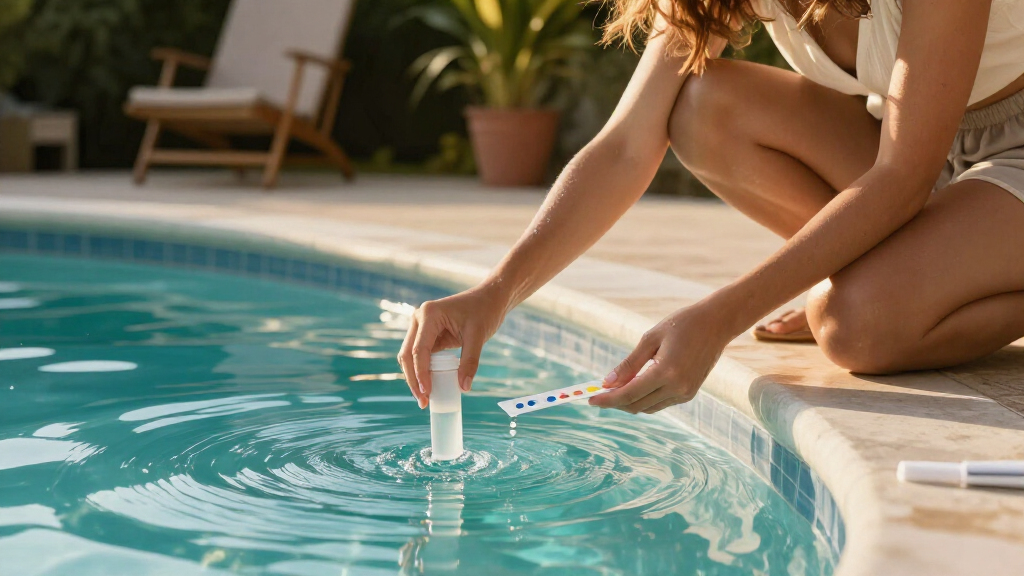
I compared these 15 pool water test kits by the decisions that matter in everyday care: which water factors each format is meant to check, how much work readings require, how easy results are to interpret, and whether the kit suits a pool, spa, or both. I also weighed the testing approach—strips, liquid reagents, or a digital reader—because each serves a different routine. A fast screen is useful for frequent checks; a more involved kit can be a better fit for owners who want more detail before adjusting water.
The ranking favors kits with a clear use case and a good balance of coverage and usability, rather than treating the highest test count as automatically best. The Taylor K-2006C leads for owners seeking a more detailed reagent-based approach, while strip and digital options rank well for speed and easier interpretation. More focused kits appear lower for buyers who need broader coverage, though they may be the sensible choice for simple needs. I also considered practical tradeoffs such as reading charts, managing reagents, and checking whether a kit’s stated scope matches the water being tested.
Factors to Consider When Choosing Pool Water Test Kits
Before choosing among these pool water test kits, start with your testing routine rather than the biggest number printed on the package. The right format depends on how often you test, which readings you need, and how comfortable you are interpreting results. These factors can help you avoid paying for tests you will not use or relying on a quick screen when you need a closer check.
Match the test range to your pool-care decisions
List the readings you actually use to maintain your pool, then check that a kit covers them before comparing formats. A compact chlorine-and-pH kit may be enough for basic checks, but it can leave gaps for owners who monitor more aspects of water balance. A longer list of test parameters is only useful if you understand what each result means and act on it. Pool and spa owners should also check whether the kit is intended for both settings, since the care routine and testing needs may differ. Avoid assuming that “7-in-1” or “9-in-1” means every result you need is included; read the parameter list. If a recurring water issue calls for measurements beyond your everyday kit, treat a broader test as a complement rather than buying based on the count alone.
Choose between strips, reagents, and digital reading
Strips are a practical fit when you want a fast check with little setup, especially if you test often. Their main challenge is reading colors consistently, so strong lighting, following the specified wait time, and matching the chart carefully all matter. Liquid reagent kits add steps and require careful handling, but they can suit owners who prefer a more controlled, hands-on reading process. A digital reader can reduce reliance on visual color matching, though it still depends on the correct strip or test procedure and may involve an app or device workflow. No format removes the need to follow instructions. Pick the one you are most likely to use correctly on a regular schedule.
Balance routine screening with follow-up testing
A quick home test is best treated as part of a routine, not as an infallible answer to every water problem. If a reading changes sharply, conflicts with what you see in the water, or prompts a major chemical adjustment, repeat the test before acting. A more detailed kit can help when you need to investigate a persistent imbalance, while strips can keep ordinary checks convenient. This is a useful reason to own two formats, but not every pool owner needs both. Keep notes on results and chemical changes so you can spot a pattern instead of reacting to one reading. Repeatedly inconsistent results may point to technique, old supplies, or a need for a separate confirmation test.
Check the ongoing work behind the kit
The purchase is only part of the routine: reagents and strips are consumables, and the kit needs proper storage to give useful readings. Before choosing, check what is included, how the tests are performed, and whether replacement supplies for that format are easy for you to manage. Strips are simple to store and use, but moisture or poor handling can compromise them. Reagent kits call for more steps and careful storage of bottles and comparators. Digital kits add a device or app to the routine, so consider whether you want that extra layer. A format that fits your habits is more valuable than one with impressive coverage that sits unused.
Prioritize clarity over headline test counts
Kit labels often emphasize the number of tests or readings, but a higher count does not automatically make a kit easier or more useful. Compare the actual parameters, how each result is read, and whether the instructions suit your level of experience. Beginners may do better with a straightforward routine and a short list of essential checks than with a complicated kit they use inconsistently. Experienced owners may value added detail if they know how it will inform treatment decisions. Check whether the count refers to types of readings, individual tests, or included supplies; those are not interchangeable. The best match is the one whose results you can interpret and use reliably.
Frequently Asked Questions
Are test strips enough for maintaining a home pool?
For routine screening, strips can be a convenient option if they cover the readings you rely on and you follow their timing and color-chart instructions. They are less suitable as the only tool when results are hard to distinguish or a water problem persists. In those cases, repeat the test and use a more detailed method or a suitable confirmation test before making a large adjustment. A strip kit’s test count does not tell you how precisely you can interpret each result. Choose strips for convenience, then have a plan for checking uncertain readings.
Should I choose a digital pool tester instead of color-chart strips?
A digital reader can help if matching strip colors to a chart is frustrating or inconsistent for you. It does not make the testing process automatic: the correct strip, timing, and device instructions still matter. Check whether the reader uses a phone app or another device workflow and whether you are comfortable relying on it at every test. Standard strips avoid that added step and may suit owners who can read their charts confidently. The better choice is the one that gives you results you can interpret without skipping routine checks.
When is a reagent kit a better choice than a test-strip kit?
A reagent kit is a stronger fit when you want a more hands-on test process and broader detail than a quick strip check provides. That can matter when you monitor water closely or want to investigate a reading before changing treatment. The tradeoff is more setup, careful measuring, and reagent storage, so it may be a poor fit for someone who values speed above detail. You also need to follow the kit’s instructions closely to get consistent results. For ordinary screening, strips may be easier; for closer follow-up, a reagent kit can earn its place.
Can one test kit cover both a swimming pool and a hot tub?
Some kits are labeled for pools and spas, but do not assume that a shared label means the same testing routine fits both. Check the instructions and included parameters for the water you plan to test, then confirm the method is suitable for each setting. If you maintain both, consider how often each needs checking and whether one kit’s supplies fit that schedule. A basic kit may cover common checks but still leave out readings you need for one of the two. Choose by the actual instructions and coverage, not just the product name.
What should I do if my kit gives an unexpected or inconsistent reading?
Repeat the test carefully before making a major chemical adjustment, using a fresh sample and the timing and handling steps in the instructions. Check whether the strips or reagents have been stored properly and whether the color or comparator was read under suitable light. Compare the repeated result with recent notes and any changes you made to the water. If readings remain inconsistent, use a different testing method or seek a suitable confirmation test rather than guessing. This helps separate a true water change from an issue with the test process.
Conclusion
For the broadest fit in this lineup, I’d choose the Taylor K-2006C as best overall for owners who want detailed, reagent-based testing and do not mind extra steps. For best value in routine convenience, a 150-count strip kit such as the EASYTEST or 7-in-1 option makes sense when quick screening matters more than a hands-on test process. Beginners may prefer straightforward strips; those who struggle with color matching can look to the AquaDoc Eagle Ray or Wynvex digital kit. For a more involved alternative, the Taylor K-2005, K-1005, or K-1004 offers a different scope and format, so check the included tests before choosing. If your needs are basic, a focused chlorine-and-pH kit may be enough; if you manage both a pool and spa, favor a kit whose instructions and parameters match both. The best choice is the one that fits your water-care routine and gives you readings you can use consistently.
Halloween Picks
halloween
As an affiliate, we earn on qualifying purchases.