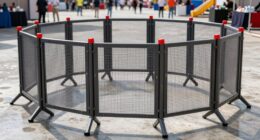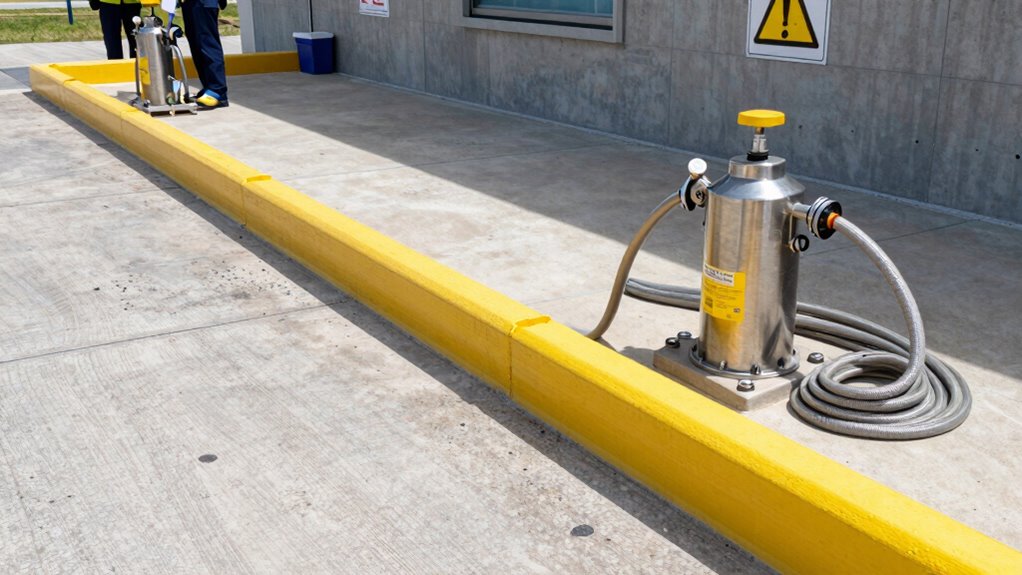
To impress inspectors and guarantee effective spill containment at pump-out zones, you should install berms or spill pallets that create a secondary barrier, preventing leaks from reaching the environment. Regularly inspect these barriers to confirm they’re intact and accessible, and maintain spill response equipment nearby. Properly designed containment not only helps with regulatory compliance but also streamlines cleanup if a spill occurs. Continue to explore best practices to keep your site safe and compliant.
Key Takeaways
- Ensure pump-out zones are equipped with secondary containment berms or spill pallets to capture leaks and prevent environmental contamination.
- Regularly inspect containment barriers for integrity, ensuring they are free of cracks, damage, or blockages.
- Use spill response equipment nearby and keep it accessible for quick cleanup during incidents.
- Implement stormwater management practices to prevent rainwater from mixing with hazardous substances in pump-out areas.
- Maintain documentation of inspections and maintenance to demonstrate regulatory compliance and responsible operation.
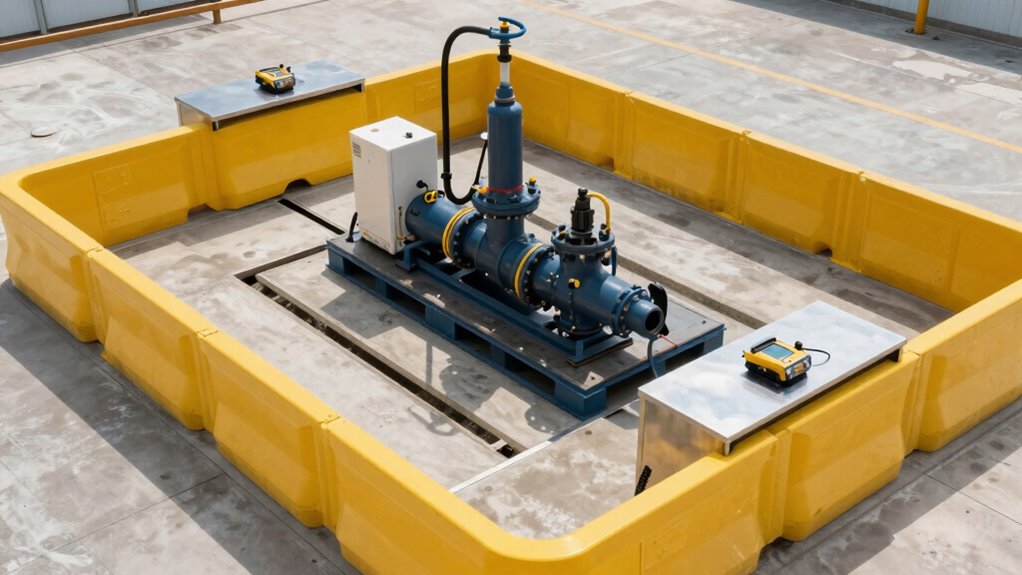
Effective spill containment is indispensable for pump-out zones to prevent environmental contamination and guarantee safety. When you’re managing a pump-out station, you need to prioritize proper spill containment measures that align with stormwater management best practices and meet environmental compliance standards. These elements are essential because they help you avoid costly fines, protect nearby waterways, and maintain a safe environment for workers and the community. By implementing effective spill containment, you create a barrier that captures any accidental releases of fuel, oil, or other hazardous substances before they reach stormwater runoff, ensuring your operations don’t contribute to water pollution.
Proper spill containment safeguards water quality and ensures compliance at pump-out stations.
Stormwater management plays a significant role here, as it involves controlling how rainwater interacts with your pump-out zone. When spills occur, you want to make sure that contaminated water doesn’t get washed away into storm drains or natural bodies of water. Spill containment systems such as berms, spill pallets, and secondary containment barriers are designed specifically to contain leaks and prevent them from escaping into the environment. These systems not only contain spills but also facilitate easy cleanup, reducing the risk of environmental damage and helping you stay compliant with local regulations. When you invest in high-quality containment measures, you’re proactively managing stormwater and reducing the chance of pollutants entering the water system, which can have serious ecological impacts.
Meeting environmental compliance standards isn’t just about avoiding penalties; it’s about doing your part to protect the environment. Regulatory agencies often require pump-out stations to have spill containment systems that are regularly inspected and maintained. When you follow these guidelines, you demonstrate your commitment to responsible operation and environmental stewardship. Regular inspections ensure that containment barriers are intact, spill response equipment is accessible, and any potential issues are addressed promptly. This diligence not only keeps your operation compliant but also reassures clients and stakeholders that you prioritize environmental safety.
In addition, effective spill containment simplifies your spill response procedures. When a spill occurs, a well-designed containment system allows you to quickly isolate and clean up the spill, reducing its impact. This efficiency is imperative because it minimizes environmental harm and demonstrates your commitment to stormwater management and environmental compliance. Furthermore, integrating high-performance spill containment technology can enhance your response capabilities and reduce cleanup time. In the long run, investing in proper spill containment solutions ensures your pump-out zone operates smoothly, adheres to regulations, and protects the environment you depend on. With the right setup, you can confidently manage stormwater, prevent contamination, and maintain a safe, compliant operation that inspectors will appreciate.
Frequently Asked Questions
What Are the Latest Regulations for Spill Containment in Pump-Out Zones?
You need to stay updated on the latest spill containment regulations for pump-out zones to guarantee environmental impact is minimized and regulatory compliance is met. Current rules emphasize proper containment systems, regular inspections, and immediate spill response plans. By adhering to these standards, you reduce risks of contamination, protect the environment, and avoid fines. Keep reviewing local and federal guidelines frequently, as regulations evolve to enhance safety and environmental protection.
How Often Should Spill Containment Systems Be Inspected and Maintained?
You should inspect your spill containment systems regularly, ideally monthly, to guarantee they’re functioning properly. Follow your maintenance schedules diligently, checking for leaks, cracks, or damage. Keep detailed records of inspections and repairs, and promptly address any issues. Consistent inspection frequency and routine maintenance help prevent spills, keep your system compliant, and satisfy inspector requirements, ultimately protecting the environment and your operations.
What Materials Are Most Effective for Spill Containment Barriers?
You should choose absorbent materials like pads, mats, or booms, which quickly soak up spills and prevent spreading. For barrier durability, opt for heavy-duty, chemical-resistant materials like high-density polyethylene or rubber that withstand weather and chemical exposure. These materials guarantee your spill containment barriers remain effective over time, providing reliable protection. Regularly inspect and replace them as needed to maintain peak containment and comply with safety standards.
Can Portable Spill Containment Solutions Be Used Temporarily?
Sure, you can absolutely use portable spill containment solutions temporarily. It’s ironic how something labeled “portable” can handle a temporary setup with such reliability. These flexible, easy-to-deploy options are perfect for short-term needs, allowing you to quickly contain spills during pump-out zones. Just make certain they’re properly positioned and maintained, so inspectors see you’re serious about spill management—even if it’s just for a little while.
What Are the Cost Considerations for Different Spill Containment Options?
When evaluating spill containment options, you should conduct a thorough cost analysis to compare initial expenses, ongoing maintenance, and replacement costs. Portable solutions may have lower upfront costs but could add to long-term expenses if frequent replacements are needed. Incorporate these findings into your budget planning to guarantee you select the most cost-effective option that meets safety and regulatory requirements, balancing affordability with reliability.
Conclusion
Don’t let spill concerns hold you back. Proper containment for pump-out zones isn’t just a good idea—it’s essential for compliance and safety. Some might worry it’s costly or complicated, but the setup is straightforward and cost-effective in the long run. By investing now, you prevent costly cleanup and protect your environment. Take action today—spill containment isn’t just an option, it’s a responsibility you can’t afford to ignore.