
Using hot water for outdoor handwashing helps remove germs more effectively and makes the experience more comfortable, especially in dirty environments. However, you should avoid hot water when it’s too hot to prevent burns, particularly for children or elderly folks. When quick rinses or cold environments don’t require deep cleaning, lukewarm or cold water may suffice. To guarantee safety and hygiene, it’s important to know when hot water is beneficial—and when to skip it. Keep going to discover more tips for safe outdoor handwashing.
Key Takeaways
- Use hot water when thorough germ removal is needed, especially in dirty or bacteria-prone environments.
- Avoid hot water for quick rinses or when water temperature cannot be safely controlled.
- Ensure water is between 100°F and 110°F to prevent burns and maximize comfort during outdoor handwashing.
- Hot water is unnecessary for brief rinses; lukewarm or cold water suffices for simple rinsing tasks.
- Employ portable heaters or solar water bags to safely supply hot water in outdoor settings when needed.

When you’re outdoors, having access to clean, hot water for handwashing can make a significant difference in maintaining hygiene. It’s especially important in environments where dirt, bacteria, or viruses are prevalent, and where regular soap and water aren’t always readily available. Hot water not only helps remove germs more effectively but also provides a more comfortable and satisfying washing experience. However, when considering outdoor handwashing, you need to think about bathing safety and water temperature control. Making sure the water is at the right temperature is essential for both effectiveness and safety.
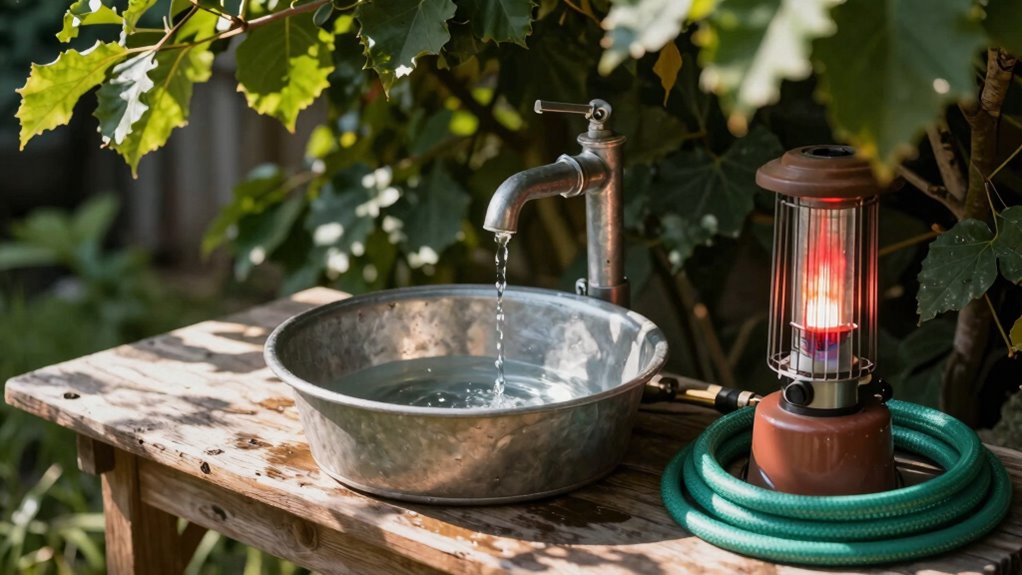
Bathing safety isn’t just about avoiding burns; it also involves maintaining proper water temperature control. If the water is too hot, you risk scalding your skin, especially if you’re washing children or elderly family members. Conversely, water that’s too cold might discourage thorough handwashing, reducing its effectiveness. To guarantee safety, always test the water temperature before washing your hands. Ideally, it should be warm enough to feel comfortable but not so hot that it causes discomfort or burns. Using a thermometer or simple touch test can help you set the ideal temperature, typically around 100°F to 110°F (38°C to 43°C). Controlling water temperature outdoors can be tricky, especially if you’re relying on portable heating devices or improvised methods. Many portable water heaters or solar water bags come with adjustable temperature controls, making it easier to reach and maintain the perfect warmth. If you’re using a fire-heated water source, always let the water cool slightly after boiling before use. Remember, safety comes first—burns from hot water can happen quickly, and it’s better to err on the side of caution.
Having hot water available for outdoor handwashing can also influence your hygiene habits. When the water feels comfortably warm, you’re more likely to wash thoroughly, scrubbing away dirt and germs for the recommended 20 seconds. This not only helps prevent illness but also keeps your hands feeling clean and refreshed. But it’s essential to recognize when hot water isn’t necessary—if you’re just rinsing off after a quick outdoor activity, lukewarm or even cold water may suffice. Energy-efficient water heating solutions can help make outdoor handwashing safer and more convenient, especially in remote or off-grid settings.
Frequently Asked Questions
How Much Does Portable Hot Water Equipment Typically Cost?
Portable hot water equipment usually costs between $200 and $1,200, depending on the size and features. Budget options like small, gas-powered units can be as low as $200, while larger, more durable models with higher capacity may reach $1,200 or more. Your choice depends on your needs, frequency of use, and budget estimates. Consider these factors to find the right balance between affordability and performance for outdoor handwashing.
Can Solar-Powered Systems Provide Adequate Hot Water Outdoors?
Can solar-powered systems provide adequate hot water outdoors? Absolutely, if you choose a system with high solar efficiency and robust system durability. These systems harness sunlight effectively, even in less sunny conditions, ensuring consistent hot water supply. You’ll want to verify that the system is built to withstand outdoor elements, offering long-term performance. With proper sizing and quality components, solar-powered hot water solutions are reliable for outdoor handwashing needs.
What Safety Precautions Are Necessary for Outdoor Hot Water Setups?
You should always wear safety gear like gloves and goggles when handling outdoor hot water systems. Follow installation guidelines carefully to prevent leaks and burns. Make certain all connections are secure, and keep the setup away from children or pets. Regularly inspect for corrosion or damage, and turn off the system before maintenance. These precautions keep you safe and ensure your outdoor hot water setup functions efficiently.
How Long Does a Portable Hot Water Heater Typically Last?
Imagine a loyal companion, ready to serve whenever you need hot water—your portable heater typically lasts 5 to 10 years with proper care. Its durability lifespan depends on quality and maintenance requirements. Regularly flushing the system, checking for leaks, and protecting it from harsh weather can extend its life. Treat it well, and it’ll be there for countless outdoor adventures, providing comfort and convenience every time.
Is Hot Water Necessary for Outdoor Handwashing in Cold Climates?
In cold climates, hot water isn’t strictly necessary for outdoor handwashing, but it greatly improves hygiene. You’ll find that hot water helps remove germs more effectively, especially in freezing temperatures where cold water may be less comfortable or less effective at cleaning. If maintaining good handwashing hygiene is a priority, using hot water can make a noticeable difference, ensuring your hands are thoroughly cleaned and protected from cold-weather germs.
Conclusion
When it comes to outdoor handwashing, hot water is your trusty sidekick, ready to banish germs like a fiery knight. But remember, sometimes cool or even lukewarm water can do the trick just fine—it’s all about knowing when to summon the heat and when to let nature’s chill do its work. So, keep your hands clean and your choices smart, and you’ll stay safe no matter the season. Your outdoor cleaning adventure is always within reach.