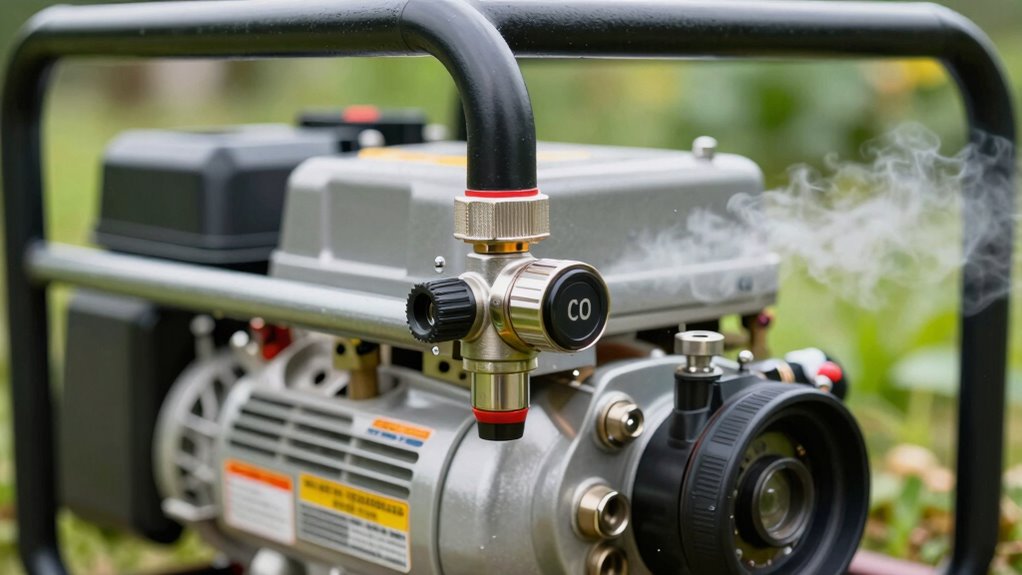

To stay safe with outdoor power equipment, always guarantee it has a functioning CO shutoff or alarm system that detects dangerous gas levels. Never operate equipment in enclosed or semi-enclosed spaces, like garages or sheds, even if doors are open. Always use equipment outdoors in open air, follow safety and maintenance guidelines, and install carbon monoxide detectors nearby. Staying aware of these rules helps prevent deadly CO buildup; more important tips await to keep you safe.
Key Takeaways
- Use CO detectors in garages and near outdoor equipment to detect dangerous levels early.
- Never run outdoor power tools indoors or in enclosed spaces to prevent CO buildup.
- Ensure proper ventilation and keep equipment outside, away from windows and vents during operation.
- Regularly inspect and maintain equipment to prevent malfunctions that could increase CO emissions.
- Follow manufacturer guidelines for safe shutdown and storage to avoid accidental CO hazards.
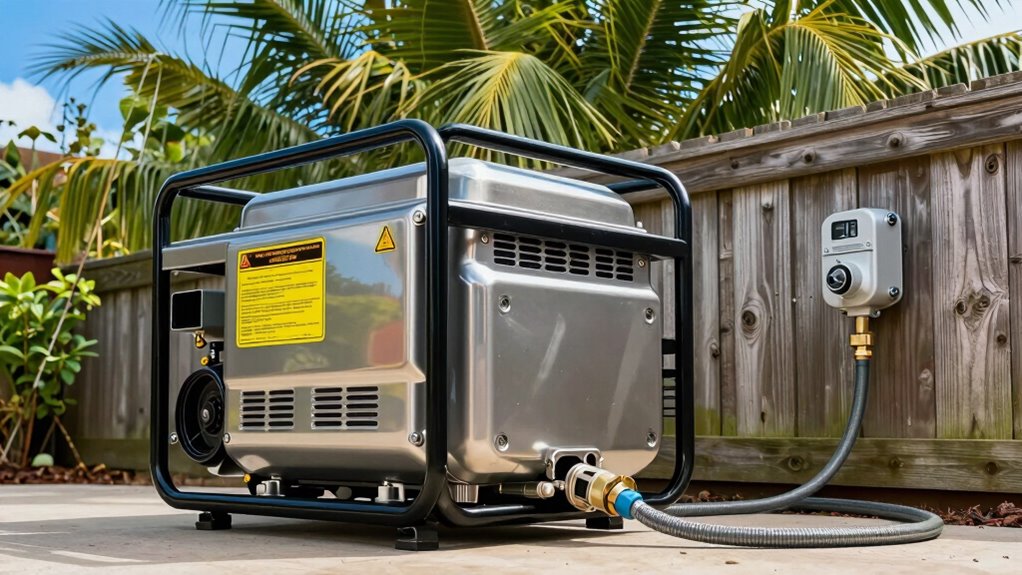
Outdoor power equipment running on gas can produce dangerous carbon monoxide (CO) fumes if not properly maintained or used in enclosed spaces. It’s essential to understand the risks and follow safety precautions to prevent CO poisoning. Carbon monoxide is a colorless, odorless gas that can quickly build up indoors or in poorly ventilated areas, making it deadly. When operating equipment like lawnmowers, generators, or leaf blowers, always ensure they are used outdoors in open air, away from windows, doors, and vents. Never run these machines inside garages, sheds, or basements, even if doors are open, because CO can accumulate rapidly and pose a serious threat.
To stay safe, you need to follow necessary safety precautions. Always read and adhere to the manufacturer’s instructions for each piece of equipment. Wearing proper protective gear, such as gloves and eye protection, helps prevent accidents, but safety also involves awareness of the environment. Keep children and pets away from running equipment, and never refuel engines near open flames or in enclosed spaces. After use, turn off the equipment and allow it to cool before storing it in a well-ventilated area. Regularly inspecting your outdoor power tools is essential—look for fuel leaks, damaged cords, or loose parts. Maintenance tips include cleaning air filters, checking spark plugs, and ensuring mufflers are in good condition. Proper maintenance not only prolongs the lifespan of your equipment but also minimizes the risk of malfunctions that could lead to dangerous CO emissions.
In addition to routine maintenance, using carbon monoxide detectors in your home and garage provides an extra layer of safety. These devices alert you immediately if CO levels become unsafe, giving you time to evacuate and ventilate the area. Remember, a small oversight can have serious consequences. For instance, forgetting to start a generator outside or running a mower in a semi-enclosed space can escalate into hazardous CO buildup. Being proactive with maintenance tips, such as replacing worn-out parts and checking ventilation pathways, can greatly reduce risks. Always ensure your outdoor power equipment is in good condition before use, and never underestimate the importance of safety precautions. Protecting yourself, your family, and your pets from CO exposure depends on your vigilance and adherence to these guidelines. By staying informed and cautious, you can enjoy the benefits of outdoor power equipment without risking your health. Additionally, understanding CO shutoff mechanisms can help mitigate potential hazards from malfunctioning equipment.
Frequently Asked Questions
How Often Should CO Detectors Be Tested and Replaced?
You should test your CO detectors at least once a month to ensure sensor maintenance is current. Replace the detectors every 5 to 7 years, depending on the manufacturer’s guidelines, to maintain ideal sensor lifespan. Regular testing helps detect any malfunctions early, while timely replacement guarantees continued safety from carbon monoxide risks. Keep track of these schedules to protect yourself and your loved ones effectively.
Are Portable Outdoor Power Equipment CO Alarms Required by Law?
Yes, portable outdoor power equipment CO alarms are often mandated by law in many areas to guarantee outdoor safety. These portable alarms help alert you to dangerous carbon monoxide levels when using generators, lawnmowers, or other outdoor power tools. Regulations vary by location, so check your local laws. Installing and maintaining these alarms can prevent CO poisoning and keep you safe during outdoor activities involving fuel-powered equipment.
What Are the Signs of CO Poisoning From Outdoor Equipment?
Think of your body as a lighthouse, alerting you to danger. Symptoms of CO poisoning from outdoor equipment include headache, dizziness, nausea, or confusion—like signals flickering in your mind. Recognize these signs early for prompt emergency response, such as moving to fresh air immediately. Ignoring symptom recognition can lead to serious health risks. Stay vigilant, treat CO exposure as an urgent warning, and prioritize your safety.
Can CO Shutoff Devices Be Installed on Existing Outdoor Power Tools?
Yes, you can install CO shutoff devices on existing outdoor power tools. These devices enhance outdoor safety by providing CO detection, alerting you to dangerous levels of carbon monoxide. Installing a CO shutoff helps prevent CO poisoning by automatically shutting down equipment when unsafe conditions are detected. Make sure you choose compatible, high-quality devices and follow installation instructions carefully to guarantee effective protection and peace of mind during outdoor use.
How Do Weather COnditions Affect CO Buildup and Detection Outdoors?
Weather influence markedly affects CO buildup and detection outdoors. Cold temperatures can cause CO to linger near the ground, increasing the risk of exposure. Wind can disperse CO, making detection challenging as it dilutes the concentration. Rain and humidity can also impact sensor performance, potentially causing false alarms or delayed detection. You should be aware that changing weather conditions can complicate outdoor CO monitoring, so always use reliable sensors suited for outdoor environments.
Conclusion
Now that you know the rules for outdoor power equipment and CO shutoff devices, it’s vital to stay safe. Remember, carbon monoxide is silent and deadly—you’re 40 times more likely to die from CO poisoning indoors if you’re not careful. By following these guidelines, you protect yourself and your loved ones. Keep safety at the forefront, and always make certain proper ventilation and CO alarms are in place. Your awareness can make all the difference in preventing tragedy.