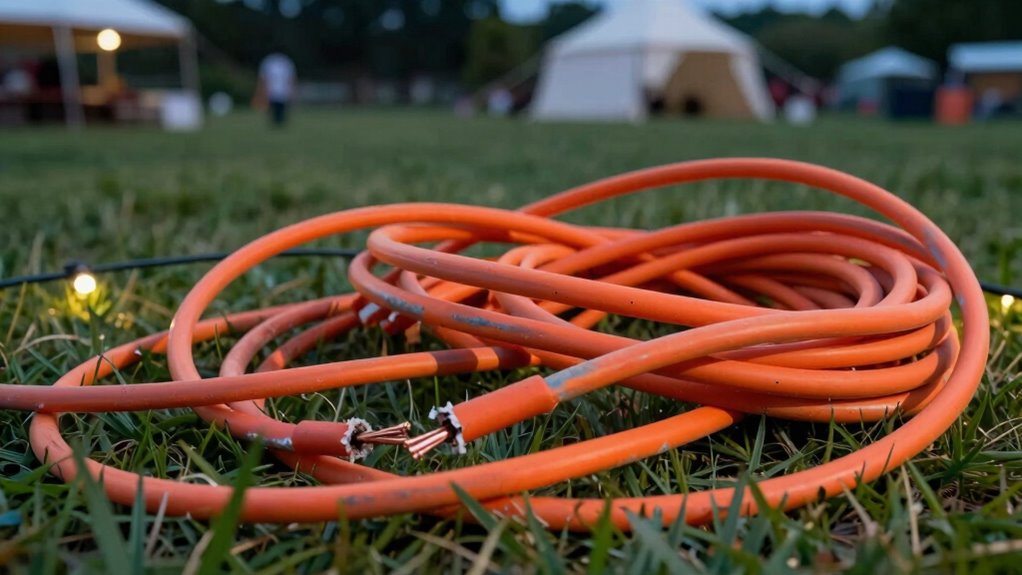

Using the wrong gauge extension cords for outdoor events is a common mistake that can cause overheating and electrical hazards. If you choose a cord with too thin wire (a higher gauge number), it won’t handle high wattage devices properly, leading to increased resistance and heat buildup. Longer cords or multiple connections amplify this risk. To stay safe, always select outdoor-rated cords with the appropriate gauge—stick around to discover how proper selection can prevent these dangers.
Key Takeaways
- Using cords with too small a gauge (higher numbers like 16 or 18) increases resistance and heat during high-wattage outdoor event use.
- Overlong extension cords of inadequate gauge can cause resistance buildup, leading to overheating and potential electrical fires.
- Daisy-chaining multiple cords without proper gauge or capacity elevates heat risk and electrical faults.
- Selecting cords with the correct gauge (12 or 14) for the device wattage prevents heat accumulation and safety hazards.
- Proper storage and inspection of cords ensure insulation integrity, reducing internal heat buildup during outdoor events.
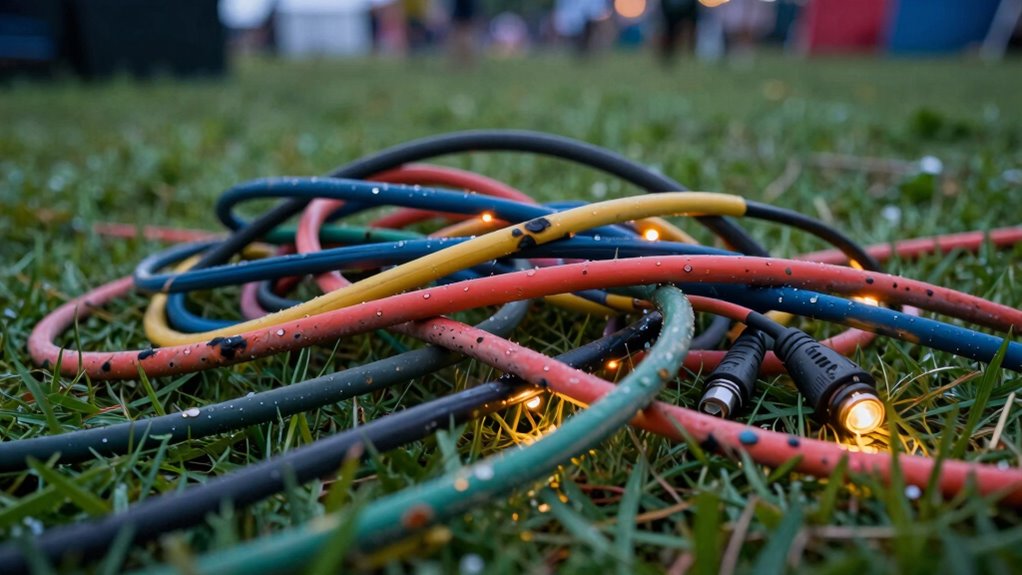
Hosting outdoor events often requires reliable power sources, and extension cords are essential for safely connecting multiple devices and equipment. However, using the wrong type or size of extension cord can lead to dangerous situations, especially issues related to heat buildup. To prevent this, you must pay close attention to safety precautions and proper cord storage. Knowing how to select and handle extension cords properly keeps everyone safe and your event running smoothly.
First, always choose the right gauge of extension cord for the job. Using a cord with a wire gauge that’s too thin for the power load causes it to overheat, increasing the risk of fire or damage to your equipment. For outdoor events, heavy-duty cords with at least 14-gauge or 12-gauge wire are recommended, especially when powering high-wattage devices like speakers, lighting, or appliances. This helps ensure the cord can safely handle the current without excessive heat. Remember, the larger the gauge number, the thinner the wire, and the higher the risk of overheating. Always check the manufacturer’s specifications and avoid the temptation to use a longer cord with a smaller gauge, as resistance increases with length, further raising heat concerns.
Choose heavy-duty extension cords (12-14 gauge) to safely power high-wattage devices outdoors and prevent overheating risks.
Safety precautions are crucial when working with extension cords outdoors. Never overload a cord by plugging in too many devices, and avoid daisy-chaining multiple cords together. Instead, use a single, appropriately rated extension cord capable of handling the total load. Keep cords away from high-traffic areas to prevent tripping hazards and potential damage. It’s also essential to keep cords dry and protected from moisture, water, or snow, which can cause shorts and increase heat risks. Regularly inspect cords for cuts, frays, or damage, and replace any compromised cords immediately. Using outdoor-rated extension cords with proper insulation minimizes the chance of electrical faults and overheating. Additionally, understanding the fundamentals of electrical resistance can help you choose cords that minimize heat buildup and ensure safety.
Proper cord storage after the event is equally important. Once you’re finished, coil the extension cords loosely to prevent kinks or damage to the wires. Store them in a cool, dry place away from direct sunlight and extreme temperatures, which can degrade the insulation over time. Proper storage not only extends the life of your cords but also keeps them in excellent condition for future use, reducing the risk of heat-related issues caused by damaged insulation or internal wiring.
Frequently Asked Questions
How Can I Tell if My Extension Cord Is Outdoor-Rated?
To tell if your extension cord is outdoor-rated, look for weatherproof insulation and durable construction. Check for labels or markings indicating it’s designed for outdoor use, like “W” or “W-A” on the plug or jacket. Outdoor-rated cords are built to withstand moisture, UV rays, and temperature changes, ensuring safety and longevity. Always verify these features before use to prevent overheating and damage during outdoor events.
What Are the Signs of an Overheated Extension Cord?
If your extension cord feels hot to the touch, it’s a clear sign of overheating. You might notice a sizzling smell or see the cord’s insulation melting or discoloring, which are indoor hazards turned outdoor problem signs. Always inspect for signs like frayed wiring or a burnt odor, as these indicate the cord’s insulation is compromised, risking electrical hazards. Avoid using damaged cords to prevent potential fires or shocks.
Are Thicker Gauge Cords Always Safer for Outdoor Use?
Thicker gauge cords aren’t always safer for outdoor use if the gauge size isn’t appropriate for your power needs. A larger gauge reduces resistance and heat, but you also need to take into account the cord insulation quality to prevent damage from weather and physical stress. Always match the gauge size to your equipment’s amperage requirements and choose outdoor-rated cords with proper insulation, ensuring safety and preventing overheating during outdoor events.
How Long Can I Safely Run an Extension Cord Outdoors?
You can generally run an extension cord outdoors for up to 100 feet, but it depends on your appliance’s power ratings and cord gauge. Always check the cord’s label for recommended length limitations, especially for high-wattage devices. Using a cord longer than its safe length can cause voltage drops and overheating. To stay safe, use a heavier gauge cord for longer distances and make sure it’s rated for outdoor use.
What Safety Precautions Should I Take During Outdoor Events?
Think of your outdoor event as a well-oiled machine; you need safety precautions to keep it running smoothly. Always check weather conditions, especially rain or wind, which can turn a simple setup into a fire safety hazard. Use outdoor-rated extension cords with proper gauge, avoid overloading circuits, and keep cords away from water and high traffic areas. Regularly inspect cords for damage, ensuring your event stays safe and enjoyable for everyone.
Conclusion
To keep your outdoor event safe and running smoothly, choosing the right extension cord gauge is essential. Don’t let a small mistake turn into a big problem—think of it as putting all your eggs in one basket. By paying attention to the cord’s gauge and avoiding shortcuts, you guarantee everyone stays safe and your equipment works flawlessly. Remember, a little caution now saves you from a headache later; it’s better to be safe than sorry.