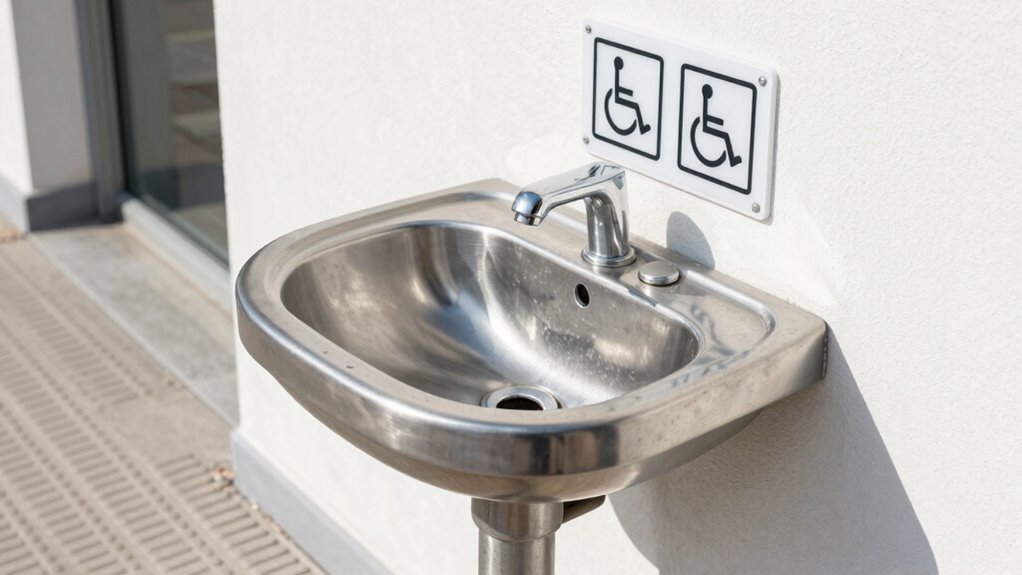
To comply with ADA clearance rules for handwashing stations, guarantee the sink is no higher than 34 inches from the floor and leaves enough knee space for wheelchair users—typically 27 inches high, 30 inches wide, and 19 inches deep. Controls should be easy to operate with limited strength, like lever handles. Proper clearance around the station also matters. Keep these guidelines in mind to avoid violations—continue exploring more details to ensure full compliance.
Key Takeaways
- Sink height should not exceed 34 inches from the floor for wheelchair accessibility.
- Ensure at least 27 inches of knee clearance underneath the sink for seated users.
- Clear space around the station must be sufficient for easy wheelchair navigation and access.
- Controls, such as lever handles, should be operable with limited hand strength and reach.
- Proper installation and maintenance are essential to uphold ADA clearance and prevent violations.
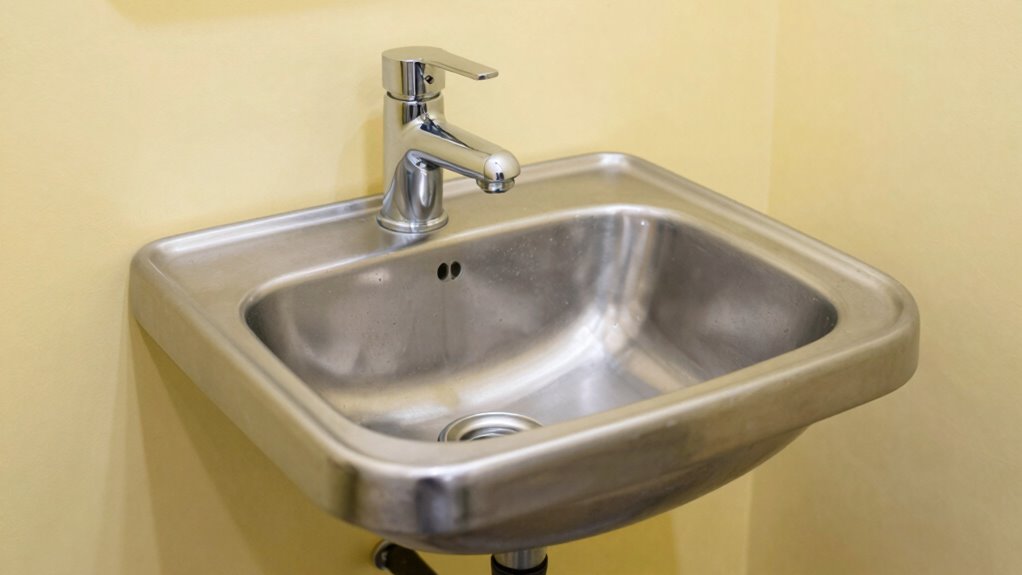
Accessible handwashing stations are essential for ensuring everyone can maintain proper hygiene, especially individuals with disabilities. When designing or installing these stations, you must prioritize accessible features that comply with ADA standards. These features include appropriate height, clear space around the station, and controls that are easy to operate for all users. For example, the sink should be mounted no more than 34 inches above the floor, with enough knee clearance underneath to allow wheelchair users to comfortably reach the faucet and soap dispenser. Lever-style handles are preferred because they’re easier to operate than traditional knobs, especially for those with limited hand strength. Making sure these accessible features are incorporated from the start helps create an inclusive environment and reduces the risk of violations during inspections. Proper ventilation considerations are also crucial to prevent moisture buildup and maintain a sanitary environment around handwashing stations.
However, simply installing accessible handwashing stations isn’t enough. Regular maintenance protocols are vital to keep these facilities functional and compliant over time. Maintenance should include routine checks to verify that controls work smoothly, the water temperature remains within safe limits, and soap and paper towel dispensers are stocked and operational. You should also inspect for any physical damage or wear that could hinder accessibility, such as loose fixtures or obstructed pathways. Keeping the area clean and dry is equally important to prevent slips and falls, especially since water and soap can create hazards if not properly managed. Establishing clear maintenance schedules helps guarantee that issues are addressed promptly, preventing ADA violations and ensuring the station remains accessible and safe for everyone.
It’s important to document all maintenance activities. Records of inspections, repairs, and replacement of fixtures not only demonstrate compliance but also help identify recurring issues that might require more significant upgrades. When repairs are needed, prioritize those that restore or enhance accessibility features. For instance, if a faucet handle becomes difficult to operate, replace it with an easy-to-use lever. Also, consider training staff or maintenance personnel on ADA requirements and proper upkeep procedures so they understand the importance of maintaining accessible features. This proactive approach minimizes downtime and guarantees that the station continues to serve all users effectively.
Frequently Asked Questions
Are Portable ADA Handwashing Stations Compliant With All Regulations?
Yes, portable ADA handwashing stations can be compliant if they meet all the necessary regulations. Make certain station portability doesn’t compromise accessibility by adhering to clearance rules, proper height, and reach ranges. Check that the portable design allows for proper maneuvering space and stable installation. By prioritizing portable compliance, you guarantee the station remains accessible for all users, regardless of mobility impairments, while maintaining flexibility for different locations.
How Often Must ADA Handwashing Stations Be Inspected for Compliance?
Have you considered how often you should inspect your ADA handwashing stations? You need to conduct inspections at least once a month to ensure compliance standards are met. Regular inspections help identify issues early, preventing violations and maintaining accessibility. Staying diligent with your inspection frequency guarantees your stations remain compliant, safe, and functional for all users. Don’t wait for problems to arise—consistent inspections are key to ongoing ADA compliance.
What Maintenance Is Required to Keep ADA Stations ADA Compliant?
To keep ADA stations compliant, you must regularly inspect ADA signage to guarantee it’s visible and properly placed. Check the water temperature to confirm it stays within the safe range, typically around 105°F. Clean and maintain the fixtures to prevent buildup or leaks, and verify that the accessible clearances remain unobstructed. Regularly reviewing these aspects ensures your station continues to meet ADA requirements and provides safe, accessible use.
Can ADA Handwashing Stations Be Installed Outdoors?
Yes, you can install ADA handwashing stations outdoors, but you need to take into account outdoor installation requirements. Ensure the station has weather resistance features to withstand rain, snow, and temperature fluctuations. Proper shielding or enclosures help protect the station and maintain compliance. You also need to follow ADA clearance rules, ensuring accessible height and space for users. With the right weather-resistant design, outdoor ADA stations can be functional and compliant.
Are There Specific Materials Recommended for ADA Handwashing Station Durability?
You should choose materials with high durability and vandal-resistant surfaces for ADA handwashing stations. Stainless steel is a popular option because it’s tough, easy to clean, and resists corrosion. Polycarbonate and heavy-duty plastics also offer excellent durability, especially in outdoor settings. Prioritizing these materials guarantees your station withstands daily wear and tear, remains accessible, and maintains a professional appearance over time.
Conclusion
You can’t afford to overlook ADA handwashing station clearance rules—they’re the backbone of accessible, compliant facilities. Missing even a small detail could turn a simple setup into a legal nightmare faster than you can say “compliance violation.” Stay vigilant, double-check measurements, and prioritize accessibility. Remember, these rules aren’t just suggestions; they’re the difference between a smooth-running space and a costly lawsuit. Follow the guidelines closely—your reputation and peace of mind depend on it!