Relying solely on portable solar panels for off-grid events can lead to power failures, especially during cloudy days or at night. Without adequate battery storage, your setup won’t provide consistent energy, risking event disruptions. Proper planning involves evaluating your equipment needs, sizing batteries correctly, and considering weather factors. If you want to avoid last-minute surprises and ensure continuous power, it’s essential to understand the realities and limitations—more insights await you.
Key Takeaways
- Always assess total energy needs and event duration to determine appropriate panel and battery capacity.
- Portable solar panels are suitable for short-term use but may require supplementation for larger or longer events.
- Battery storage is essential to ensure power during night-time or cloudy conditions, making a hybrid system advantageous.
- Weather variability impacts solar efficiency; plan for extra capacity or larger panels to compensate.
- Consider future technology advancements and hybrid setups to enhance reliability, portability, and overall event power sustainability.
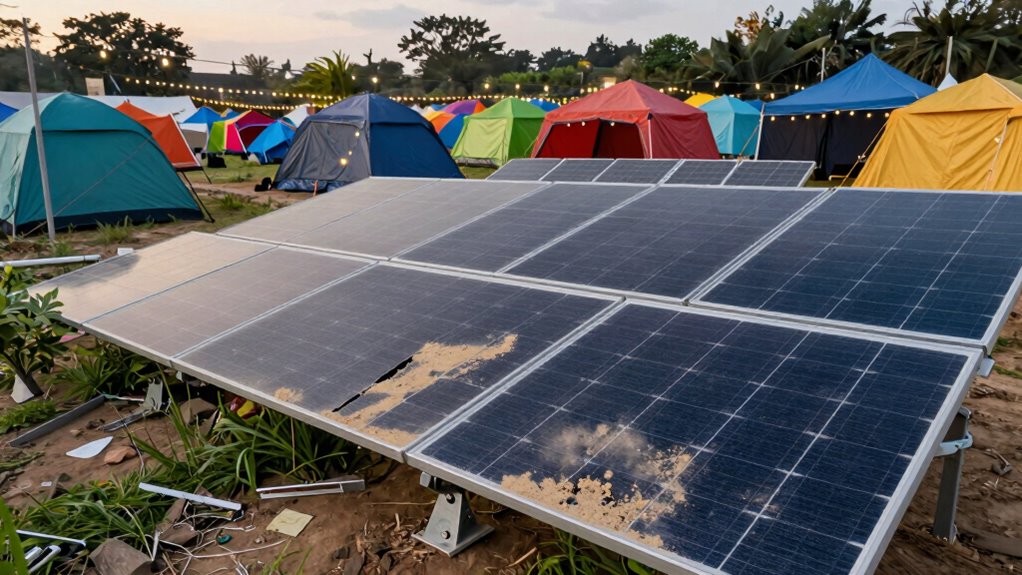
Hosting an off-grid event can be both exciting and challenging, especially when it comes to powering your equipment and lighting. Without access to traditional power sources, you need reliable solutions that keep everything running smoothly. Solar energy offers a compelling option, but before you dive in to buying panels, it’s vital to understand what’s involved. One of the key components you’ll want to consider is battery storage. Solar panels generate electricity during the day, but your event might run into the evening or overnight. Battery storage lets you store excess energy collected during sunlight hours so you can draw from it when the sun isn’t shining. This guarantees your lighting stays bright and your equipment stays powered, regardless of the time of day.
Battery storage ensures your off-grid event stays powered through night and cloudy days.
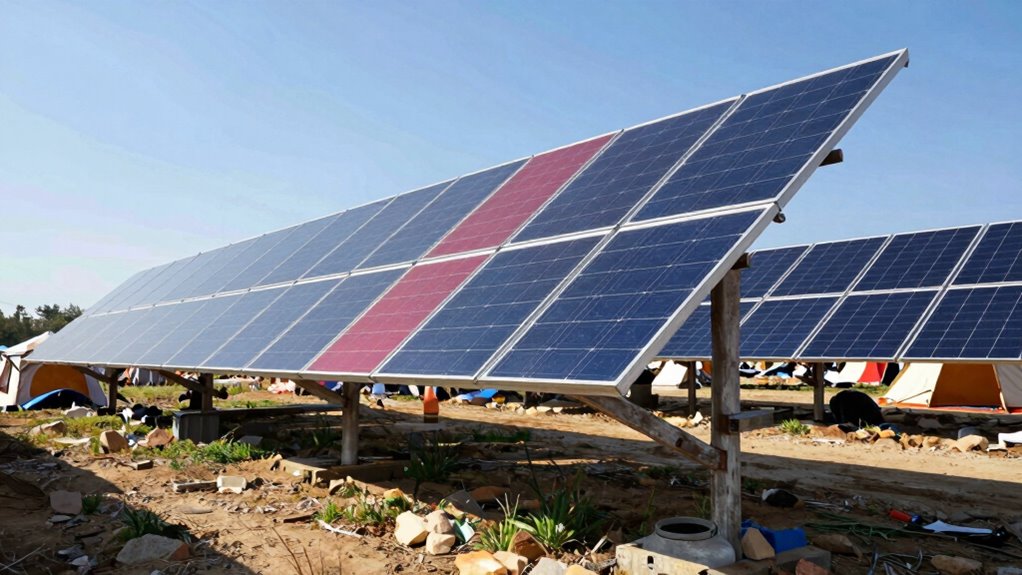
When evaluating solar options, portable panels are often appealing because they’re easy to set up and transport. These are lightweight, foldable, and designed for mobility, making them perfect for temporary events. However, their size and wattage capacity are limited compared to larger, stationary systems. This means you need to carefully assess your energy needs and determine whether portable panels can generate enough power to meet your demands. If your event requires running multiple devices, sound systems, or lighting for an extended period, relying solely on small portable panels might not suffice. You’ll need to combine them with a robust battery storage system to guarantee continuous power.
Another important factor is understanding your energy consumption. List out all the equipment you plan to run and their wattage. This will help you estimate how many solar panels and how much battery capacity you’ll need. Keep in mind that solar panels don’t produce electricity at night, so your battery storage must be large enough to hold enough energy for your entire event. It’s also wise to factor in some extra capacity for unexpected needs or cloudy days. In practice, you might find that a hybrid setup using portable panels to charge a sizable battery bank offers the best balance of portability and reliability. Additionally, considering the advancements in nanotechnology can lead to more efficient and durable solar solutions in the future, further enhancing off-grid power systems.
Finally, consider the weather and location of your event. Cloudy or rainy conditions reduce solar efficiency, which means you’ll need more panels or larger batteries to compensate. Planning ahead and investing in quality battery storage and appropriately sized portable panels ensures your off-grid event remains powered without surprises. Making informed choices now means you’ll avoid last-minute power struggles and enjoy a smooth, successful event powered sustainably by the sun.
Frequently Asked Questions
How Long Do Off-Grid Solar Panels Typically Last?
Off-grid solar panels typically last 25 to 30 years, but their efficiency declines over time. You’ll notice a gradual decrease in panel efficiency, which means you’ll generate less power as they age. Battery lifespan is also vital; most off-grid systems rely on batteries lasting 5 to 15 years. Proper maintenance can extend both panel efficiency and battery life, ensuring your setup remains reliable for years to come.
Can Solar Panels Handle Extreme Weather Conditions?
Yes, solar panels can handle extreme weather conditions thanks to their durability and weather resilience. Modern panels are built with tough materials that resist high winds, heavy snow, hail, and even intense heat. You should choose high-quality panels with proven solar panel durability, ensuring they perform well in harsh environments. Proper installation and maintenance also boost their resilience, so you can rely on your solar system to withstand extreme weather events.
What Maintenance Is Required for Off-Grid Solar Setups?
You’ll need to stay on top of your off-grid solar setup, or it’ll throw a tantrum. Regularly check your inverter and perform battery maintenance—think of it as a spa day for your system. Keep dust and debris off panels, ensure wiring stays tight, and monitor performance. A little routine TLC keeps your solar system happy, efficient, and prepared to power your event without surprise solar drama.
Are There Government Incentives for Off-Grid Solar Systems?
Yes, there are government rebates and policy incentives available for off-grid solar systems. You should check local, state, or federal programs that offer financial support or tax credits, which can substantially reduce your upfront costs. These incentives encourage renewable energy adoption and can make off-grid solar more affordable. Make sure to research specific eligibility requirements and application procedures to maximize your benefits.
How Do I Calculate the Total Energy Needs for My Event?
To calculate your energy needs for the event, start by listing all equipment and their power requirements in watts. Estimate how many hours each device will run, then multiply power consumption by hours to find energy consumption in watt-hours. Add these totals to determine your overall energy consumption. This helps you plan the right number of solar panels and storage capacity, ensuring your off-grid event runs smoothly without power shortages.
Conclusion
Before you invest in solar panels for off-grid events, remember it’s not a magic bullet that’ll power the entire universe. Do your homework, consider your energy needs, and factor in the unpredictable nature of weather. Rushing in without a plan is like trying to tame a wildfire with a garden hose. With careful planning, you’ll harness the sun’s power efficiently—making your event shine brighter than a thousand suns, without burning out prematurely.