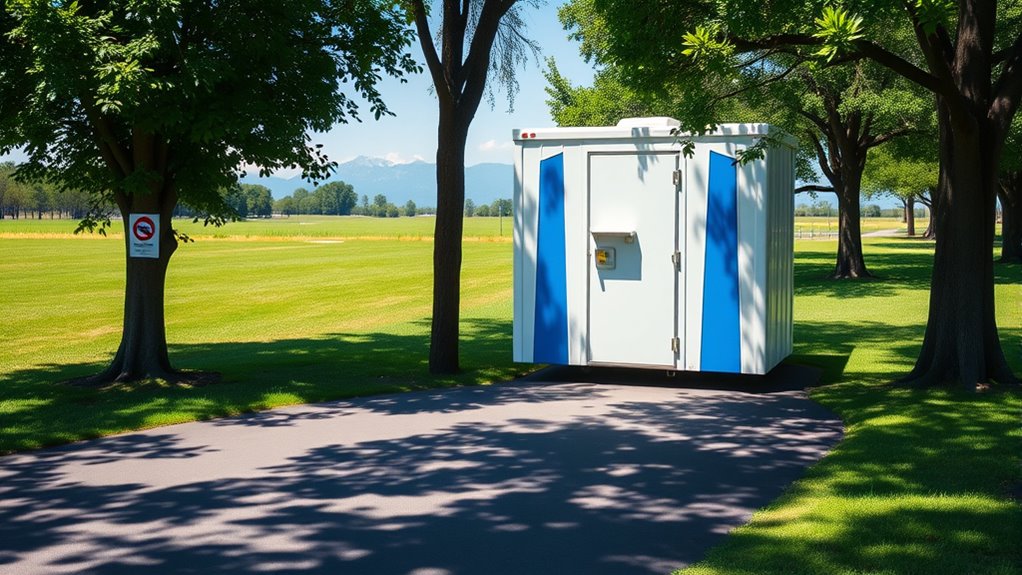

Before installing temporary restrooms on public lands, you need to obtain proper permits from relevant land management agencies. This involves submitting detailed applications that outline your project scope, restroom types, and placement plans, all while complying with environmental and safety regulations. You must follow specific placement and sanitation standards to avoid fines or project delays. To guarantee a smooth process, it’s important to understand the land’s policies — more details will help you navigate their requirements effectively.

Get pool and patio gear delivered free with Prime
- Fast, free delivery on millions of items
- Prime Video, Amazon Music and more included
- Member-only deals all year
Key Takeaways
- Obtain necessary permits from land management agencies before installing temporary restrooms.
- Submit detailed applications including site plans, restroom specifications, and project duration.
- Ensure restroom placement complies with environmental regulations, avoiding water sources and sensitive habitats.
- Follow installation and sanitation guidelines to prevent fines and project delays.
- Maintain ongoing communication with managing agencies for inspections and adherence to land access policies.
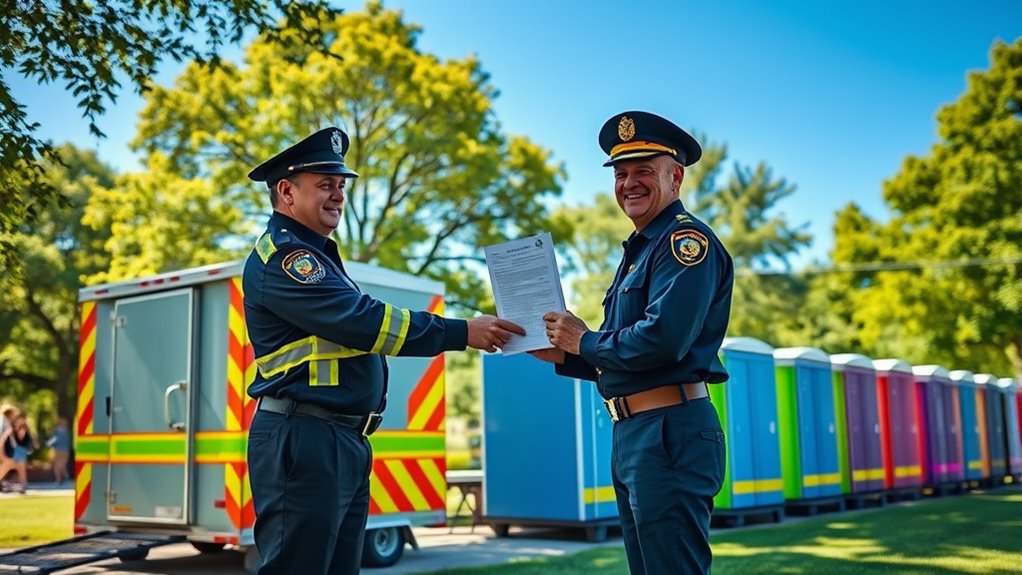
Are you planning an event or construction project on public land that requires temporary restrooms? If so, understanding the restroom regulations and land access policies is vital to ensure your project runs smoothly and legally. Public lands are managed by government agencies, each with specific rules governing their use. These regulations are in place to protect the environment, maintain safety, and ensure fair access for all users. Before installing any portable restrooms, you need to familiarize yourself with these policies to avoid potential fines or project delays.
Start by researching the land access policies relevant to your location. Different agencies, such as national parks, city parks, or county land departments, have their own procedures for granting permits for temporary structures like restrooms. Many of these agencies require you to submit an application detailing the scope of your project, the number of restrooms needed, and the duration of their use. This helps authorities assess potential impacts on the land and ensure your plans align with conservation efforts and safety standards. Be prepared to provide additional information, such as site plans, sanitation plans, and proof of your ability to maintain cleanliness and hygiene standards.
Research land access policies and submit detailed permit applications to ensure compliance with regulations.
Restroom regulations also dictate where and how you can place temporary restrooms. You might need to choose locations that minimize environmental disturbance and avoid disrupting natural habitats or existing infrastructure. Some areas may have restrictions on placement near water sources or sensitive ecosystems. Additionally, certain land access policies may require you to use specific types of portable toilets that meet health and safety standards. These regulations are designed to prevent contamination and protect public health, particularly in areas accessible to large crowds or vulnerable populations. Moreover, some agencies may require the use of water-efficient or environmentally friendly restroom units to comply with sustainability guidelines.
Securing the necessary permits often involves paying application fees and adhering to specific installation guidelines. Failure to comply with restroom regulations or land access policies can lead to penalties, including fines, removal orders, or even suspension of your permit. To stay compliant, coordinate with the managing agency early in the planning process, and keep open communication lines to clarify any uncertainties. Remember, many agencies also require regular inspections during the project to ensure the restrooms are maintained properly and that environmental standards are upheld.
portable restroom with environmental standards
As an affiliate, we earn on qualifying purchases.
As an affiliate, we earn on qualifying purchases.
Frequently Asked Questions
How Long Does the Permit Approval Process Typically Take?
The permit approval process usually takes between two to six weeks, depending on the specific public land agency and the completeness of your application. You should expect some permit procedures, like submitting detailed plans and paying fees, which can impact approval timelines. To avoid delays, verify your application is thorough and submitted early. Keep in mind, complex projects or seasonal factors might extend approval timelines.
Are There Specific Fees Associated With Temporary Restroom Permits?
Imagine the cost of a small investment that guarantees health and safety—temporary restroom permit fees. You’ll find that permit costs vary depending on the location and scope, with clear fee structures outlined by authorities. Typically, you’ll pay application fees and possibly additional charges based on usage or size. It’s essential to review local regulations because these fees help maintain infrastructure and comply with public land policies.
Can Permits Be Transferred Between Different Locations?
No, permit transfer for a temporary restroom on public lands usually isn’t allowed between different locations. If you need a location change, you’ll typically have to apply for a new permit or request a permit transfer specifically for that new site. It’s important to check with the issuing agency beforehand, as policies vary, and ensuring compliance helps avoid potential fines or permit revocations during your project.
What Are the Penalties for Operating Without a Permit?
Operating without a permit can lead to severe enforcement penalties, sometimes as harsh as fines that could bankrupt a small country. Permit violations are taken seriously, and authorities crack down hard to maintain order. You risk hefty fines, project shutdowns, or even legal action. Don’t gamble with this; securing the proper permits guarantees you stay compliant and avoid these costly consequences. Play it safe—permits are your legal shield.
Are There Restrictions on the Size or Number of Restrooms Allowed?
You should know that there are restrictions on restroom size limits and the maximum unit count allowed on public lands. Typically, regulations specify the maximum size for individual units and cap the total number of restrooms permitted within a specific area. These limits help manage environmental impact and ensure safety. Always check local rules before installing, as exceeding these limits can lead to fines or permit revocations.
Conclusion
Getting the proper permits for temporary restrooms on public lands is like planting seeds in a well-tended garden—you guarantee everything grows smoothly without unexpected weeds. I once saw a festival flourish because organizers secured the right permissions, making visitors feel cared for and safe. Don’t let red tape be the obstacle that spoils your plans. With the right permits, you’re setting the stage for a successful event, where everyone can enjoy the space responsibly and comfortably.
Halloween Picks
halloween
As an affiliate, we earn on qualifying purchases.