If you’re choosing between composting and chemical toilets for your eco-campground, consider your sustainability goals and maintenance capacity. Composting toilets are eco-friendly, requiring no water or chemicals, and help reduce environmental impact, but need regular management. Chemical toilets are simpler to operate but rely on chemicals that can harm ecosystems and involve ongoing costs. To make the best decision for your site’s eco-credibility and practicality, explore the detailed differences ahead.
Key Takeaways
- Composting toilets are more eco-friendly, using biodegradable materials and biological waste breakdown, reducing environmental impact.
- They require no water or chemicals, minimizing resource use and chemical disposal concerns.
- Maintenance involves managing compost chambers, which may need regular attention but is generally straightforward.
- Chemical toilets depend on chemical treatments, posing environmental risks and higher ongoing chemical supply costs.
- For sustainability-focused eco‑campgrounds, composting toilets are the better long-term, eco-conscious choice.
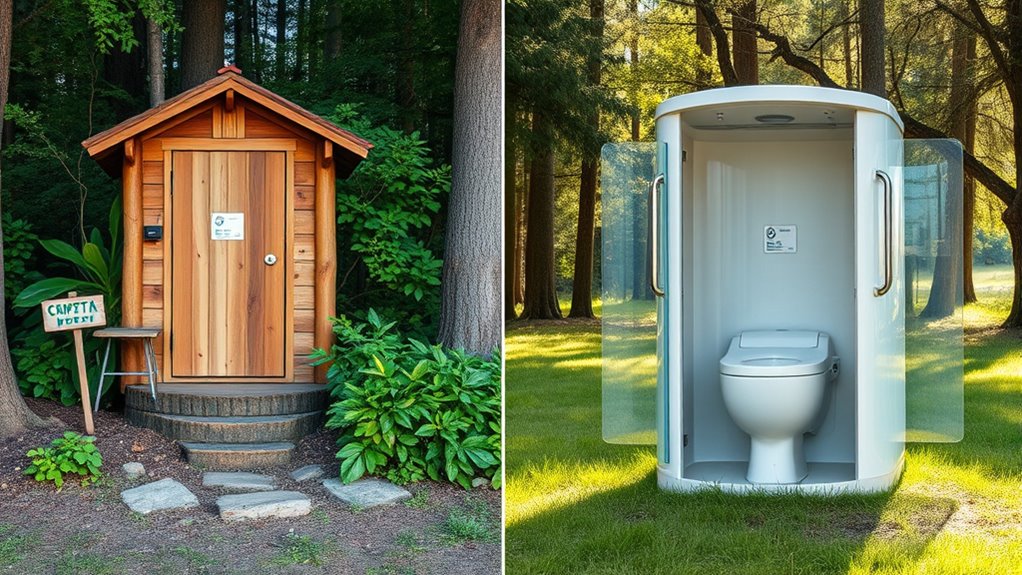
When choosing between composting toilets and chemical toilets, understanding their differences can help you make an informed decision for your needs. Both options are popular in eco-campgrounds, but they serve different purposes and come with distinct advantages and considerations. A key factor to contemplate is the eco friendliness of the materials used and the maintenance requirements involved.
Composting toilets are designed to break down human waste into compost-like material using natural processes. They typically utilize eco friendly materials, such as biodegradable components and sustainable construction materials, which minimize environmental impact. Because they rely on biological decomposition, they don’t require water or chemicals, making them highly sustainable. This means you can reduce water consumption and avoid introducing potentially harmful substances into the environment. Maintenance, however, involves regularly managing the composting chamber, monitoring moisture levels, and occasionally removing finished compost. While this might seem labor-intensive, it’s often straightforward and can be managed with proper training. The ongoing effort is balanced by the environmental benefits and the reduced need for chemical treatments or waste disposal services.
Composting toilets use natural processes, eco-friendly materials, and require minimal chemicals, promoting sustainability and environmental health.
Chemical toilets, on the other hand, use chemical solutions to neutralize waste and control odors. They tend to be simpler to set up initially and require less daily maintenance. You just need to regularly add chemical treatments to the holding tank and ensure it’s emptied when full. But these chemicals aren’t eco friendly materials; they can contain formaldehyde or other substances that may harm the environment if not disposed of carefully. Additionally, chemical toilets typically require more frequent servicing, especially in high-traffic campgrounds, because the chemicals can become less effective over time, and the tanks need to be emptied more often. While maintenance might seem less demanding day-to-day, it involves managing chemical supplies and ensuring proper disposal of waste, which can be more costly and less eco-friendly over the long term.
Ultimately, your decision hinges on your priorities. If you’re aiming for a more sustainable, environmentally conscious operation, composting toilets with their eco friendly materials and lower chemical dependence might be the better choice. They do require commitment to ongoing maintenance, but the environmental payoff is significant. Conversely, if simplicity and low initial effort are your main concerns, chemical toilets could fit your needs, but keep in mind the ongoing costs and environmental considerations. Both options have their place in eco‑campgrounds, but knowing how they align with your eco goals and maintenance capacity will help you choose the best fit.

NOMAD by OGO Portable Compost Toilet – Camping Toilet for Truck Campers, Hunting Blinds, Car Camping, Primitive Camping & Boating, No-Electric, Waterless, Odor-Free Fits 8 Gallon Bags
DESIGNED FOR THE ADVENTURER – No Electric, No Plumbing, No Hassle. The NOMAD is the simple, affordable compost…
As an affiliate, we earn on qualifying purchases.
As an affiliate, we earn on qualifying purchases.
Frequently Asked Questions
How Do Composting Toilets Handle Greywater?
When it comes to greywater filtration, composting toilets typically don’t handle greywater directly, as they are designed mainly for waste composting. Instead, greywater from sinks and showers needs separate treatment, often through filtration systems or soak zones, to prevent contamination. This separation enhances composting efficiency by keeping waste dry and manageable, ensuring the compost remains odor-free and effective while safely managing greywater for eco-campgrounds.
Are Chemical Toilets More Cost-Effective Long-Term?
You might think chemical toilets are more cost-effective long-term, but consider the financial comparison carefully. While installation costs are lower upfront, chemical toilets incur ongoing expenses for chemicals and waste disposal, which add up over time. Composting toilets, although pricier initially, reduce long-term expenses by eliminating chemical purchases and requiring less maintenance. So, evaluate both the initial investment and ongoing costs before deciding.
What Maintenance Is Required for Composting Toilets?
You’ll need to regularly monitor your composting toilet’s waste decomposition process, ensuring it breaks down properly. It’s essential to maintain proper ventilation requirements to control odors and promote aerobic activity. You should also empty the compost container when full, add bulking agents like sawdust, and occasionally stir or aerate the compost. Regular inspections and maintenance keep the system functioning efficiently, reducing odors and health risks while supporting eco-friendly waste management.
Can Composting Toilets Be Used Year-Round in Cold Climates?
Imagine a sturdy tree standing firm through winter storms—that’s what your composting toilet needs to survive cold climates. Yes, you can use it year-round, but proper winter operation requires adequate insulation to prevent freezing. You’ll want to add insulation around the chamber and perhaps consider supplemental heat sources. With these measures, your composting toilet can function efficiently, ensuring eco-friendly sanitation even during the coldest months.
How Do Odor Control Methods Differ Between Options?
You’ll find odor control methods differ based on your toilet type. With composting toilets, ventilation techniques like exhaust fans or vents help dissipate odors, while odor absorption materials like charcoal or peat moss trap smells. Chemical toilets often rely on chemical deodorizers added to waste tanks. Proper ventilation and odor absorption are key for maintaining a fresh environment, especially in enclosed or high-use areas.

Emergency Zone Eco Gel Port-a-Potty Chemicals – Liquid Waste Gelling and Deodorizing Powder – 1 Pack
Eco Gel: Provides a mess-free way to deal with less-than-pleasant moments of camping or emergencies
As an affiliate, we earn on qualifying purchases.
As an affiliate, we earn on qualifying purchases.
Conclusion
So, whether you choose composting or chemical toilets, remember that your eco-friendly efforts might just be a tiny drop in the bucket—literally. Ironically, the “greener” option could end up causing more environmental fuss than it saves. In the end, it’s up to you to weigh the impact, knowing that even your best intentions might be part of a bigger, messy picture. Sometimes, the most eco-friendly choice is simply admitting we’re all a little imperfect.

CRAZYTHUR Portable Toilet Gel, 50 Packets Camp Toilet Portable Gel, Poo Powder with Lemon Scent, Eco Gels for Portable Toilets Powder, Travel Toilets Gels for Outdoor Camping and Hiking
Eco-Friendly&Biodegradable: Our camping toilet gels are mainly made of eco-friendly and biodegradable polymers, which formula that magically transforms…
As an affiliate, we earn on qualifying purchases.
As an affiliate, we earn on qualifying purchases.

Heavy Duty Motorhome Sewer Hose Fitting 90 Degree Bend Reinforced Sealing Suitable for Efficient Campers Drainage Systems Waste Water Adapter
This heavy duty sewage hose connector combines flexibility with rigid ABS fittings, enabling kink less flows control even…
As an affiliate, we earn on qualifying purchases.
As an affiliate, we earn on qualifying purchases.