
To prevent confusion among your event staff, establishing a clear channel plan is essential. Assign specific channels for different situations, emergencies, or teams, and guarantee everyone knows when and how to use them. Regular equipment checks and proper radio use improve reliability and communication clarity. Clear protocols and a well-organized plan keep everyone on the same page, enabling swift responses. Keep exploring to discover how detailed planning can make your event run smoothly.

Get pool and patio gear delivered free with Prime
- Fast, free delivery on millions of items
- Prime Video, Amazon Music and more included
- Member-only deals all year
Key Takeaways
- Develop a clear channel hierarchy for different event situations to prevent communication overlap and confusion.
- Assign specific channels for security, coordination, emergencies, and general communication to streamline staff interactions.
- Implement a well-structured channel plan with designated procedures for escalating issues quickly and effectively.
- Regularly train staff on channel usage, protocols, and troubleshooting to ensure consistent and reliable communication.
- Conduct pre-event equipment checks and maintenance to ensure radios function properly and reduce communication disruptions.
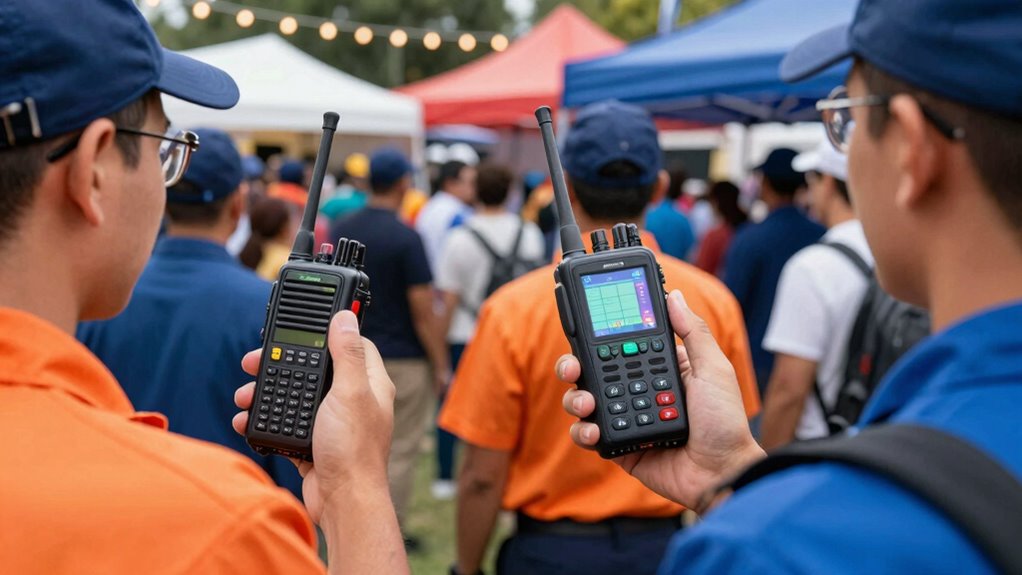
Effective communication is essential for event staff to coordinate smoothly and respond quickly to any situation. When you’re managing a large event, clear and reliable communication tools like two-way radios become indispensable. To maximize their effectiveness, you need a well-thought-out channel plan that minimizes confusion and keeps everyone on the same page. One of the first steps is establishing clear security protocols that outline how and when staff should communicate, which channels to use for different situations, and who should be contacted in emergencies. These protocols serve as a guide so that everyone knows their role and how to escalate issues quickly, reducing the risk of miscommunication during critical moments.
Alongside security protocols, regular equipment maintenance is essential. When you keep your radios in top condition, you prevent avoidable breakdowns that could leave teams in the dark. This means routinely checking batteries, ensuring antennas are intact, and testing the audio quality of each device. Regular maintenance not only prolongs the lifespan of your radios but also ensures they work reliably when you need them most. It’s a good idea to schedule these checks before the event begins and periodically throughout, especially if the event lasts several days or involves heavy usage. Well-maintained equipment fosters trust among staff, knowing they can depend on their radios at all times. Additionally, understanding proper radio frequency use can improve clarity and reduce interference during busy moments, ensuring your team stays connected.
As an affiliate, we earn on qualifying purchases.
Frequently Asked Questions
How Do I Choose the Best Channel Plan for My Event?
To choose the best channel plan, start by evaluating your event’s size and communication needs, focusing on frequency allocation to avoid interference. Opt for channel customization to tailor channels for different teams or zones, ensuring clear communication. Consider the number of staff members, the event layout, and potential signal congestion. A well-planned, flexible channel scheme will keep everyone connected, streamline operations, and prevent confusion during your event.
What Are the Legal Considerations for Radio Communication at Events?
You need to follow legal considerations like emergency protocols and licensing requirements when using radios at events. Make certain your radios operate on frequencies authorized by your local or national regulations, and obtain necessary licenses if required. Incorporate emergency protocols into your communication plan, so staff knows how to respond swiftly. Staying compliant not only keeps you legal but also ensures clear, reliable communication during critical moments.
How Many Radios Can Operate on a Single Channel?
You can typically have around 10 to 15 radios operating on a single channel before interference sources become a concern. To avoid this, make certain your radios are properly licensed and use clear communication protocols. Remember, exceeding the recommended number can cause signal clashes, leading to confusion. Regularly check for interference sources and maintain your equipment to keep communication smooth and compliant with radio licensing regulations.
What Are the Troubleshooting Steps for Radio Interference?
Identify interference sources, troubleshoot techniques, and eliminate interference sources. First, check for interference sources like electronic devices, walls, or metal structures that can block signals. Then, try troubleshooting techniques such as changing channels, adjusting antenna positioning, or reducing objects between radios. If issues persist, test radios in different locations or with different channels. By systematically addressing interference sources and applying troubleshooting techniques, you’ll restore clear communication quickly and efficiently.
How Do I Train Staff to Use the Radios Effectively?
You train staff by emphasizing clear radio etiquette and staff communication protocols. Start with a brief demonstration of proper microphone use, like speaking clearly and holding the radio upright. Conduct role-playing exercises to practice concise messaging and listening skills. Reinforce the importance of staying on assigned channels, using call signs, and avoiding unnecessary chatter. Regularly review protocols and provide feedback to guarantee everyone communicates efficiently and minimizes confusion during the event.
Conclusion
A clear channel plan isn’t just a guideline—it’s the heartbeat of your event’s success. Think of it as the secret code that keeps everyone in sync, turning chaos into coordination. When your staff knows exactly where to tune in, confusion melts away like fog at dawn. So, don’t leave communication to chance—embrace a smart channel plan. After all, isn’t smooth sailing what you’re really after?
Halloween Picks
halloween
As an affiliate, we earn on qualifying purchases.