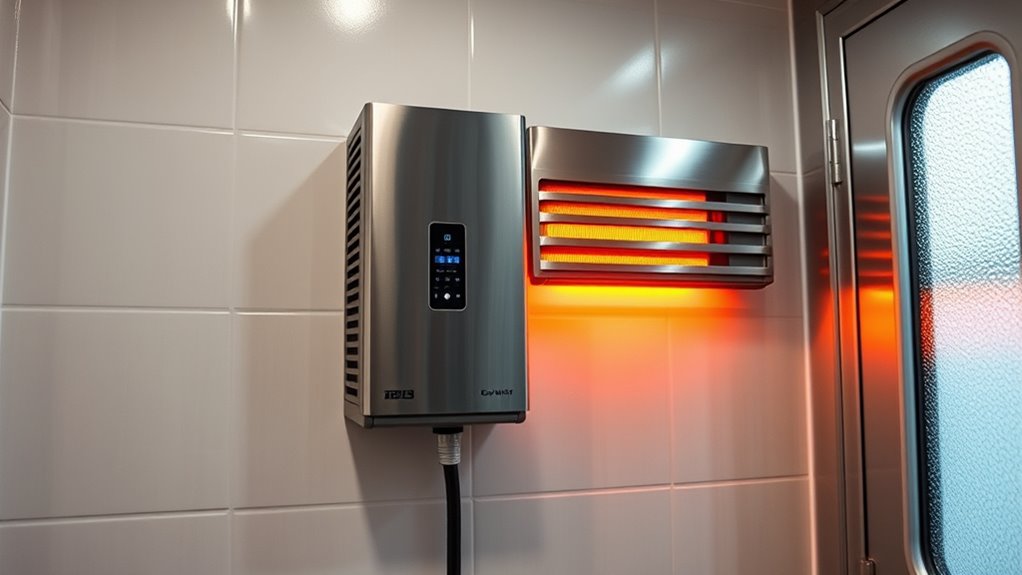

Choosing an energy-efficient restroom trailer heater means matching the heat source and output to the trailer’s insulation, available power, and operating schedule. The Envi LE5012P is my pick for quiet, low-draw supplemental heat in a small, well-insulated restroom with dependable 120 V service. For a larger space or faster warm-up, the VEVOR 8 kW diesel heater with a 10 L tank offers the same listed heating area as its sibling with more fuel capacity. The 5 L VEVOR all-in-one suits buyers who want app, remote, and LCD controls in a portable package without carrying as much fuel.

Get pool and patio gear delivered free with Prime
- Fast, free delivery on millions of items
- Prime Video, Amazon Music and more included
- Member-only deals all year
These options are not direct substitutes: the Envi draws 500 watts of electricity and covers up to 150 sq. ft., while both diesel models are rated at 8 kW for about 215–269 sq. ft. Diesel output can be useful where electrical service is limited, but it brings fuel use and a need for safe installation and exhaust routing. I rank them by how well their stated output, controls, and operating needs fit different restroom-trailer setups.
Complete the kit


Key Takeaways
- The Envi LE5012P uses 500 watts at 120 V and is the quietest fit for supplemental heat in a compact, insulated restroom.
- Both VEVOR diesel heaters list 8 kW output and coverage of about 215–269 sq. ft.; the 10 L model mainly wins on longer fuel intervals.
- The 5 L VEVOR provides app, remote, and LCD controls, with listed fuel capacity for up to 8 hours of heating.
- The 10 L VEVOR adds a timer and preheating, and its larger tank is listed for up to 16 hours between refills.
- Neither diesel heater is a plug-in 120 V alternative: each requires 12 V power and diesel fuel, so installation and exhaust planning matter.
| Envi LE5012P Plug-In Electric Panel Wall Heater |  | Best Overall for Quiet, Low-Draw Supplemental Heat | Model: LE5012P | Heating output: 500 watts | Voltage / amperage: 120 V / 4.17 A | VIEW ON AMAZON | See Our Full Breakdown |
| VEVOR 8 kW Diesel Air Heater with Bluetooth Control and Automatic Altitude Adjustment |  | Best for Longer Runs and Fewer Fuel Stops | Heater power: 8 kW | Applicable area: 215–269 sq. ft. (20–25 m²) | Fuel tank: 10 L (2.6 gal) | VIEW ON AMAZON | See Our Full Breakdown |
| VEVOR 12V All-in-One Diesel Air Heater with App and Remote Control, 8 kW, 5 L Tank |  | Best Portable Diesel Option for Shorter Duty Cycles | Heater power: 8 kW | Heating area: 215–269 sq. ft. (20–25 m²) | Fuel tank: 5 L (1.3 gal) | VIEW ON AMAZON | See Our Full Breakdown |
| energyefficient restroom trailer heater | Heater power | Fuel tank | Fuel consumption | Power supply |
|---|---|---|---|---|
| Envi LE5012P Plug-In Electric | — | — | — | — |
| VEVOR 8 kW Diesel Air Heater w | 8 kW | 10 L (2.6 gal) | 0.16–0.62 L/h | 12 V |
| VEVOR 12V All-in-One Diesel Ai | 8 kW | 5 L (1.3 gal) | 0.16–0.62 L/h | 12 V |
More Details on Our Top Picks
Envi LE5012P Plug-In Electric Panel Wall Heater
I rank the Envi LE5012P first for a small restroom trailer that already has reliable 120 V service and needs steady supplemental warmth rather than rapid, high-output heating. Its 500 W draw is modest beside either 8 kW VEVOR diesel heater, and the fanless convection design avoids blower noise in a compact space. Wall mounting also keeps the floor open, which can matter in a narrow restroom where fixtures and cleaning access compete for room.
The tradeoff is capacity. Envi lists coverage up to 150 sq. ft., below the diesel models’ 215–269 sq. ft. range, and its maximum temperature is listed as 90 °F. That makes it a poor match for a drafty trailer, a cold climate requiring fast recovery, or a larger multi-stall layout. Unlike the VEVOR heaters, it does not require diesel refills or a separate 12 V supply, but it relies on shore power and cannot deliver comparable rated output. The wall-sense sensor cuts power if the unit is removed from the wall, while its cool-touch exterior and overheat protection add useful safeguards in a tight room.
For a well-insulated single restroom, the Envi is the simplest fit of this lineup when low electrical draw and quiet operation matter more than brute heating capacity. I would choose one of the diesel options if the space is larger or power availability is constrained.
Pros:- Low 500 W electrical draw
- Fanless convection runs quietly
- Wall-mounted 2-inch profile frees floor space
- Wall-sense safety sensor and cool-touch exterior
Cons:- Listed coverage is limited to 150 sq. ft.
- Depends on 120 V service and offers less output than either diesel heater
Best for: Owners of compact, insulated restroom trailers with steady 120 V service who want quiet supplemental heat and a clear floor area.
Not ideal for: Buyers heating a large, poorly insulated trailer, needing quick warm-up in severe cold, or operating without dependable 120 V power.
- Model:LE5012P
- Heating output:500 watts
- Voltage / amperage:120 V / 4.17 A
- Listed coverage:Up to 150 sq. ft.
- Heating method:Convection
- Mounting / thickness:Wall mount / 2 inches
- Maximum temperature:90 °F
- Warranty:3 years
Our verdict“Choose the Envi for quiet, modest electric heat in a compact trailer; choose a VEVOR when coverage and output matter more.”
VEVOR 8 kW Diesel Air Heater with Bluetooth Control and Automatic Altitude Adjustment
For a larger trailer or an operating schedule where repeated refills would be inconvenient, I place this 10 L VEVOR diesel heater ahead of the 5 L model. Both have the same stated 8 kW output and 215–269 sq. ft. coverage, so the larger tank does not imply more heating capacity. Its advantage is endurance: the supplied details list up to 16 hours of heating, compared with up to 8 hours for the smaller-tank version.
Control options are broad, with Bluetooth app, remote, and LCD controls, plus a timer and preheating. Those features can help a user set a warm-up schedule before guests arrive, while automatic altitude adjustment is listed up to 18,045 ft. The stated fuel-consumption range, 0.16–0.62 L/h, means actual runtime varies with operating conditions; I would not treat the maximum runtime as guaranteed for every setting. Like its 5 L sibling, it needs a 12 V supply and diesel fuel, and installation must handle exhaust and combustion air appropriately.
This is the strongest match in the group for extended diesel operation, not a more powerful alternative to the smaller VEVOR. Compared with the Envi, it offers far greater listed coverage but adds fuel handling, a 12 V requirement, and installation complexity. Choose it when the 10 L tank and scheduling features solve a real operational need.
Pros:- 10 L tank is listed for up to 16 hours of heating
- 8 kW output with stated coverage of 215–269 sq. ft.
- App, remote, and LCD controls with timer and preheating
- Automatic altitude adjustment up to 18,045 ft
Cons:- Requires both diesel fuel and a 12 V power supply
- Fuel use varies from 0.16 to 0.62 L/h, so runtime depends on settings and conditions
- Exhaust and combustion-air routing add installation requirements
Best for: Operators of larger restroom trailers who need diesel heat, altitude compensation, scheduled preheating, and longer intervals between refills.
Not ideal for: Small trailers with reliable 120 V service, buyers who want the least complex installation, or users without a safe exhaust plan.
- Heater power:8 kW
- Applicable area:215–269 sq. ft. (20–25 m²)
- Fuel tank:10 L (2.6 gal)
- Fuel consumption:0.16–0.62 L/h
- Power supply:12 V
- Temperature range:46–96.8 °F (8–36 °C)
- Altitude adjustment:Up to 18,045 ft (5,500 m)
- Controls:Bluetooth app, remote, and LCD; timer and preheating
Our verdict“Pick the 10 L VEVOR when you need the diesel models’ rated output and want fewer refills than the 5 L version.”
VEVOR 12V All-in-One Diesel Air Heater with App and Remote Control, 8 kW, 5 L Tank
The 5 L VEVOR all-in-one makes the most sense when a trailer needs the diesel models’ 8 kW output, but a 10 L tank would be unnecessary bulk for the way it is used. Its listed heating area, 215–269 sq. ft., matches the larger VEVOR, and it includes app, remote, and LCD controls. This means buyers do not sacrifice the stated output or control choices by selecting the smaller tank.
Its key compromise is operating interval. VEVOR lists up to 8 hours of heating from the 5 L tank, half the listed duration of the 10 L model. The 0.16–0.62 L/h consumption range also makes actual runtime dependent on demand and conditions. Automatic altitude compensation up to 5,500 m and overheating protection are useful capabilities, but the unit still requires a 12 V source, diesel refills, and an appropriate installation plan for exhaust. It is a more involved setup than the wall-mounted Envi, even if portability is useful across changing sites.
I would rank it behind the 10 L version for long shifts and unattended stretches, but ahead of the Envi when the trailer’s area and heating demand exceed what a 500 W panel unit is designed to cover. It suits buyers who value portable controls and can comfortably refuel during their operating schedule.
Pros:- 8 kW output and stated coverage of 215–269 sq. ft.
- App, remote, and LCD control options
- Automatic altitude compensation up to 5,500 m
- Portable 5 L tank package listed for up to 8 hours of heating
Cons:- Smaller tank means more frequent refills than the 10 L VEVOR
- Requires 12 V power and diesel fuel
- Fuel consumption can reach 0.62 L/h
Best for: Users who need an 8 kW portable diesel heater for a medium-size trailer and expect shorter heating periods or can refill between shifts.
Not ideal for: Operators seeking long runs between refills, buyers with no 12 V source, or anyone who needs simple 120 V plug-in heating.
- Heater power:8 kW
- Heating area:215–269 sq. ft. (20–25 m²)
- Fuel tank:5 L (1.3 gal)
- Fuel consumption:0.16–0.62 L/h
- Power supply:12 V
- Temperature range:46.4–96.8 °F (8–36 °C)
- Remote / app range:32 ft (10 m) / 98 ft (30 m)
- Altitude adjustment:Up to 5,500 m (18,045 ft)
Our verdict“Choose the 5 L VEVOR for portable high-output heat on shorter schedules; step up to the 10 L model for longer intervals between refills.”

How We Picked
I compared the three candidates against the practical demands in the title: supplying heat to a restroom trailer without using more energy or operating complexity than the setup calls for. I prioritized the stated heating output and coverage, then looked at power source, fuel consumption or electrical draw, controls, tank capacity, safety features, and the likely fit for a trailer’s footprint and schedule. These figures come from the supplied product information; real comfort depends on insulation, outdoor temperature, air leakage, layout, and how often doors open.
The ranking reflects distinct use cases rather than treating watts and kilowatts as a single efficiency score. The Envi comes first for modest, quiet electric heating where 120 V power is available. The 10 L diesel heater ranks next for users needing substantially more listed output and fewer fuel stops. The 5 L unit remains a strong choice for portable control flexibility, though its smaller tank makes it less suited to long unattended stretches than the 10 L version. I have not assumed that either diesel model can be installed indoors without suitable exhaust and combustion-air arrangements; buyers should follow the manufacturer’s installation instructions and local requirements.
| energyefficient restroom trailer heater | Altitude adjustment |
|---|---|
| Envi LE5012P Plug-In Electric | — |
| VEVOR 8 kW Diesel Air Heater w | Up to 18,045 ft (5,500 m) |
| VEVOR 12V All-in-One Diesel Ai | Up to 5,500 m (18,045 ft) |
Factors to Consider When Choosing Energyefficient Restroom Trailer Heater
I would start with the trailer’s actual heat demand and available power, then compare the inconvenience of refilling fuel with the limits of electric output. A heater’s advertised coverage is a reference point, not a promise of uniform comfort in every trailer.Match output to the trailer
The Envi’s 500 W output and 150 sq. ft. stated coverage fit a compact, insulated restroom needing supplemental warmth. The VEVOR heaters are rated at 8 kW for 215–269 sq. ft., so they suit larger spaces or setups needing more heat output. Those figures alone cannot predict comfort: insulation, outdoor temperature, air leakage, ceiling height, and frequent door openings all change the load. If the trailer is drafty, a lower-output unit may struggle even when its stated coverage appears adequate.
Choose the power source your site supports
The Envi runs on 120 V electricity and draws 4.17 A, which makes it straightforward where shore power is available. Each VEVOR instead needs a 12 V supply and diesel fuel. That can suit a site where electrical capacity is limited, but it does not mean the heater runs without power: its controls and operation still depend on the 12 V source. Check the trailer’s electrical setup and planned operating duration before deciding which system fits.
Compare fuel capacity with the work schedule
The two diesel units share the same listed output and fuel-consumption range, but their tanks differ. VEVOR lists the 5 L model for up to 8 hours and the 10 L model for up to 16 hours. Those are stated maximum durations, not fixed runtime guarantees, since consumption ranges from 0.16 to 0.62 L/h. A larger tank can reduce refill frequency over a long shift; a smaller tank may be easier to manage when heating periods are brief.
Plan controls and installation together
Both VEVOR heaters offer app, remote, and LCD controls, while the 10 L version also lists a timer and preheating. This can help with scheduled warm-up, but remote control does not remove the need to set up and monitor the heater correctly. Diesel combustion equipment needs suitable exhaust routing and combustion-air arrangements, installed according to its instructions and applicable requirements. The Envi avoids fuel and exhaust handling, though it must be wall mounted and depends on available 120 V power.
Treat safety and energy use as system questions
The Envi lists a cool-touch exterior, overheat protection, and a wall-sense sensor. The VEVOR models list overheating protection, but that feature does not replace correct installation or ventilation planning. For energy use, compare the Envi’s 500 W electrical draw with the diesel models’ stated fuel use and 12 V requirement; they use different energy sources, so one figure does not establish a universal efficiency winner. The better fit depends on your site’s power, heating hours, climate, and fuel-handling capacity.
Frequently Asked Questions
Which heater is the most energy efficient for a restroom trailer?
There is no single efficiency winner for every trailer because the Envi uses electricity while the VEVOR units burn diesel, and the supplied specifications do not provide a direct efficiency comparison. The Envi has a modest 500 W draw and is suited to supplemental heat in a small, insulated room. The diesel models provide much higher stated output, which may better match a larger or colder trailer. Compare the energy source available at your site, expected heating hours, and the trailer’s heat loss.
Can the Envi LE5012P heat an entire restroom trailer?
It may suit a compact, well-insulated trailer, but Envi lists coverage up to 150 sq. ft. and describes a 500 W heater. A larger space, high heat loss, cold outdoor conditions, or frequent door openings can exceed what that output handles comfortably. The VEVOR models have greater stated coverage and 8 kW output, although they bring diesel and 12 V requirements. Use the trailer’s actual heat demand when choosing rather than relying on floor area alone.
What is the practical difference between the two VEVOR heaters?
Both are listed as 8 kW diesel heaters for 215–269 sq. ft., with the same 0.16–0.62 L/h fuel-consumption range and altitude adjustment up to 5,500 m. The main distinction is tank size: the 5 L version is listed for up to 8 hours, while the 10 L version is listed for up to 16 hours. The 10 L listing also specifies timer and preheating functions. Choose based on refill intervals and scheduling needs rather than expecting more heat from the larger tank.
Do the VEVOR diesel heaters need electricity?
Yes. Both listed VEVOR models require a 12 V power supply as well as diesel fuel. The fuel provides the heat source, but the unit is not independent of electrical power. Confirm that the trailer has a suitable 12 V supply for the intended operating period, and follow the manufacturer’s installation instructions for exhaust and combustion air. The Envi is the option in this lineup that uses 120 V power directly.
Which option should I choose for a small trailer with shore power?
I would start with the Envi LE5012P if the trailer is compact, insulated, and needs supplemental rather than rapid high-output heat. Its 500 W draw, fanless operation, and wall-mounted form suit a small room with dependable 120 V service. If the space is larger or loses heat quickly, compare the VEVOR units’ greater stated coverage and output, then account for diesel refills, a 12 V source, and installation requirements. The right pick depends on the trailer’s heat load and operating schedule.
Conclusion
For a compact trailer with shore power, I recommend the Envi LE5012P for quiet supplemental heat and a modest electrical draw. For a larger trailer or longer diesel operating periods, the 10 L VEVOR is the better match because it shares the other diesel model’s stated output while offering a longer listed interval between refills. Choose the 5 L VEVOR when you need comparable 8 kW output and broad controls for shorter duty cycles, and its smaller tank fits your routine. Before buying, match the stated coverage to your trailer’s insulation and climate, confirm the required power source, and plan diesel exhaust installation where relevant.