When using ULV foggers, proper ventilation is more important than the machine itself. Good airflow ensures disinfectants reach all surfaces evenly, reduces fumes, and speeds up drying times, making your disinfection safer and more effective. Open windows, use fans, and control airflow based on your space and disinfectant type. Mastering ventilation helps you get the best results—stay with us to discover key techniques for optimizing your fogging process.
Key Takeaways
- Proper ventilation ensures even disinfectant distribution and prevents residue buildup during ULV fogging.
- Controlling airflow enhances safety by dissipating fumes and reducing health hazards.
- Effective ventilation choices depend on space size, disinfectant type, and airflow dynamics.
- Poor ventilation can lead to under- or over-treatment, compromising disinfection quality.
- Optimizing airflow accelerates drying times and facilitates safe re-entry after fogging.
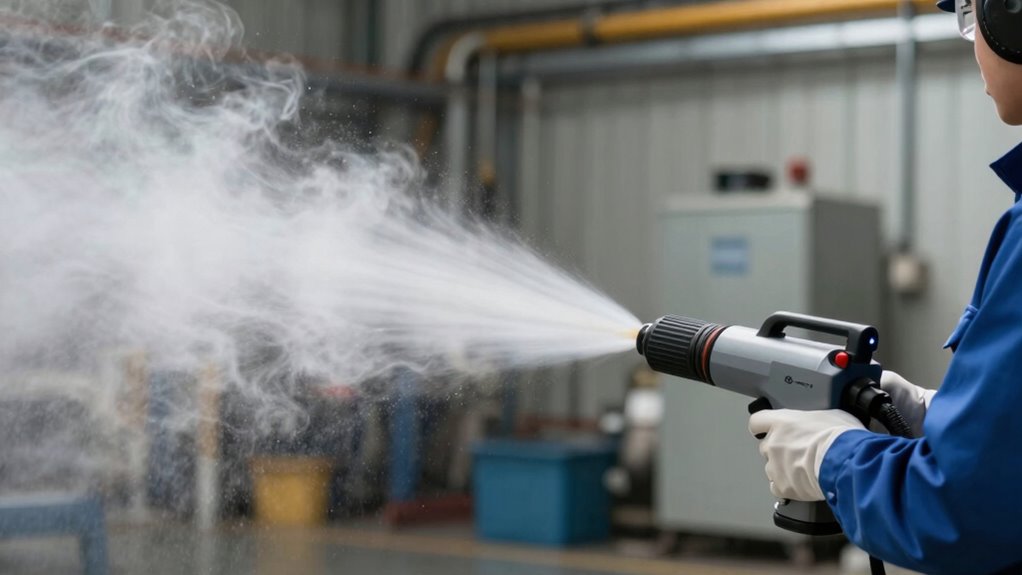
Are you looking for an efficient way to disinfect large areas quickly? ULV foggers are a popular choice because they disperse disinfectants in a fine mist, covering surfaces rapidly and evenly. But to truly maximize disinfection efficiency, you need to pay attention to more than just the machine itself. The ventilation rules surrounding ULV fogging are often overlooked but are critical to achieving thorough, safe, and effective disinfection. Proper ventilation ensures the disinfectant reaches all surfaces while minimizing the risk of inhalation or residue buildup. Without adequate airflow, disinfectants can settle unevenly, leaving some areas under-treated and others over-saturated. This not only compromises disinfection but can also cause potential health hazards for your staff or occupants. Hence, understanding and implementing proper ventilation protocols is just as important as selecting the right fogger.
Maintaining your fogger is another key factor that influences disinfection efficiency. Regular fogger maintenance involves cleaning nozzles, checking for clogs, and ensuring the machine operates smoothly. When foggers are well-maintained, they produce consistent droplet sizes and spray patterns, which are essential for uniform coverage. Neglecting maintenance can lead to inconsistent fog dispersion, resulting in missed spots or over-application in certain areas. It might seem like a minor issue, but over time, poor fogger maintenance can considerably reduce the effectiveness of your disinfection process. Always follow manufacturer guidelines for cleaning and servicing your fogger, and routinely inspect components for wear and tear. Doing so ensures your machine functions at peak performance, saving you time and resources in the long run.
Additionally, consider the environment in which you’re fogging. Ventilation isn’t just about open windows or fans; it’s about controlling airflow to optimize the distribution of disinfectants. Sometimes, this means adjusting ventilation based on the size of the space, the type of disinfectant used, and the safety protocols in place. Proper ventilation helps dissipate excess fumes and ensures that disinfectant vapors don’t linger longer than necessary, which is crucial for both safety and disinfection quality. Remember, a well-ventilated area not only improves disinfection efficiency but also accelerates the drying process, enabling quicker re-entry into the space.
Furthermore, understanding the importance of airflow dynamics can help you optimize your ventilation setup for the best results.
Frequently Asked Questions
What Safety Precautions Should Be Taken During ULV Fogging?
During ULV fogging, you should always wear protective gear like masks, gloves, and goggles to avoid inhaling chemicals. Guarantee proper ventilation by opening windows and doors before and after fogging to disperse fumes safely. Keep people and pets out of the area during application and for the recommended time afterward. These safety precautions minimize risks, protect your health, and ensure effective fogging results.
How Often Should ULV Foggers Be Calibrated?
You should calibrate your ULV fogger at least every three to six months to guarantee peak performance—because guesswork isn’t a reliable strategy. Regular calibration is key to proper equipment maintenance, preventing uneven spray patterns, and avoiding costly mistakes. Think of it as giving your machine a check-up; neglect it, and your fogging efforts become a wild guess. Keep up with calibration frequency to stay in control of your fogging game.
Can ULV Foggers Be Used Indoors Safely?
You can use ULV foggers indoors safely if you prioritize indoor air quality and proper equipment maintenance. Make certain the space is well-ventilated during and after fogging, and follow manufacturer guidelines carefully. Use appropriate disinfectants, avoid overuse, and give the room ample time to air out before re-entry. Regularly maintaining your equipment helps prevent malfunctions and ensures effective, safe indoor fogging.
What Environmental Factors Affect Fogging Effectiveness?
Environmental factors like humidity levels and air circulation play vital roles in fogging effectiveness. High humidity can cause the fog to clump or settle quickly, reducing coverage, while low humidity helps it disperse evenly. Good air circulation ensures the fog spreads thoroughly, reaching all surfaces. You should monitor these factors closely, adjusting your approach in response. Proper ventilation and controlled humidity levels maximize fogging efficiency and safety indoors.
Are There Legal Regulations for ULV Fogging in Public Spaces?
Yes, there are legal regulations for ULV fogging in public spaces. You must guarantee legal compliance by following regulatory standards set by local, state, or federal authorities. These rules often cover the types of chemicals used, application procedures, and safety protocols to protect public health. Always stay updated on current laws, obtain necessary permits, and adhere strictly to safety guidelines to avoid legal issues and ensure effective, responsible fogging.
Conclusion
Ultimately, remember that proper ventilation matters more than the fogger itself. For instance, in a recent school disinfection, staff prioritized airflow alongside ULV fogging, markedly reducing chemical residue and exposure. You can achieve similar results by ensuring adequate ventilation during and after fogging sessions. It’s not just about the machine; controlling airflow protects your health and maximizes effectiveness. So, always focus on ventilation rules—they’re your best tool for safe, efficient disinfection.