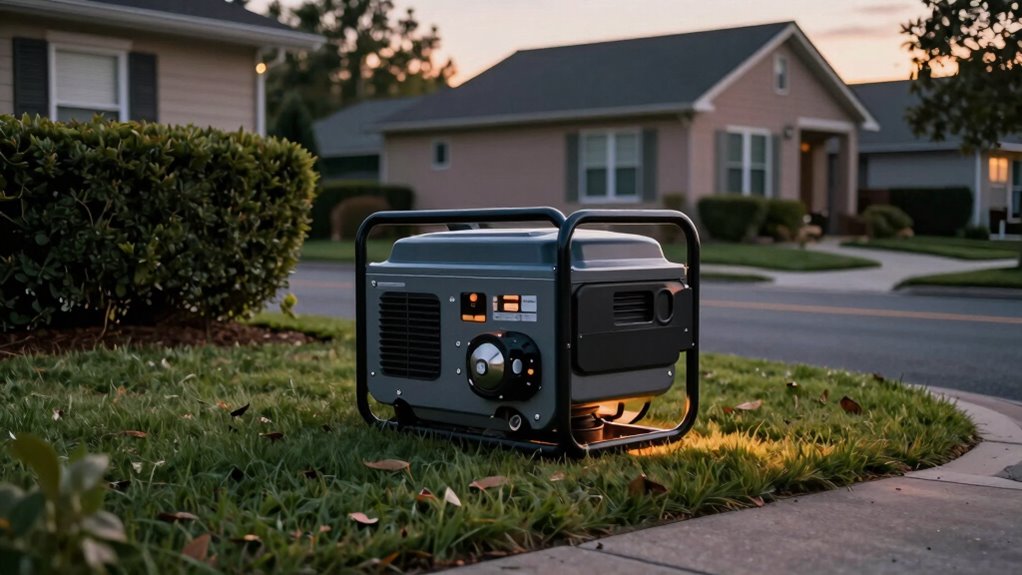

To stay compliant with noise ordinances when using a generator, start by placing it away from windows and neighbors’ homes, ideally on sound-absorbing surfaces. Use soundproofing materials like foam pads, rubber mats, or dense barriers such as wood or concrete. Regularly monitor noise levels with a decibel meter, and supplement with mufflers or enclosures for extra quiet operation. Understanding local regulations and applying these techniques can help you avoid fines and legal issues—discover how to make your setup quieter and more compliant.
Key Takeaways
- Install soundproofing materials like foam pads and dense barriers to reduce generator noise and meet legal decibel limits.
- Position generators away from property lines, windows, and walls to minimize sound transmission and stay within ordinance thresholds.
- Regularly measure noise levels with a decibel meter to ensure compliance and adjust soundproofing efforts as needed.
- Use mufflers, enclosures, and sound dampening techniques to effectively lower noise output below local limits.
- Familiarize yourself with local noise regulations and enforce compliance proactively to avoid fines and legal issues.
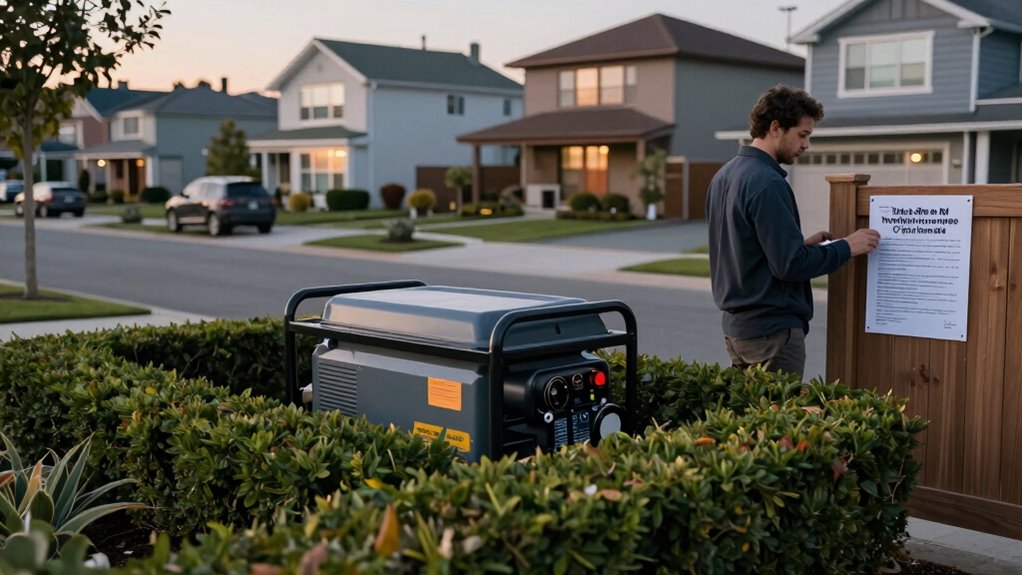
Generators are indispensable tools during power outages, but they can also create noise that disturbs neighbors and violates local regulations. To prevent noise complaints and avoid legal trouble, you need to understand how soundproofing techniques can help manage generator noise effectively. Soundproofing isn’t just about muffling sound; it’s about strategically reducing decibel levels so your generator complies with local noise ordinances. You can start by placing your generator on a sound-absorbing surface like rubber mats or foam pads, which dampen vibrations and minimize noise transmission. Building a sound barrier, such as a fence or wall made from dense materials like wood or concrete, can also block sound from reaching neighboring properties. Adding a canopy or enclosure around your generator further muffles noise and keeps sound levels within acceptable limits.
Proper placement is key. Position your generator away from windows, walls, and neighbor’s living spaces, and on the highest, most open ground possible. This reduces the sound’s direction and prevents it from bouncing toward nearby homes. Using soundproofing techniques in tandem with these placement strategies makes a significant difference. For example, installing a muffler or sound-dampening enclosure can cut noise output dramatically. These methods aren’t just practical; local authorities often enforce noise regulations through legal enforcement actions, which can include fines or orders to cease operations. Being proactive with soundproofing demonstrates your effort to comply and can sometimes prevent enforcement actions altogether.
Understanding the legal enforcement mechanisms in your area is essential. Many municipalities have specific decibel limits for generator noise, often measured at property lines. If you’re caught exceeding these limits, authorities may issue warnings or fines. That’s why it’s critical to know the permissible noise levels and ensure your generator operates within them. Regularly monitoring noise levels with a decibel meter can help you stay on track. If you find your generator is too loud, applying soundproofing techniques can bring it into compliance. Furthermore, understanding soundproofing materials and their properties can enhance your efforts. Remember, simply ignoring noise regulations can lead to legal consequences, so taking steps to soundproof your generator isn’t just courteous; it’s necessary for legal compliance.
Frequently Asked Questions
Are There Specific Times When Generators Are Prohibited From Operating?
Yes, there are specific times when generators are prohibited from operating, often during late-night and early-morning hours, to reduce noise complaints. To avoid violations, you should schedule regular generator maintenance to keep it running smoothly and quietly. Familiarize yourself with the local noise complaint process to address issues promptly. Staying aware of these restrictions helps you stay compliant and minimizes disruptions for your neighbors.
How Do I Determine if My Generator Noise Level Complies Locally?
Think of your generator’s noise level as a whisper in a library—if it’s too loud, it disrupts the peace. To check compliance, perform a noise level measurement using a decibel meter, ensuring it stays within the limits specified by your local ordinance review. This way, you respect your neighbors and avoid penalties, turning quiet coexistence into your new standard.
Can I Install Noise Barriers to Reduce Generator Sound?
Yes, you can install noise barriers to reduce generator sound. Use soundproofing techniques like high-density barriers or acoustic panels during noise barrier installation to effectively block noise. Position the barriers properly, ensuring they are tall and thick enough to absorb or deflect sound waves. This approach helps keep noise levels down and guarantees compliance with local ordinances without guesswork, making your setup quieter and more neighbor-friendly.
What Are the Penalties for Violating Noise Ordinances?
Violating noise ordinances can lead to fines and legal action. When a noise complaint process is initiated, authorities assess penalties based on the severity and frequency of violations. Penalty assessments often include fines, mandatory noise mitigation measures, or even equipment shutdowns. To avoid these penalties, stay compliant by understanding local noise limits, monitoring generator noise levels, and responding promptly to any complaints. Ignoring these steps risks costly penalties and community disputes.
Are There Different Rules for Residential Versus Commercial Generators?
Yes, there are different rules for residential and commercial generators. You need to focus on proper generator placement to minimize noise disturbance and adhere to noise level limits specified for each zone. Commercial generators often have higher noise thresholds but still must comply with local ordinances. Always check your local regulations to guarantee your generator’s placement and noise levels meet the required standards, avoiding penalties and community complaints.
Conclusion
Sticking to noise ordinances when using a generator is essential—think of it as avoiding a noise disaster that could blow up your reputation overnight. By understanding local rules and taking simple steps like proper placement and maintenance, you’ll stay compliant and keep peace in your community. Don’t let noise violations turn your reliable power source into a loud, unwelcome beast. Instead, be a responsible neighbor, and enjoy your generator’s power without the chaos!