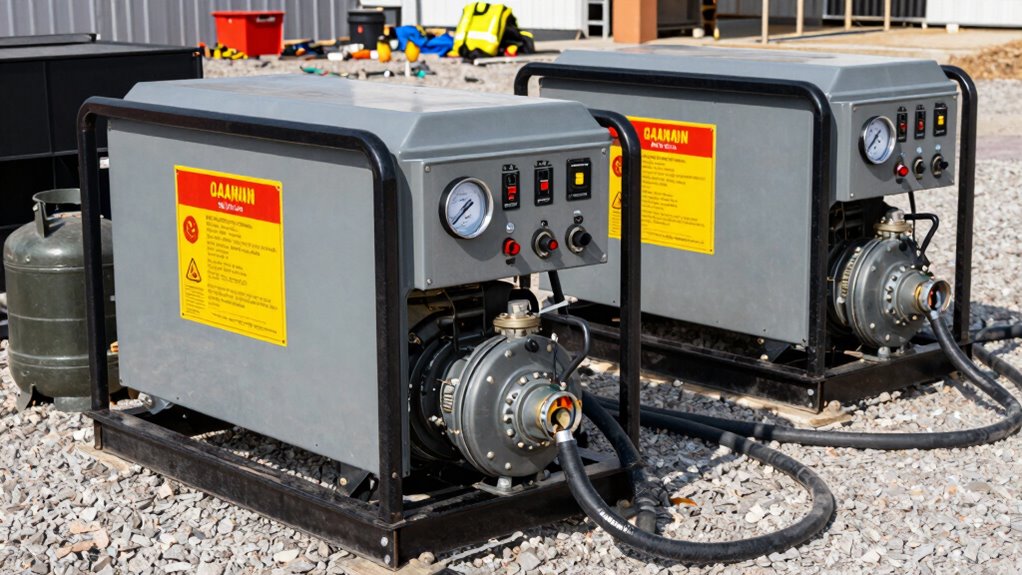

To keep safe with dual-fuel generators, regularly check fuel levels and store fuels properly in approved containers. Always operate in a well-ventilated area, never refuel when hot or running, and keep fire extinguishers nearby. Inspect components for damage, follow maintenance routines, and secure caps to prevent leaks. Using high-quality fuel and following manufacturer guidelines reduce hazards. For a complete safety approach, continue exploring the key steps to protect yourself, others, and your environment.
Key Takeaways
- Always operate dual-fuel generators in well-ventilated areas to prevent carbon monoxide buildup.
- Follow manufacturer guidelines for safe fuel switching and storage to prevent leaks and explosions.
- Regularly inspect and maintain fuel lines, filters, and connections to ensure safety and performance.
- Keep fire extinguishers and safety equipment nearby, and avoid clutter around the generator.
- Never refuel while the generator is running or hot, and use high-quality fuels for reliable operation.
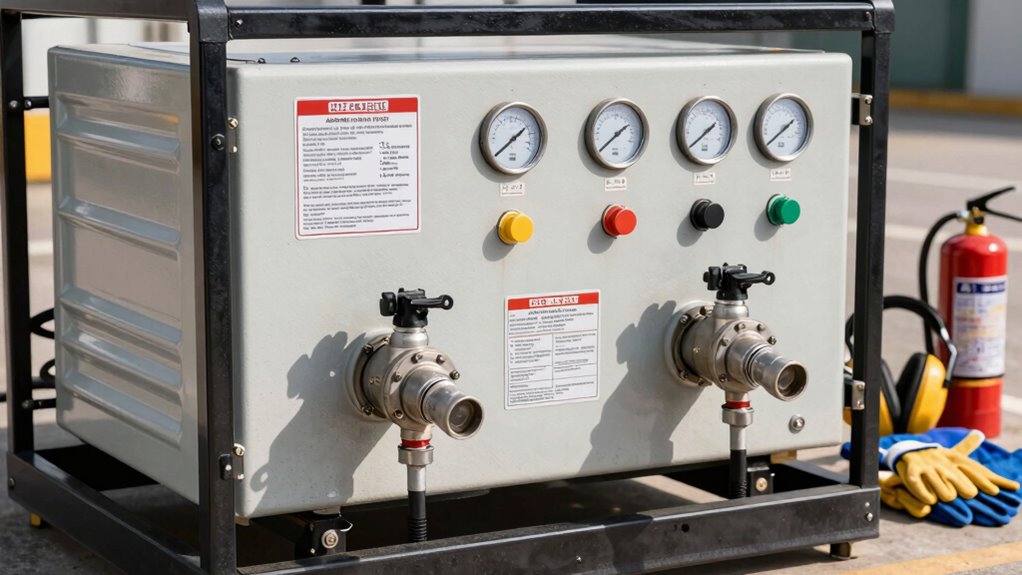
Using dual-fuel generators can be a reliable way to guarantee power during outages, but safety must always come first. These generators offer the flexibility of running on different fuel sources, typically gasoline and propane, which can be a lifesaver during emergencies. However, to maximize their benefits and ensure safe operation, you need to pay close attention to proper maintenance and fuel management. One key aspect is understanding fuel efficiency. Since dual-fuel generators can switch between fuels, you should monitor fuel consumption closely to avoid running out unexpectedly. Regularly checking fuel levels and understanding each fuel’s consumption rate helps you plan better, especially during prolonged outages. Ensuring your generator is running efficiently not only saves you money but also minimizes the risk of mechanical issues caused by overworking or inefficient operation.
Proper maintenance schedules are critical for safety and performance. Adhering to the manufacturer’s recommended maintenance routines keeps your generator in top shape. This includes checking oil levels, inspecting filters, and testing electrical connections regularly. Skipping these steps can lead to dangerous malfunctions or even fires. Additionally, a well-maintained generator is more fuel-efficient because it runs smoothly without unnecessary strain on components. Developing a routine maintenance schedule and sticking to it ensures that you catch potential problems early, preventing costly repairs and safety hazards. Always keep a record of maintenance tasks performed, so you know exactly when components were last checked or replaced.
Safety also involves understanding how to operate your generator correctly. Always start your generator in a well-ventilated area to prevent carbon monoxide buildup, which can be deadly. Never refuel while the generator is running or hot, as this can cause fires or explosions. It’s wise to keep a fire extinguisher nearby and ensure your workspace is free of clutter or flammable materials. When switching fuels, do so carefully, following the manufacturer’s instructions to avoid leaks or spills. Properly securing fuel caps and storage containers reduces the risk of accidental leaks, which can lead to fires or environmental hazards. Additionally, using high-quality fuel can improve engine performance and longevity.
Frequently Asked Questions
Can Dual-Fuel Generators Operate Safely in All Weather Conditions?
You can operate dual-fuel generators safely in most weather conditions, but they have weather resilience limits. Extreme weather like heavy rain, snow, or high winds can impact their performance or cause safety issues. Always check the manufacturer’s guidelines for operational limitations and guarantee proper maintenance. Protect the generator from direct exposure to harsh elements, and never operate it in flooded areas to avoid accidents and ensure safe, reliable power.
What Are the Common Signs of Fuel Leaks in Dual-Fuel Generators?
Imagine your generator whispering warnings; fuel odor and visible stains are its signals. If you smell gasoline or see wet spots beneath the unit, it’s a clear sign of a leak. These symptoms act as your warning lights, alerting you to potential hazards. Don’t ignore them—address leaks immediately to prevent fire risks and damage. Staying vigilant keeps your generator running safely and reliably, just like heeding a friend’s advice.
How Often Should I Perform Safety Inspections on My Generator?
You should perform safety inspections on your generator weekly, following your maintenance schedule. Use an inspection checklist to guarantee all components are functioning properly, checking for fuel leaks, loose connections, and proper ventilation. Regular inspections help catch issues early, preventing accidents or breakdowns. Also, document each inspection to track any recurring problems. Staying diligent with your safety checks keeps your generator running smoothly and safely when you need it most.
Is It Safe to Refuel While the Generator Is Running?
It’s not safe to refuel your generator while it’s running. For proper refueling safety, always follow generator shutdown protocols—turn off the generator, let it cool, and then refuel. This prevents fuel spills, fires, or explosions caused by hot surfaces igniting vapors. Never attempt to refuel during operation, as adhering to these safety steps considerably reduces risk and ensures safe, reliable generator use.
What Safety Equipment Should I Have Nearby During Operation?
During generator operation, you should have safety equipment like a fire extinguisher nearby in case of fire emergencies. Wearing safety gloves is essential to protect your hands from heat, sparks, or accidental contact with hot surfaces. Always keep these items within reach, and make sure you’re familiar with their use. Staying prepared with the right safety gear helps prevent injuries and keeps your operation safe and efficient.
Conclusion
Remember, even the bravest explorers relied on careful preparation—your safety with dual-fuel generators is no different. By following this checklist, you’re charting the modern wilderness of power with the wisdom of seasoned adventurers. Don’t leave safety to chance; print this guide and keep it close. Like a trusted compass, it’ll steer you clear of danger, ensuring your journeys remain powered and protected. Stay vigilant, and let safety be your guiding star.