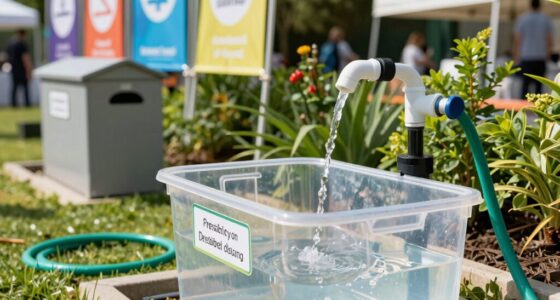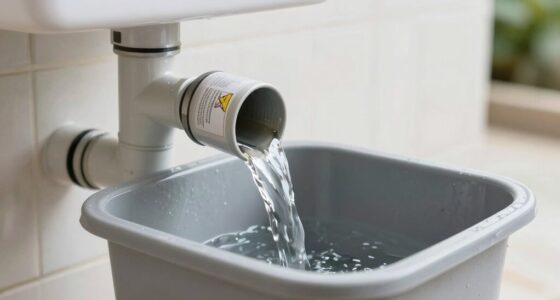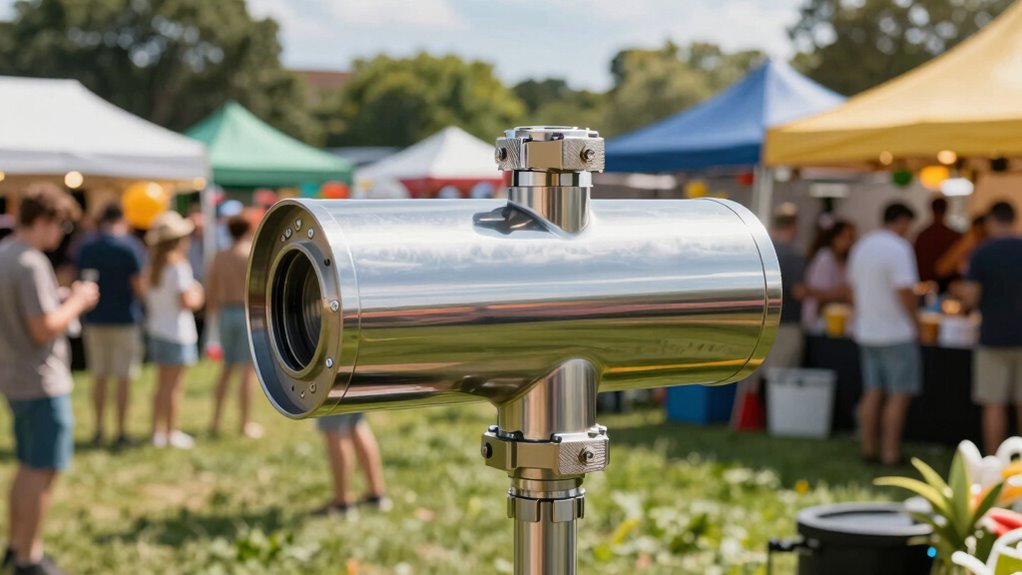
A dependable backflow prevention device is your best safeguard during an event, as it stops contaminated water from flowing back into the clean supply. It acts as a one-way barrier, especially when water pressure fluctuates unexpectedly. Properly installed and maintained, devices like check valves or RPZ assemblies protect your guests and water system from harmful contaminants. To guarantee your water stays safe and your event runs smoothly, continue discovering how these devices work best.
Key Takeaways
- Backflow prevention devices act as automatic barriers, preventing contaminated water from reversing into the clean supply during pressure drops.
- Proper installation, regular testing, and maintenance ensure these devices function reliably during high-demand or fluctuating pressure events.
- Using suitable pipe materials and managing water pressure helps maintain system stability, reducing backflow risks.
- Incorporating pressure sensors and monitoring systems enables early detection of pressure issues, safeguarding water quality.
- A well-designed backflow prevention setup is critical for ensuring safe water supply during large events or in complex facilities.
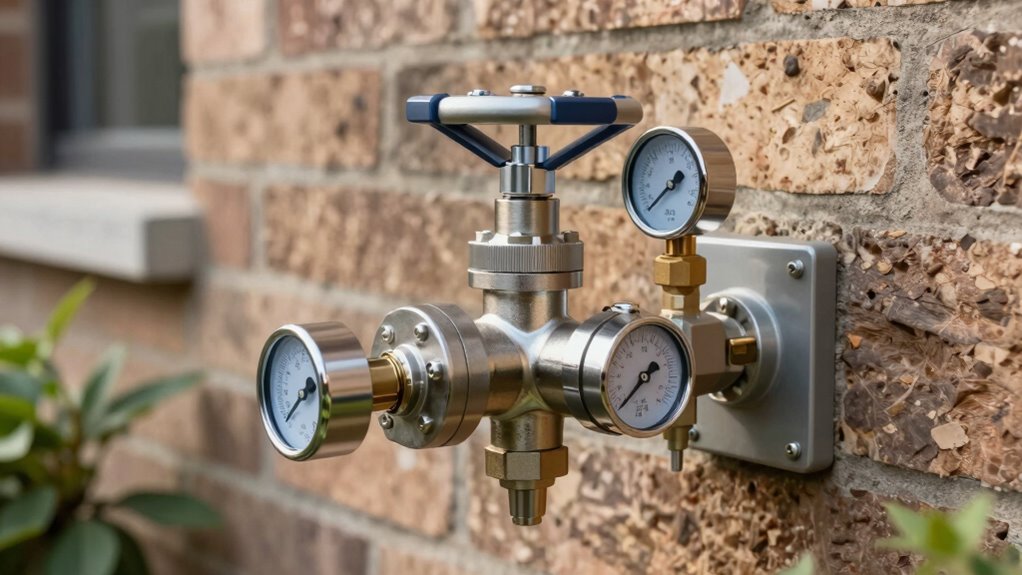
Have you ever wondered how to keep your drinking water safe from contamination? It’s a critical concern, especially during events or in facilities where multiple systems interact with your water supply. One key factor that influences water safety is water pressure. When water pressure drops unexpectedly or fluctuates, it can create a backflow, allowing contaminated water to seep into your clean supply. That’s where backflow prevention devices come into play—they act as a safeguard, preventing reverse flow and protecting your water source. But understanding how these devices work requires a look at the systems they’re integrated into, including pipe materials and how they influence water pressure.
Pipe materials are more than just the backbone of your plumbing—they also play an essential role in backflow prevention. Different pipe materials, such as copper, PVC, or galvanized steel, have varying properties that affect water pressure. For example, some materials are more resistant to corrosion and scaling, which helps maintain consistent water pressure over time. Others might develop leaks or blockages if not properly maintained, causing pressure drops that increase the risk of backflow. Choosing the right pipe materials for your system ensures a stable water pressure environment, making backflow devices more effective. Properly installed and maintained pipes help sustain the pressure needed to prevent reverse flow, especially during high-demand periods.
Choosing corrosion-resistant pipe materials maintains water pressure and enhances backflow prevention effectiveness.
When water pressure drops, the risk of backflow spikes because the pressure inside your pipes becomes lower than the surrounding environment, allowing contaminated water from various sources—like irrigation systems or nearby industrial processes—to flow back into the main supply. Backflow prevention devices, such as check valves or reduced pressure zone (RPZ) assemblies, are designed to automatically respond to these pressure changes. They act as a one-way barrier, stopping contaminated water from re-entering your drinking water system when pressure fluctuates. To guarantee these devices work properly, you must keep your water pressure within recommended ranges and avoid abrupt pressure drops, which can compromise their function.
Preventing backflow isn’t just about installing a device; it’s about understanding how water pressure and pipe materials interact within your plumbing system. Regular inspections, pressure tests, and maintenance of your pipes and backflow preventers ensure the system remains reliable. Additionally, incorporating smart technology such as pressure sensors and monitoring systems can help detect issues early and maintain optimal conditions. By paying attention to these factors, you’re safeguarding not only your water quality but also the health and safety of everyone relying on your water system. A well-designed, properly maintained system with suitable pipe materials and consistent water pressure is your best defense against backflow contamination—an essential step to protect any event or facility from potential water-related disasters.
Frequently Asked Questions
How Often Should Backflow Prevention Devices Be Inspected?
You should inspect backflow prevention devices at least once a year, following a proper maintenance schedule. Regular inspection frequency guarantees these devices function correctly and prevents contamination risks. Keep in mind that if you notice any signs of damage or irregular operation, you need to perform inspections more often until the device is repaired or replaced. Staying proactive with these inspections safeguards your water supply and adheres to local regulations.
What Are the Costs Associated With Installing Backflow Preventers?
Imagine you’re dialing up a vintage rotary phone—installation costs for backflow preventers typically range from $150 to $600, depending on your system’s complexity. Maintenance expenses are usually modest but vary with device type and inspection frequency. While the initial investment might seem steep, think of it as insurance against costly water contamination issues. Properly installed, these devices safeguard your event and save you money in the long run.
Can Backflow Preventers Fail Over Time?
Backflow preventers can fail over time, especially if you neglect device maintenance. Failure causes include debris buildup, worn-out parts, and corrosion, which can compromise their effectiveness. Regular inspections and maintenance help catch issues early, ensuring the device functions properly when needed. If you ignore these factors, you risk backflow contamination, potentially ruining an entire event. So, stay proactive with maintenance to keep your backflow preventer reliable.
Are There Different Types of Backflow Prevention Devices?
Think of backflow prevention devices like tools in a handyman’s kit—they come in different types, each suited for specific jobs. You’ve got reduced pressure zone (RPZ) devices, double check valves, and pressure vacuum breakers. Regular device maintenance is essential to guarantee they function correctly, and staying compliant with regulations keeps your system safe. Different devices meet various needs, so choosing the right one depends on your situation and local codes.
How Does Backflow Prevention Impact Water Quality Regulations?
Backflow prevention plays a vital role in maintaining water safety and guaranteeing regulatory compliance. By preventing contaminated water from flowing back into the clean water supply, you protect public health and meet local water quality standards. Installing and maintaining proper backflow prevention devices helps you adhere to regulations, avoid penalties, and ensure safe, clean water for everyone. It’s an essential step in safeguarding water quality and maintaining regulatory compliance.
Conclusion
Imagine a single device standing guard like a silent sentinel, shielding your event from unseen threats. Backflow prevention isn’t just a piece of equipment; it’s your frontline defense against chaos and contamination. When you install it, you’re not just protecting water; you’re safeguarding memories, health, and peace of mind. Don’t wait for disaster to strike—embrace this tiny hero today and keep your event flowing smoothly, like a well-orchestrated symphony.