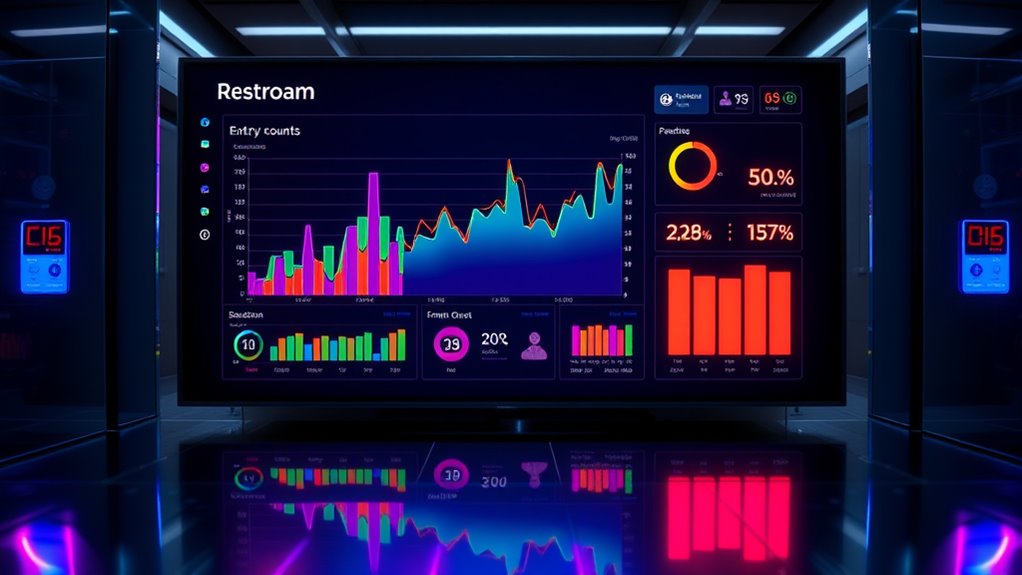

Restroom data dashboards help you monitor visitor flow by counting entries and exits in real time. They provide instant alerts when occupancy exceeds set thresholds or when supplies and cleanliness need attention. This allows you to respond proactively, improve hygiene standards, and optimize maintenance schedules. With these dashboards, you can make smarter resource decisions and enhance visitor experiences. Keep exploring to discover how you can use these tools to streamline restroom management effectively.
Key Takeaways
- Restroom data dashboards track entries and exits to analyze visitor flow and identify peak usage times.
- They provide real-time alerts for occupancy thresholds, ensuring safety and hygiene standards.
- Dashboards help monitor hygiene issues and cleanliness, enabling swift maintenance responses.
- They support data-driven decisions for resource allocation, staffing, and cleaning schedules.
- Visual insights from dashboards assist in optimizing restroom layout and infrastructure based on visitor patterns.

Restroom data dashboards are powerful tools that help facility managers monitor and optimize restroom usage, cleanliness, and maintenance in real time. With these dashboards, you gain instant insights into how often restrooms are used, allowing you to make informed decisions that enhance hygiene compliance and overall visitor experience. Tracking restroom entries and exits provides a clear picture of visitor flow analysis, enabling you to identify peak times and allocate cleaning resources efficiently. By understanding visitor patterns, you can proactively address hygiene concerns, ensuring restrooms remain clean and safe throughout the day.
One of the key advantages of restroom data dashboards is their ability to deliver real-time alerts. When certain thresholds are crossed—such as high occupancy, low supplies, or cleanliness issues—you receive immediate notifications. This proactive approach means you can respond swiftly to potential problems before they impact visitors or staff. For example, if the dashboard detects a surge in restroom entries during a busy event, you can dispatch cleaning crews or maintenance staff to prevent hygiene lapses and maintain compliance standards. These alerts help you stay ahead of issues, reducing downtime and improving overall hygiene compliance.
By integrating visitor flow analysis into your restroom management strategy, you can optimize cleaning schedules based on actual usage rather than fixed intervals. If data shows that restrooms are most heavily used during specific hours, you can increase cleaning frequency during those times, ensuring higher hygiene standards are maintained. Conversely, during slower periods, you can reduce staffing and cleaning efforts, saving costs without sacrificing cleanliness. This targeted approach enhances hygiene compliance by aligning cleaning and maintenance efforts directly with visitor behavior.
Restroom data dashboards also support data-driven decision-making, giving you concrete evidence to justify resource allocation or infrastructure investments. For instance, if certain restrooms consistently see higher traffic, you might consider expanding facilities or upgrading fixtures to better handle demand. Additionally, analyzing visitor flow helps you identify bottlenecks or areas where congestion occurs, allowing you to redesign layouts or add signage to improve flow and hygiene practices.
Frequently Asked Questions
How Often Should Restroom Data Be Updated for Accuracy?
You should update restroom data at least daily to guarantee data freshness and maintain accuracy. The update frequency depends on how often restroom usage varies; higher traffic areas may need multiple updates per day. Regular updates help you identify issues quickly and keep your dashboards reliable. By staying consistent with your update schedule, you ensure the data remains current, enabling better decisions and prompt alerts when necessary.
What Privacy Measures Are in Place for Restroom Usage Data?
Did you know that over 80% of restroom data dashboards prioritize user privacy? You should know that strict privacy measures are in place, including data anonymization, which removes personal identifiers to safeguard user privacy. This ensures that usage patterns are analyzed without compromising individual identities. By combining anonymization techniques with secure data handling practices, you can trust that restroom usage data remains confidential and respects user privacy at all times.
Can Dashboards Integrate With Existing Building Management Systems?
Yes, dashboards can integrate with your existing building management systems. They’re designed for seamless building integration, ensuring compatibility with various system protocols. By linking your restroom data dashboard to your building’s infrastructure, you can centralize data monitoring and improve management efficiency. Just check system compatibility beforehand, and your dashboard will work smoothly alongside your current management tools, providing real-time insights and alerts effortlessly.
How Customizable Are the Alert Thresholds for Different Restrooms?
You can customize alert thresholds easily based on your specific needs, offering great threshold customization for each restroom. The alert flexibility allows you to set different parameters depending on traffic patterns or time of day, ensuring you’re promptly notified when usage exceeds or drops below certain levels. This way, you maintain control over your restroom management, making adjustments as usage trends change or priorities shift.
What Training Is Needed to Interpret Restroom Data Dashboards Effectively?
Think of data visualization as your map through a maze; you need the right directions to find your way. You’ll want user training that covers dashboard basics, how to interpret entry counts and alerts, and recognizing patterns. This training turns raw data into clear insights, helping you act swiftly. With proper guidance, you’ll navigate restroom data dashboards confidently, transforming numbers into actionable stories that keep everything running smoothly.
Conclusion
As you monitor restroom data dashboards, you realize how every entry and alert reveals a story—sometimes urgent, sometimes unexpected. It’s a reminder that behind each number, there’s a person’s need or moment of relief. That quiet coincidence, where data and daily life intersect, makes your work meaningful. You’re not just counting entries; you’re ensuring comfort and safety, often when it’s needed most. And in that, you find purpose and connection.