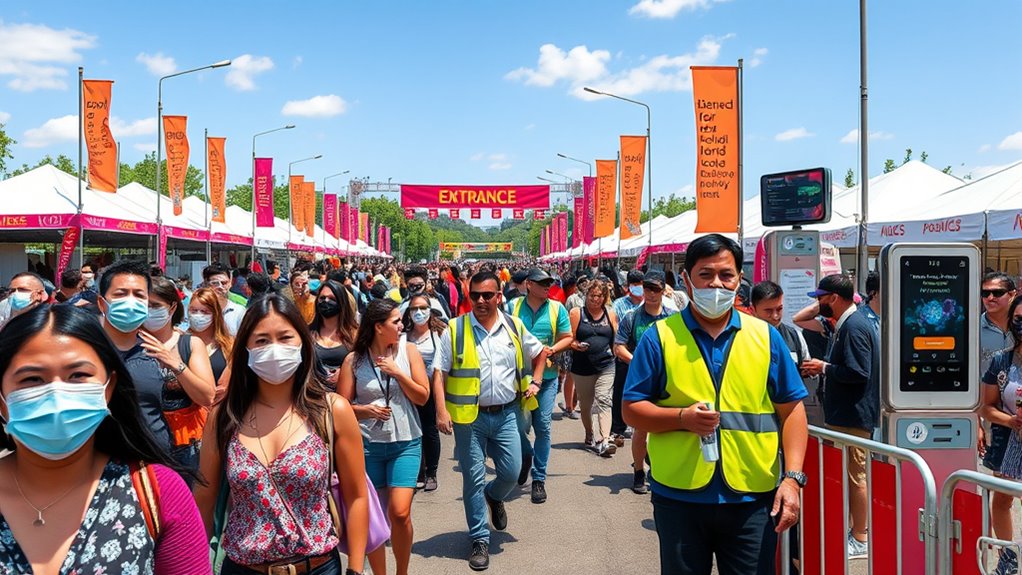

To guarantee your public event complies with health codes, you should focus on effective crowd management, safety protocols, and permit requirements. Use designated entry and exit points, clear signage, and barriers to control flow and prevent overcrowding. Incorporate hygiene measures like sanitation stations and mask policies, and consider contactless systems for tickets and payments. Securing necessary permits proves your commitment to safety and compliance. Keep these essentials in mind, and you’ll be better prepared to host a safe, smooth event.
Key Takeaways
- Obtain necessary permits that comply with local health and safety regulations before planning the event.
- Develop a comprehensive crowd management plan including entry/exit strategies and signage to prevent congestion.
- Incorporate health safety measures such as sanitation stations, mask mandates, and contactless ticketing systems.
- Prepare emergency response protocols and ensure staff are trained to handle health-related incidents.
- Regularly review and adapt plans to align with evolving health guidelines and ensure attendee safety.
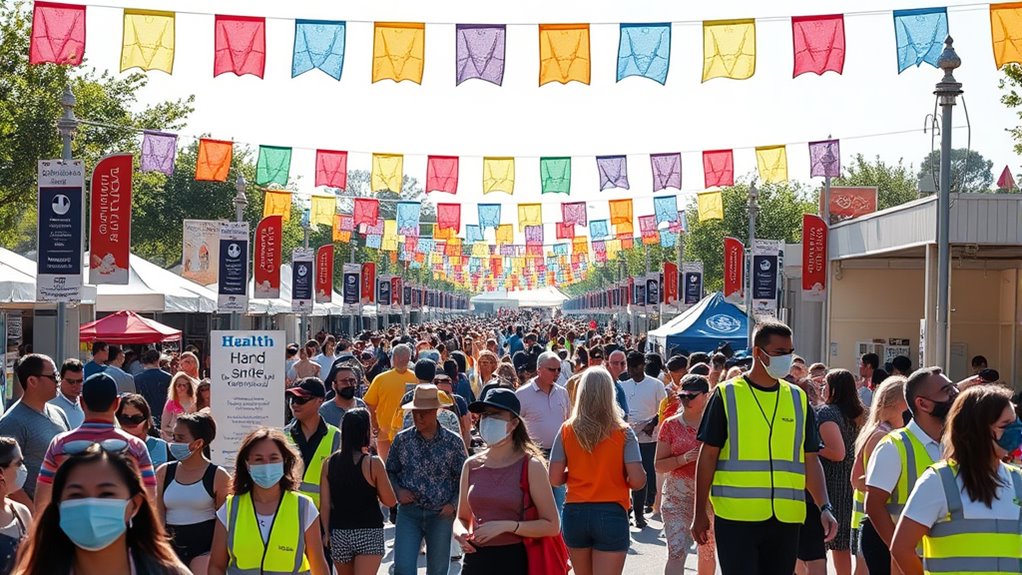
Have you ever wondered how public events stay safe during health crises? It all comes down to careful planning, especially when it involves crowd management and understanding permit requirements. When organizing a large gathering, your primary goal is to control the flow of people efficiently, ensuring everyone can enjoy the event without risking safety. Crowd management becomes your first line of defense, requiring strategies like designated entry and exit points, clear signage, and sufficient staffing to monitor and direct attendees. By managing how people move and where they gather, you reduce congestion and minimize potential health risks.
But crowd management isn’t just about controlling movement; it also involves planning for emergencies and maintaining social distancing protocols when necessary. You’ll need to implement measures such as staggered entry times or timed ticketing to prevent overcrowding. Also, consider using barriers and markers to guide foot traffic and keep groups separated. This proactive approach not only helps in enforcing health guidelines but also reassures attendees that their safety is a priority. Incorporating public water parks into your planning can provide additional recreational options that promote social distancing and outdoor activity, further enhancing safety.
Alongside crowd management, permit requirements play a crucial role in ensuring your event complies with local health and safety regulations. Before you finalize your plans, check with your city or health department to understand what permits are needed. These permits often require detailed plans covering sanitation procedures, emergency response, and crowd control measures. Securing the right permits isn’t just a bureaucratic step; it’s a way to validate that your event meets health standards and is prepared to handle the specifics of a large gathering during a health crisis. Skipping this step can lead to fines, shutdowns, or worse, putting your attendees at risk.
Once you’re aware of the permit requirements, you can tailor your event plan accordingly. This might include setting up sanitation stations, enforcing mask mandates, or implementing contactless ticketing and payment systems. Ensuring your event aligns with the permits not only helps you stay compliant but also builds trust with attendees, showing that you prioritize their health and safety.
Align your event with permits by adding sanitation stations, mask policies, and contactless systems to ensure safety and trust.
In essence, managing a public event during a health crisis hinges on meticulous crowd management and adherence to permit requirements. Both aspects work together to create a safe environment, prevent the spread of illness, and demonstrate your responsibility as an organizer. When you plan carefully and follow the necessary regulations, you can deliver a successful event that respects health guidelines while providing a memorable experience for everyone involved.
Frequently Asked Questions
How Do Health Codes Vary Between Different Cities or States?
You’ll notice health codes differ between cities and states due to regional differences and enforcement variations. Some areas have strict guidelines, requiring detailed safety measures, while others are more relaxed. It’s vital to research local regulations before planning your event, as enforcement can vary widely. Staying informed helps you make certain of compliance, avoid fines, and keep attendees safe, regardless of where your event takes place.
Are There Penalties for Non-Compliance With Health Codes at Events?
Yes, you can face fines and sanctions if you don’t comply with health codes at your event. Non-compliance can also lead to legal liabilities, including lawsuits or shutdown orders. To avoid these consequences, guarantee you follow all local health regulations, maintain proper safety measures, and stay updated on any changes. Being proactive not only protects attendees but also shields you from costly penalties and legal issues.
How Can Organizers Verify the Health Status of Attendees?
Think of attendee screening as your event’s shield, keeping everyone safe. You can verify health status through digital verification tools that act like digital passports, quickly confirming vaccination or test results. By implementing these methods, you guarantee each guest’s health credentials are legit, much like a gatekeeper checking IDs. This proactive step helps prevent outbreaks and builds trust, making your event a safe space for all attendees.
What Are the Best Practices for Updating Health Protocols Quickly?
You should keep health protocols up-to-date by utilizing digital signage to quickly communicate changes to attendees and staff. Make certain staff training is ongoing so your team can implement new procedures smoothly. Regularly monitor official health advisories, and immediately update signage and training materials as guidelines evolve. This approach helps everyone stay informed, adaptable, and compliant, minimizing risks during your event.
How Do Health Codes Impact Event Insurance and Liability?
You might worry about liability insurance and risk management, but neglecting health codes can make things worse. Health codes directly impact your event’s coverage, as non-compliance can lead to denied claims or increased liability. Staying current ensures your liability insurance protects you effectively, minimizing risks. By adhering to health codes, you demonstrate responsible risk management, protecting your organization and participants from costly legal and health-related issues.
Conclusion
Staying informed about health codes is essential for hosting successful public events. Did you know that over 60% of event organizers reported implementing new health measures in response to recent health crises? By understanding these guidelines, you not only protect attendees but also guarantee your event runs smoothly. Keep up-to-date with local regulations, prioritize safety, and you’ll create a memorable, safe experience everyone can enjoy. Your proactive approach makes all the difference.