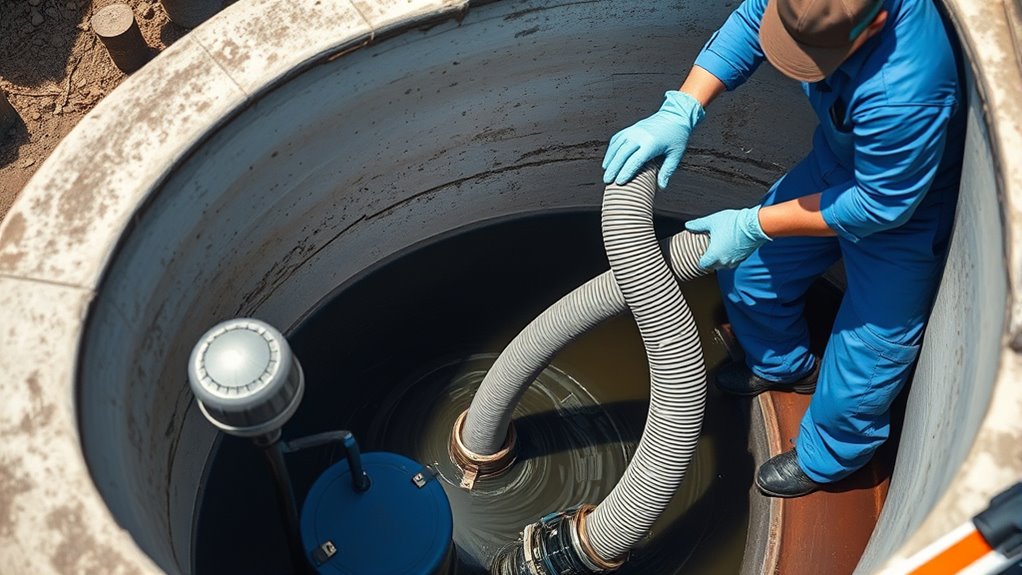

During a pump-out, a technician will carefully remove the septic tank lid and inspect it for any damage or issues. Then, they connect a specialized hose to extract the waste efficiently, which can take 20 minutes to an hour. They’ll check for cracks or leaks and guarantee the area is clean afterward. Want to know all the details of what happens during the process? Keep going to learn more.
Key Takeaways
- The technician will locate and carefully remove the septic tank lid for inspection.
- Pumping involves attaching a hose to extract waste, which may produce a loud humming sound.
- The process typically takes 20 minutes to an hour, with continuous monitoring of waste flow.
- During pump-out, the technician inspects the tank for cracks, leaks, or damage requiring repairs.
- After pumping, the area is cleaned, and maintenance advice is provided to prevent future issues.
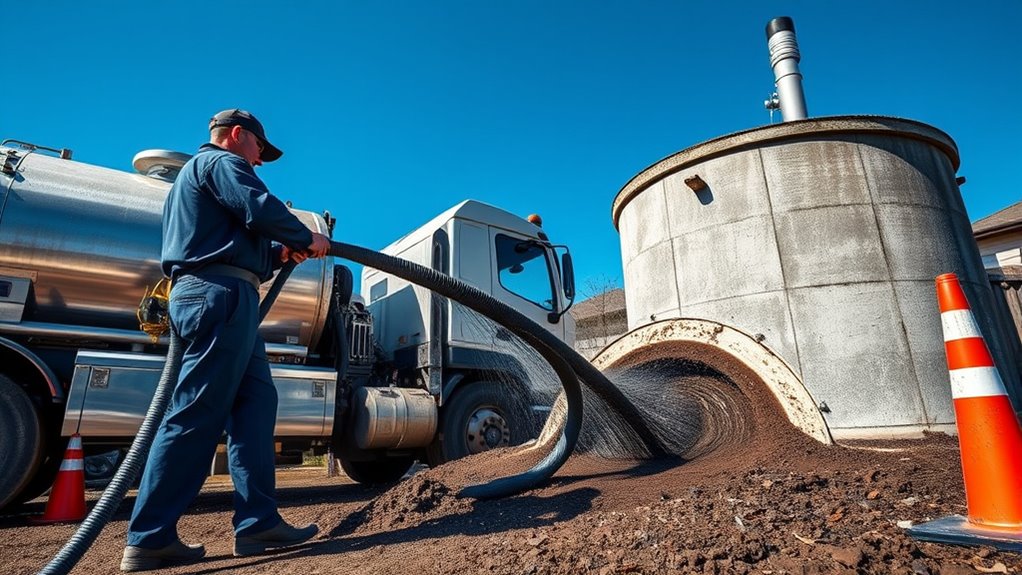
Pumping and service are essential components of maintaining reliable equipment and ensuring ideal performance. When it comes to septic systems, regular septic tank maintenance is crucial to prevent backups, odors, and costly repairs. A professional pump-out removes accumulated sludge and scum, keeping your system functioning smoothly. Understanding what to expect during a pump-out can help you prepare and ensure the process goes efficiently. Typically, a technician will arrive equipped with the necessary tools and a large waste tank to handle the contents of your septic system. They’ll start by locating your septic tank, which might be buried underground, often marked by a lid or access point. Once located, the technician will remove the lid carefully, checking for any signs of damage or issues that might require attention beyond a routine pump-out.
Next, the technician will attach a specialized hose to the tank’s outlet, starting the pumping process. You might notice a loud hum or the sound of the pump as it begins to extract the sludge and effluent. This process can take anywhere from 20 minutes to an hour, depending on the tank size and level of buildup. During this time, the technician will monitor the flow and ensure the waste is being transferred efficiently to their truck’s containment tank. It’s important to remember that septic tank maintenance isn’t just about removing waste; it also involves inspecting the tank for cracks, leaks, or other issues that could compromise the system. If problems are identified, the technician will advise you on necessary repairs or further inspections.
Additionally, using proper cleaning solutions and following maintenance routines can help extend the lifespan of your septic system. If your system is experiencing an emergency, such as a sudden backup or overflow, emergency pump out procedures come into play. In these situations, quick action is vital to prevent property damage and health hazards. You should contact a professional immediately, who will prioritize your call and arrive promptly. During an emergency pump-out, the technician will expedite the process, often using specialized equipment to handle larger volumes of waste rapidly. They’ll also assess the cause of the issue and recommend urgent repairs to avoid future incidents. After the pump-out, the technician will clean the area around the tank, ensuring no residual waste remains, and may provide tips for ongoing septic tank maintenance to prevent future emergencies.
Frequently Asked Questions
How Often Should I Schedule a Pump-Out Service?
You should schedule a pump-out service every 3 to 5 years, depending on your usage and tank size. Regular maintenance tips include monitoring your tank’s levels and odors, which can signal when it’s time. Setting scheduling reminders helps you stay on top of this essential task, preventing overflows and costly repairs. Consistent pump-outs guarantee your system remains in good shape and functions efficiently over time.
Are There Environmental Regulations for Pump-Out Disposal?
Think of disposal regulations as a strict traffic cop guiding waste safely away. Yes, there are environmental regulations for pump-out disposal, ensuring your waste doesn’t spill into our waters like a runaway horse. You must follow environmental compliance standards and proper disposal regulations to protect the environment. Ignoring these rules risks hefty fines and environmental harm, so always work with licensed providers who follow the legal pathways for waste management.
Can I Perform a Pump-Out Myself?
You can perform a DIY maintenance pump-out if you have the proper pump out equipment and experience. However, it’s essential to follow safety guidelines and environmental regulations. Make sure you understand how to operate the equipment correctly, and take precautions to prevent spills or contamination. If you’re unsure or lack experience, it’s best to hire a professional to guarantee the pump-out is done safely and properly, avoiding potential hazards.
What Should I Do if There’s a Delay in Service?
Waiting for service is like watching a pot that just won’t boil. If there’s a delay, contact the service provider to check on your maintenance scheduling and ask about any emergency procedures. Stay patient and avoid attempting to fix or pump out the system yourself, as this could cause damage or delays. Keep emergency contacts handy, and follow any updated instructions they provide to ensure safety and proper resolution.
How Can I Tell if My System Needs a Pump-Out?
You can tell if your system needs a pump-out by monitoring signs like slow drains, foul odors, or standing water around the tank area. Regular tank maintenance and system inspections help catch issues early. If you notice these signs, schedule a professional pump-out promptly to prevent costly repairs and ensure your system functions efficiently. Staying proactive with inspections keeps your system healthy and avoids unexpected failures.
Conclusion
So, while a pump-out might seem like just another maintenance task, it’s actually a crucial part of keeping your system running smoothly. Think of it as a quick visit to the doctor—uncomfortable but necessary for long-term health. Don’t wait until issues arise; regular service ensures peace of mind and a well-functioning system. Embrace the process, knowing that a little effort now prevents bigger problems later. Your future self will thank you.