
When deciding between handwashing and sanitizer, remember that soap and water are more effective when your hands are visibly dirty or greasy, as they physically remove dirt, grease, and a wider range of microbes. Hand sanitizers work well in a pinch when soap isn’t available and your hands are clean, as they denature proteins and destroy many germs. To protect yourself better, understanding when and how to use each method can make a big difference—more details follow.
Key Takeaways
- Use soap and water when hands are visibly dirty or greasy for thorough cleaning.
- Opt for hand sanitizer when soap and water are unavailable and hands are clean.
- Handwashing is more effective at physically removing dirt, grease, and microbes.
- Sanitizers quickly reduce microbes but are less effective on soiled hands.
- Regular hand hygiene, combining both methods, offers the best protection against infections.
Have you ever wondered which method is more effective for keeping germs at bay: handwashing or sanitizer? When it comes to hand hygiene, understanding the strengths and limitations of each can considerably impact your approach to infection control. Handwashing with soap and water is often regarded as the gold standard because it physically removes dirt, grease, and a broad spectrum of microbes from your skin. This process not only cleans your hands but also breaks down the lipid membranes of many viruses, including some strains of coronavirus. Proper handwashing takes at least 20 seconds and covers all surfaces of your hands, including under your nails and between fingers. It’s especially effective when hands are visibly dirty or greasy, as soap’s surfactants latch onto grime and microbes, making them easier to rinse away with water. Additionally, handwashing is more effective at removing certain microorganisms that can be resistant to alcohol-based sanitizers.
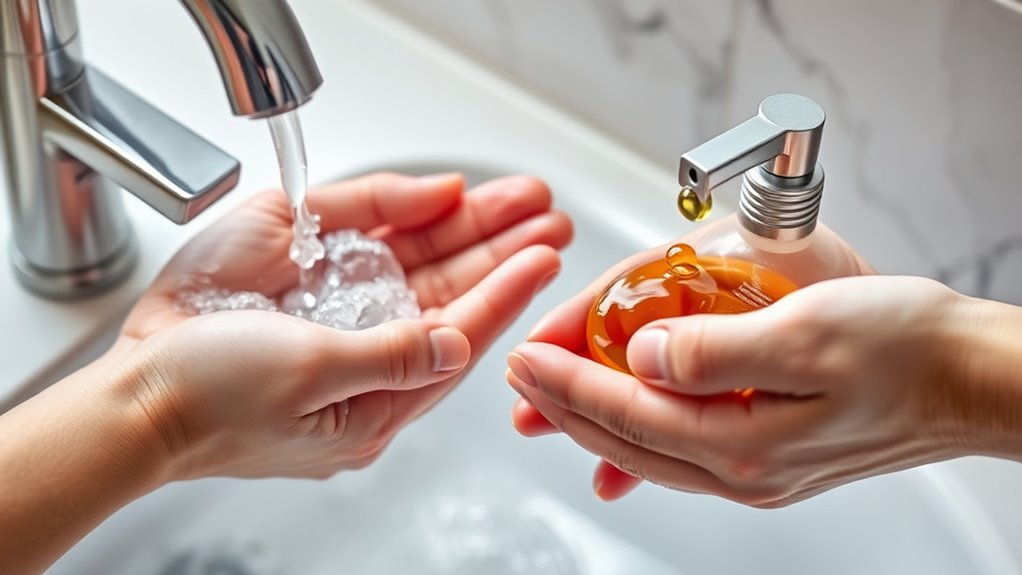
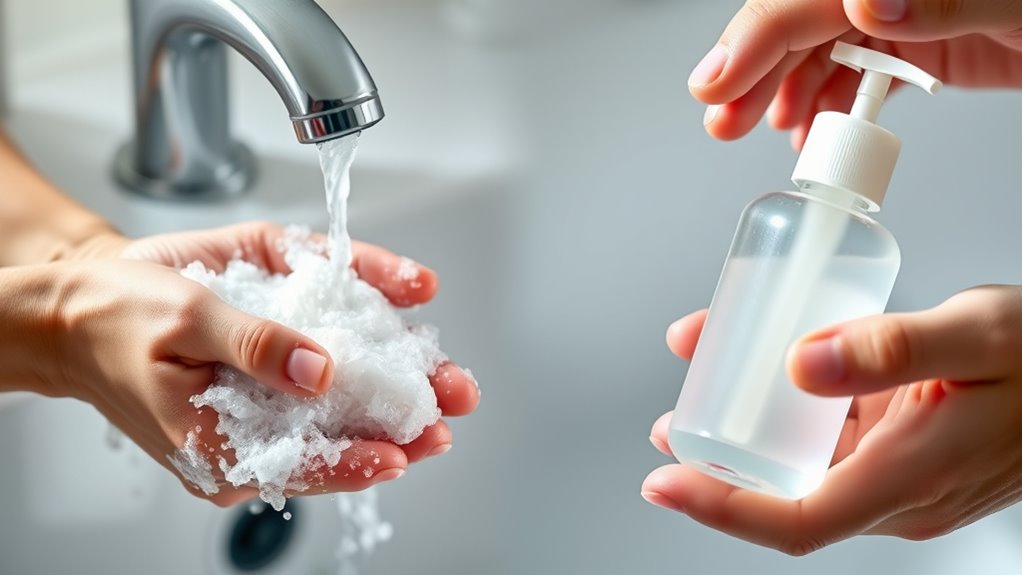
Handwashing with soap and water effectively removes dirt, grease, and microbes, breaking down virus membranes for thorough cleaning.
On the other hand, hand sanitizers—particularly those containing at least 60% alcohol—offer a quick and convenient alternative when soap and water aren’t available. Alcohol-based sanitizers work by denaturing proteins and destroying the outer lipid layer of many bacteria and viruses, rendering them inactive. They are effective against a broad spectrum of microorganisms, making them a dependable tool in infection control, especially in public settings or on the go. However, sanitizers are less effective when hands are visibly dirty or greasy because the alcohol can’t reach embedded microbes beneath dirt or oils. In such cases, using sanitizer alone won’t suffice; you need to wash your hands thoroughly.
When choosing between handwashing and sanitizer, consider the situation. If your hands are visibly soiled or greasy, hand hygiene through washing is your best bet. It physically removes germs and debris, providing a more comprehensive cleanse. But if soap and water aren’t accessible, alcohol-based sanitizer is a practical and effective alternative for reducing microbial presence. Both methods contribute to infection control, but they shouldn’t replace each other entirely. Regular handwashing remains the most effective way to ensure ideal hand hygiene, especially in healthcare settings or during outbreaks. Using sanitizer as a supplementary measure or when handwashing isn’t feasible can help you maintain good hygiene habits.
Ultimately, combining both methods appropriately maximizes your protection against germs. Good hand hygiene practices—whether through washing or sanitizing—are essential in preventing the spread of infections. Staying aware of when and how to use each method ensures you’re doing your part to stay safe and healthy.
Frequently Asked Questions
Can Hand Sanitizer Replace Washing Hands in Food Preparation?
Hand sanitizer can’t fully replace handwashing in food prep because of its limitations, such as not removing dirt and grease effectively. Handwashing has clear advantages, like physically cleaning away bacteria and contaminants. When preparing food, you should use soap and water whenever possible, especially after handling raw meat or produce. Hand sanitizer is a good backup, but it shouldn’t be your only method for maintaining hygiene in food preparation.
How Effective Is Hand Sanitizer Against Different Types of Germs?
Think of hand sanitizer as a quick, powerful knight against germs, but not invincible. Its germ eradication abilities depend on sanitizer potency and the type of germs. It’s highly effective against many bacteria and viruses, but less so against spores or heavy grime. So, while it’s great for on-the-go germ fighting, for thoroughness, especially after handling raw food, handwashing remains your ultimate shield.
Are There Skin Health Concerns With Frequent Hand Sanitizer Use?
Frequent hand sanitizer use can cause skin irritation and moisture loss, especially if it contains high alcohol levels. You might notice your skin becoming dry, cracked, or red, which can increase vulnerability to infections. To protect your skin, use moisturizers regularly and opt for sanitizers with added skin-nourishing ingredients like aloe vera. Limiting use when possible and washing with soap and water can also help maintain healthier skin.
Does Hand Sanitizer Work Equally Well on All Skin Types?
Hand sanitizer doesn’t work equally well on all skin types, especially if you have skin sensitivity. If your skin is delicate or prone to irritation, alcohol-based sanitizers can cause discomfort or dryness. While sanitizer efficacy remains high for most, sensitive skin might need gentler options to stay protected without skin health concerns. Always choose a sanitizer formulated for sensitive skin to keep your hands clean without the irritation.
What Are the Environmental Impacts of Widespread Hand Sanitizer Use?
Widespread hand sanitizer use can contribute to environmental pollution, mainly through plastic waste from bottles and packaging. Many sanitizers contain plastic components that take years to decompose, adding to plastic waste. Additionally, the chemicals in sanitizers may harm aquatic life if not disposed of properly. To minimize environmental impact, consider using eco-friendly options and reducing overall sanitizer use when possible.
Conclusion
So, next time you’re faced with the choice, remember: handwashing is the superhero that fights germs head-on, while sanitizer is the quick-fix sidekick. Sure, sanitizer’s handy when water’s nowhere to be found, but don’t rely on it to do the heavy lifting. In the battle of clean hands, wash like a pro—your future self will thank you. After all, nothing beats the classic charm of soap and water—your germ-fighting BFFs.