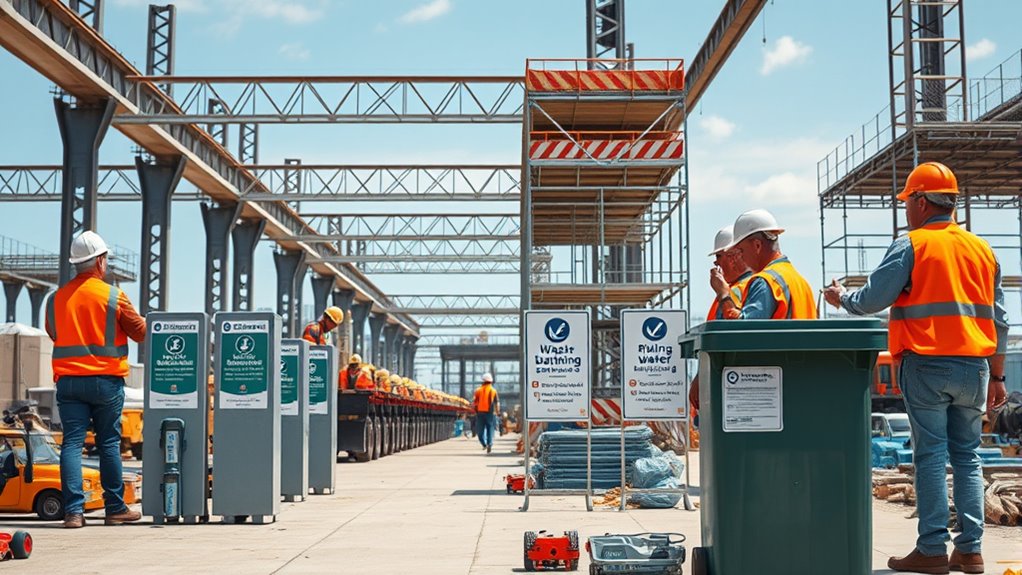

Maintaining proper sanitation on your construction site is crucial for safety, health, and OSHA compliance. You need to provide clean toilets, handwashing stations, and access to potable water, guaranteeing they’re well-maintained and conveniently located. Proper hazardous waste management and worker training are essential to prevent spills and health hazards. Following OSHA standards not only keeps your site safe but also boosts productivity. Keep going to discover more ways to guarantee a clean, compliant, and safe construction environment.
Key Takeaways
- OSHA requires proper sanitation facilities like toilets, handwashing stations, and potable water for worker safety.
- Hazardous waste must be identified, stored, labeled, and disposed of following OSHA guidelines to prevent health risks.
- Regular cleaning and inspections of sanitation facilities ensure hygiene and compliance with safety standards.
- Worker training on waste management and sanitation procedures helps prevent violations and promotes safety culture.
- Implementing sanitation and waste management best practices reduces health hazards, project delays, and environmental impact.
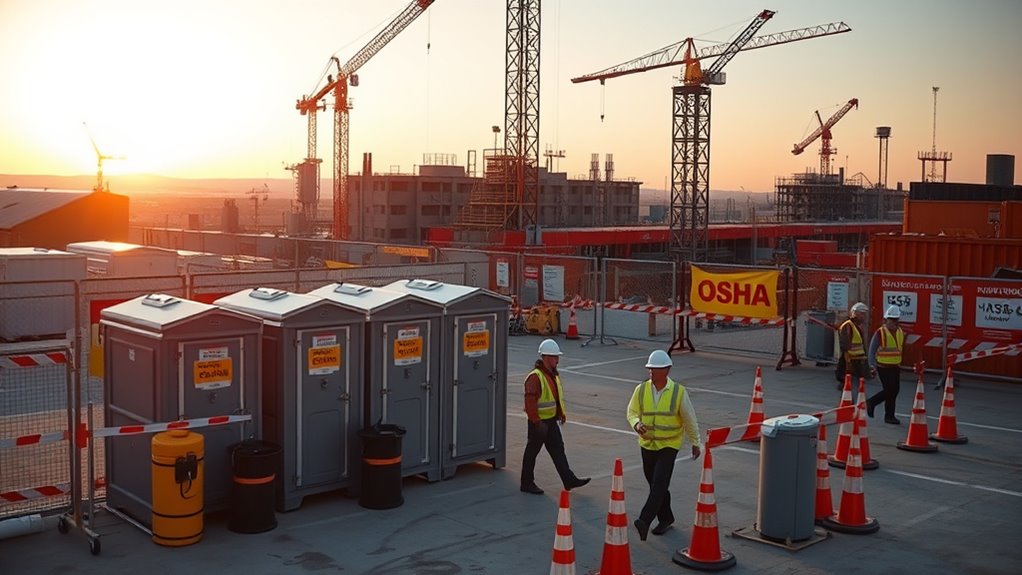
Construction site sanitation is fundamental for maintaining a safe and efficient work environment. When you prioritize proper sanitation, you reduce health risks and guarantee compliance with OSHA regulations. One critical aspect of sanitation is managing hazardous waste properly. You need to identify, contain, and dispose of hazardous waste safely to prevent contamination and protect workers and the surrounding community. This includes chemicals, paints, solvents, and other materials that could pose health hazards if mishandled. Proper storage containers, clear labeling, and strict disposal procedures are essential. OSHA mandates that you follow specific guidelines for hazardous waste to prevent spills, leaks, or accidental exposure. Failing to do so can result in serious safety violations and costly penalties.
Proper hazardous waste management ensures safety, compliance, and environmental protection on construction sites.
Another key component is providing adequate sanitation facilities. You must guarantee that workers have access to clean, functioning toilets, handwashing stations, and potable water. These facilities should be conveniently located and maintained regularly to prevent contamination and odors. Handwashing stations, in particular, are indispensable for minimizing the spread of germs and reducing the risk of illness. OSHA emphasizes that sanitation facilities should be sufficient for the number of workers on-site and should meet all health and safety standards. You should also provide supplies like soap, paper towels, and waste receptacles to keep the area hygienic. Studies show that proper sanitation facilities can significantly reduce the incidence of workplace illnesses and injuries.
Maintaining these facilities isn’t just about meeting regulations; it’s about creating a healthier work environment. When sanitation facilities are neglected, workers may resort to unsafe practices, such as improper waste disposal or using unsanitary conditions, which increases the chance of infections or accidents. You must also establish protocols for regular cleaning and inspection of all sanitation areas. This proactive approach helps identify issues before they escalate and guarantees compliance with OSHA standards. Proper training for workers on waste management and hygiene practices is equally important so everyone understands their responsibilities.
In addition, managing hazardous waste responsibly and providing adequate sanitation facilities contribute to overall site safety and efficiency. When workers have access to proper sanitation, they’re more likely to follow safety protocols, reducing downtime and preventing health issues. This, in turn, helps keep the project on schedule and within budget. Remember, OSHA’s guidelines aren’t just bureaucratic hurdles—they’re designed to protect you, your team, and the environment. By prioritizing these sanitation practices, you demonstrate your commitment to a safe, compliant, and productive construction site. Incorporating security measures into site operations can further enhance safety and protection against potential hazards.
Frequently Asked Questions
How Often Should Portable Toilets Be Serviced on Construction Sites?
You should service portable toilets at least every 3 to 7 days, depending on the number of workers and usage. Regular portable toilet maintenance is essential to maintain sanitation standards and prevent odors. Incorporate a thorough sanitation schedule planning to make sure of timely servicing, especially during busy periods. This proactive approach helps keep the site clean, safe, and compliant with OSHA regulations, protecting workers’ health and well-being.
What Are the Best Practices for Managing Construction Waste?
Managing construction waste is like juggling fireballs—you need a steady hand and clear strategy. You should implement waste segregation to separate recyclables from debris, making disposal easier and more eco-friendly. Adopt recycling strategies that prioritize reuse and recycling of materials whenever possible. Keep work areas organized, designate specific bins for different waste types, and train your team to follow these practices. This approach minimizes environmental impact and keeps your site safe and efficient.
How Can Workers Report Sanitation Hazards Effectively?
You can report sanitation hazards effectively by promptly using hazard reporting protocols established on your site. Notify your supervisor or designated safety officer as soon as you notice any sanitation issues, and document the hazards clearly. Follow sanitation protocols closely, guaranteeing your report is detailed and accurate. This proactive approach helps maintain a safe work environment, prevents accidents, and ensures that sanitation concerns are addressed swiftly and properly.
Are There Specific OSHA Requirements for Handwashing Stations?
You need to ensure proper Handwashing Facilities are available at your site to meet OSHA requirements. OSHA mandates that employers provide accessible handwashing stations with soap and water, especially in areas where contamination risk is high. Sanitation Enforcement guarantees these standards are upheld, helping prevent health hazards. Regular inspections and maintenance of these facilities are essential to comply with OSHA rules and keep workers safe and healthy on the job.
What Training Is Necessary for Proper Sanitation Procedures?
Just like a knight needs armor, you need proper training on sanitation procedures. You should understand how to use personal protective equipment and hazard communication to prevent contamination. OSHA requires training on sanitation protocols, including handwashing and waste disposal, to keep everyone safe. This training guarantees you’re aware of best practices, reducing health risks on-site. Stay sharp, stay safe—your knowledge is your best defense.
Conclusion
Remember, maintaining meticulous sanitation minimizes messes, mishaps, and medical matters. By diligently disposing of debris, designing designated sanitation stations, and staying vigilant, you create a cleaner, safer construction site. Your commitment to cleanliness cultivates a confident, compliant crew and a clutter-free workspace. Keep the site sanitized, secure, and structured—success thrives when sanitation stays central. With consistent care and clear compliance, you craft a construction zone that’s safe, sanitary, and superbly structured for success.