When setting up water filtration temporarily, you should know that physical filters like sediment and carbon filters mainly remove dirt, silt, chemicals, and odors, improving taste and clarity. However, they don’t fully eliminate viruses or bacteria. To guarantee water safety, using chemical disinfectants like chlorine or iodine in combination with filters is essential. If you want to understand exactly what each filter can do, keep exploring how these systems work together.
Key Takeaways
- Pre-filters mainly remove sediments, dirt, and larger particles from water.
- Carbon filters reduce chemicals, improve taste, and eliminate odors.
- Physical filters alone do not effectively remove viruses or bacteria.
- Combining physical filtration with chemical disinfection enhances water safety.
- Proper maintenance and certification ensure filters perform reliably in temporary setups.
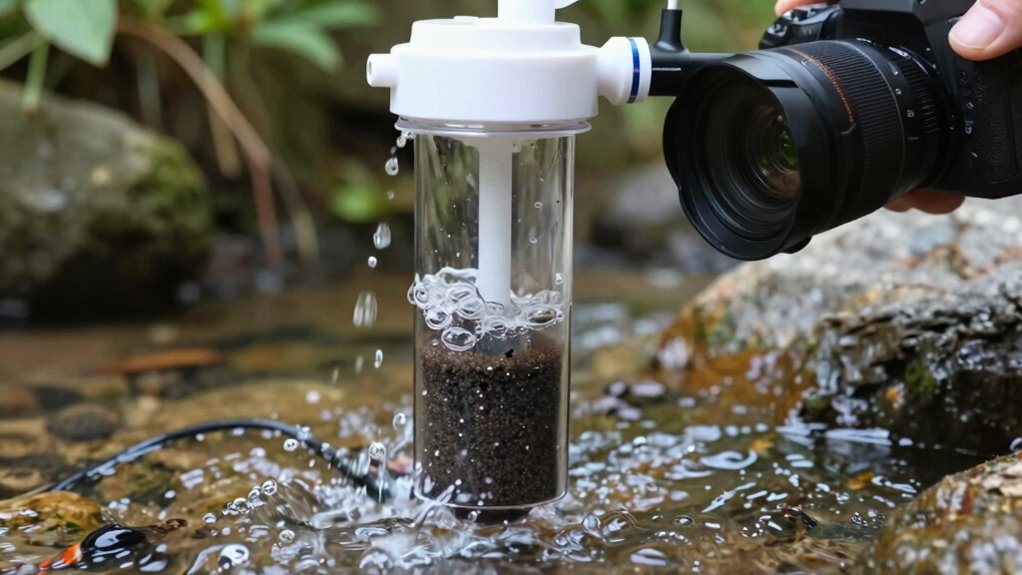
When setting up a temporary water supply, ensuring clean and safe water is essential for health and convenience. Whether you’re working on a construction site, preparing for an outdoor event, or managing emergency relief efforts, reliable filtration methods are vital. Portable units are often your best option because they’re easy to transport, quick to set up, and adaptable to various situations. These units typically include a combination of filters designed to remove contaminants, bacteria, and sediments, providing a safe water source in unpredictable conditions. To enhance safety further, chemical treatments are frequently used alongside physical filtration, especially when bacterial or viral contamination is a concern. Chemical treatments, such as chlorine or iodine tablets, help neutralize pathogens that filters alone might not fully eliminate.
Your portable units often feature multiple stages, where each stage targets specific impurities. For instance, a common setup might include a pre-filter to remove sediments and larger particles, followed by a carbon filter that reduces chemicals and improves taste and odor. These units are effective at removing common pollutants like dirt, silt, and organic compounds, making the water more palatable and safer to drink. However, physical filters alone don’t guarantee pathogen removal. This is where chemical treatments come into play, killing or inactivating bacteria, viruses, and other microorganisms that filters can’t fully eliminate. You simply add the appropriate chemical treatment according to the instructions, wait for the recommended contact time, and then your water becomes much safer.
Additionally, understanding the limitations of physical filters helps in choosing the right combination for your specific needs. It’s important to understand what your chosen filters can and cannot do. While portable units equipped with activated carbon filters excel at removing chemicals, chlorine, and some odors, they typically don’t remove all viruses or bacteria without additional treatment. That’s why combining physical filtration with chemical disinfection is the most effective approach in many temporary setups. Always follow manufacturer instructions for both filters and chemical treatments to ensure safety. Regular maintenance and replacement of filters are crucial, especially when filtering large quantities of water or highly contaminated sources. Remember, no single method is foolproof—using a combination of portable units and chemical treatments provides the best protection against contaminants.
Moreover, selecting filters with certified performance standards can significantly improve reliability and safety in your water purification process.
Frequently Asked Questions
How Often Should I Replace Water Filters in Temporary Setups?
You should replace water filters in temporary setups every 2 to 4 weeks, depending on filter lifespan and usage. Check the manufacturer’s recommendations, as replacement frequency varies with water quality and flow rate. If you notice reduced flow or bad taste, it’s time for a new filter. Regularly replacing filters guarantees clean, safe water and peak filtration performance during your setup.
Can Portable Filters Remove Viruses From Water?
Imagine you’re camping and want safe drinking water. Portable filters with UV sterilization can effectively remove viruses, including Norovirus, from water. Activated carbon filters also help by removing chemicals and improving taste. While UV sterilization kills viruses, it doesn’t remove particles or chemicals. Combining these methods provides better protection, ensuring your water is safe to drink. Remember to replace filters regularly for peak performance.
Are Chemical Treatments Necessary Alongside Physical Filters?
You should consider using chemical additives alongside physical filters for thorough water safety. Chemical treatments, like chlorine or iodine, target viruses and bacteria that filters might miss, especially if filter compatibility is uncertain. Combining filtration with chemicals ensures broader protection, making your water safer for drinking. Always check if your filter is compatible with chemical treatments to avoid damaging it or reducing effectiveness. This approach guarantees complete purification in temporary setups.
What Is the Best Filter for Removing Odors and Tastes?
The best filter for removing odors and tastes is one with activated carbon. It effectively adsorbs organic compounds responsible for unpleasant smells and flavors, providing cleaner, better-tasting water. You should look for a filter with a high-quality activated carbon media, as it offers superior odor removal. Regularly replacing the filter guarantees consistent performance, so you enjoy fresh water without the lingering tastes or odors that can ruin your experience.
How Do I Ensure Filter Effectiveness in Outdoor Environments?
To guarantee filter effectiveness outdoors, you should regularly maintain your filter and check for clogs or wear. Use UV sterilization to kill bacteria and viruses that may bypass physical filters. Keep up with filter maintenance by cleaning or replacing components as recommended, especially after exposure to dirt or debris. This combined approach guarantees cleaner, safer water during your outdoor activities.
Conclusion
When you set up a temporary water filter, you want peace of mind, not just clear water. While some filters boast removal of bacteria and viruses, they often fall short against chemicals or heavy metals. Think of your filter as a guard—sometimes it’s enough, sometimes it’s not. Choosing the right one means balancing what’s essential with what’s realistic. After all, in temporary setups, clarity isn’t just about appearance; it’s about safety.