Macerator pumps are handy tools that break down waste into a slurry for easy pumping through narrow pipes, making them perfect for basement bathrooms, small apartments, or RVs where traditional plumbing isn’t feasible. They’re ideal for organic waste but can’t handle large, non-degradable items or excessive solids that could damage the blades. Proper maintenance keeps these pumps running smoothly, and understanding their limits helps you get the best performance—stick around to learn more about their uses and care.
Key Takeaways
- Macerator pumps efficiently grind and transport organic waste in tight spaces or limited plumbing setups.
- They are ideal for basement bathrooms, RVs, or small apartments lacking traditional sewage systems.
- Not suitable for large non-organic waste or items that can damage blades, preventing costly repairs.
- Regular maintenance, including cleaning and inspections, ensures reliable operation and prolongs pump lifespan.
- They are not the right choice for handling heavy, solid, or non-degradable waste that can clog or damage the system.
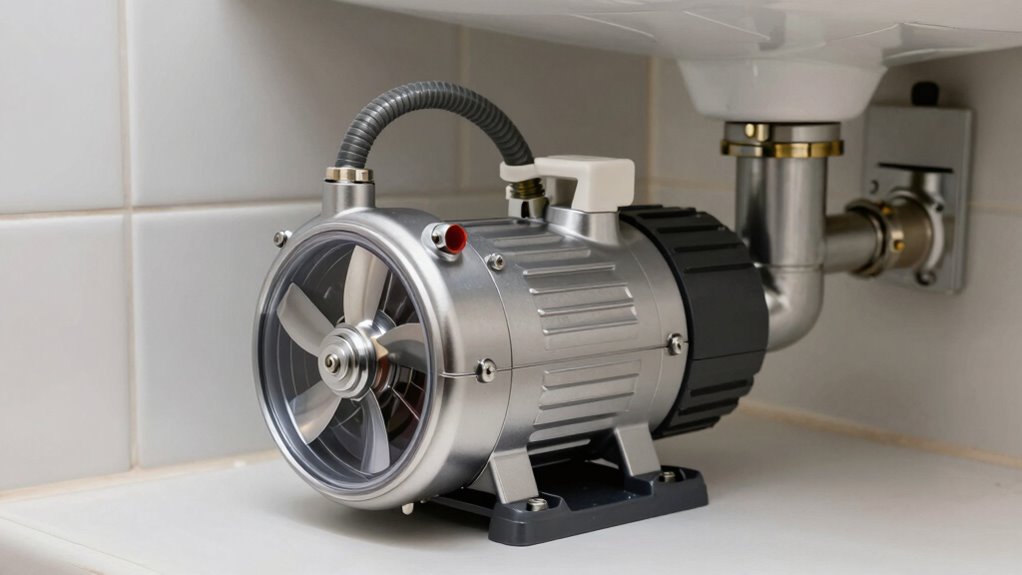
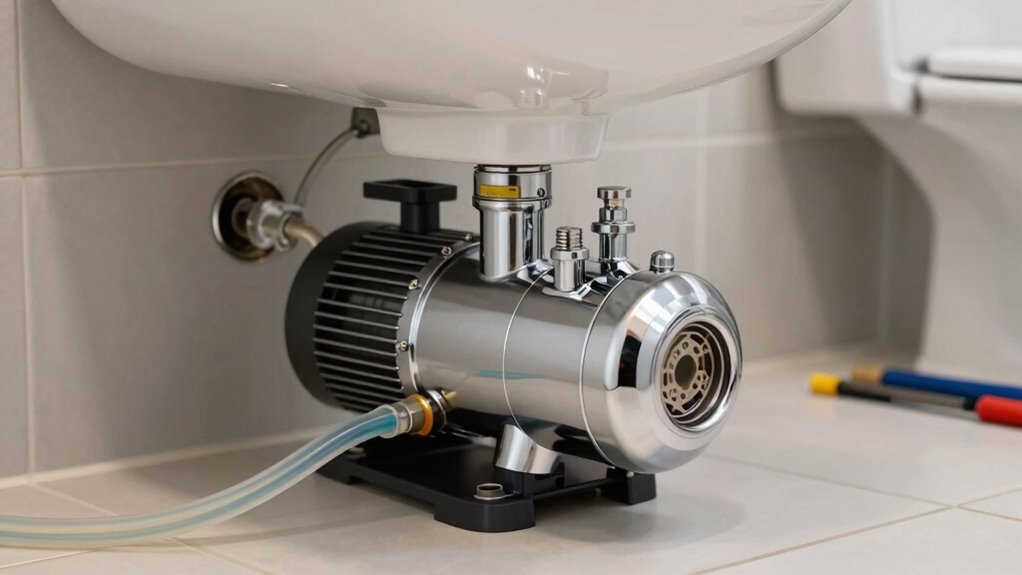
A macerator pump is a handy device that breaks down waste materials into smaller particles, making it easier to transport and dispose of. If you’re dealing with sewage disposal in tight spaces or homes without traditional plumbing, this device can be a game-changer. It grinds solid waste into a slurry, allowing it to be pumped through narrow pipes and into the main sewer line. This process simplifies waste management, reduces clogs, and helps keep your plumbing system functioning smoothly. But, like any mechanical equipment, a macerator pump requires proper pump maintenance to guarantee longevity and reliable operation. Regular maintenance not only prolongs the life of your pump but also contributes to the overall sustainability of your sewage system.
When considering a macerator pump for sewage disposal, you should assess whether it’s suitable for your setup. They’re especially useful in basement bathrooms, small apartments, or RVs where traditional gravity-fed systems aren’t feasible. However, they’re not ideal for handling large amounts of non-organic waste or items that can damage the blades. Regular pump maintenance becomes essential here; neglecting it can lead to clogs, reduced efficiency, or complete failure. Routine inspections, cleaning the inlet screen, and checking for leaks are essential steps. You should also listen for unusual noises or vibrations, which might indicate a problem needing immediate attention.
Proper pump maintenance extends the lifespan of your macerator pump and keeps your sewage disposal system operating at peak levels. Keep an eye on the motor’s performance and ensure the power supply is stable. If your pump starts to run longer than usual or struggles to grind waste, it might be time for a professional tune-up or replacement parts. Always follow the manufacturer’s instructions for cleaning and servicing. Using the right cleaning agents and avoiding harsh chemicals will prevent damage to the blades and internal components. Additionally, avoid flushing non-degradable items or excessive amounts of waste, as these can overwhelm the pump and cause costly repairs. Incorporating European cloud solutions into your maintenance planning can also enhance monitoring and diagnostics.
Frequently Asked Questions
How Long Do Macerator Pumps Typically Last?
A typical pump lifespan is about 7 to 10 years, but durability factors like usage frequency, water quality, and maintenance can impact this. If you keep the pump clean, avoid clogs, and service it regularly, you’ll likely extend its life. However, heavy use or poor water conditions can shorten its durability. Paying attention to these factors helps ensure your macerator pump stays reliable longer.
Are Macerator Pumps Suitable for Commercial Use?
Think of macerator pumps as the Swiss Army knives of plumbing—they’re quite versatile. They’re suitable for commercial use, especially in industrial applications where heavy-duty performance is needed. Unlike residential models, commercial macerators handle larger volumes and tougher materials. However, you should confirm the pump’s capacity matches your specific needs, as not all are designed for continuous, high-demand environments. Proper selection guarantees longevity and reliable operation in demanding settings.
What Is the Average Maintenance Cost?
You can expect average maintenance costs for macerator pumps to range from $100 to $300 annually, depending on usage and model. Compared to traditional systems, the cost comparison shows they’re generally affordable, especially considering their ease of maintenance. Maintenance frequency varies, but regular inspections every 6 to 12 months help prevent costly repairs. Proper upkeep keeps your pump running smoothly and extends its lifespan, saving you money long-term.
Can Macerator Pumps Handle Grease and Fats?
You can’t fight grease clogging and fat buildup with a macerator pump. These pumps aren’t designed to handle fats and grease, which can solidify and cause blockages. Remember, “A stitch in time saves nine,” so avoid pouring greasy substances down your drains if you want your pump to work efficiently. Regular maintenance and careful waste disposal prevent costly repairs and keep your system running smoothly.
Are There Eco-Friendly Options Available?
Yes, eco-friendly alternatives exist for macerator pumps. You can choose models made with sustainable solutions, like those using eco-conscious materials or energy-efficient designs. Look for pumps with low power consumption and minimal environmental impact. By selecting these eco-friendly options, you reduce your carbon footprint and promote sustainability while still benefiting from effective waste management. Always research and compare the available eco-conscious solutions to find the best fit for your needs.
Conclusion
Now that you understand when a macerator pump is your trusty lighthouse in the storm, you can navigate plumbing challenges with confidence. Think of it as your loyal compass, slicing through stubborn clogs like a hot knife through butter. But remember, not every situation calls for this hero. Use it wisely, and it’ll be your dependable partner, turning what once seemed like an insurmountable obstacle into a smooth sailing journey.