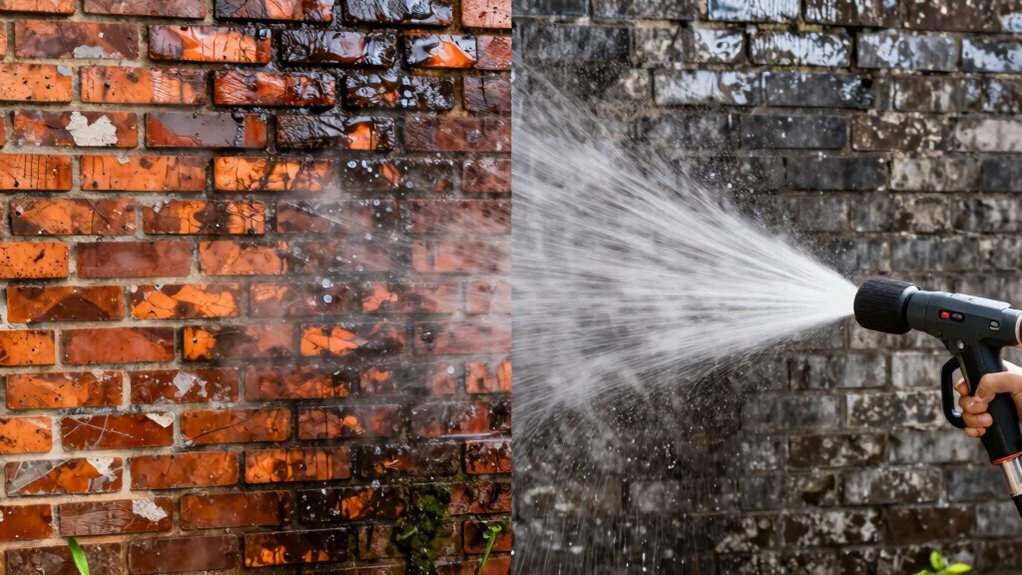

Hot water pressure washers provide stronger cleaning power than cold water units, especially on greasy, oily, or stubborn grime. The heat breaks down dirt faster, reducing effort and cleaning time, making them ideal for industrial and heavy-duty tasks. Cold water washers are more affordable, portable, and suited for lighter jobs like cleaning vehicles or outdoor furniture. To understand which option fits your needs best, keep exploring how each can impact your cleaning effectiveness and efficiency.
Key Takeaways
- Hot water pressure washers clean stubborn grease and grime more effectively than cold water units.
- Cold water washers are more affordable, portable, and suitable for lighter cleaning tasks.
- Hot water units save time and reduce chemical use, boosting efficiency especially in industrial settings.
- Cold water washers require less maintenance but may need additional chemicals for tough stains.
- The choice depends on cleaning intensity, environmental concerns, and operational costs.
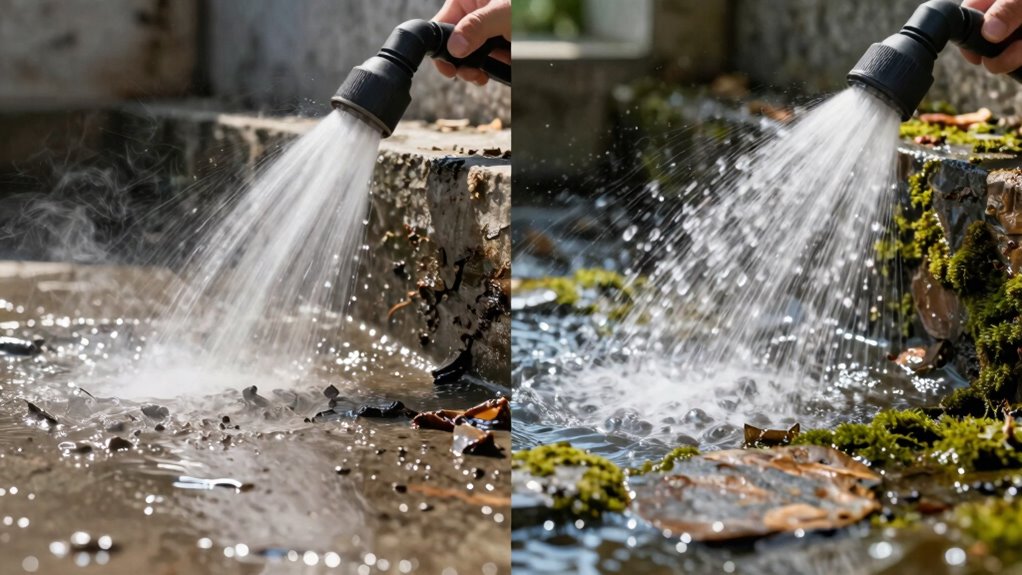
When choosing a pressure washer, understanding the differences between hot water and cold water options can make a vital impact on your cleaning results. Hot water pressure washers are often favored in industrial settings because they deliver superior cleaning power, especially when dealing with greasy, oily, or stubborn grime. The heat helps break down contaminants at a faster rate, reducing the amount of effort and time needed to achieve a thorough clean. This efficiency makes hot water washers highly valuable for commercial and industrial use, where productivity and speed are essential. On the other hand, cold water pressure washers are generally more affordable, easier to maintain, and ideal for lighter tasks like cleaning vehicles, decks, or outdoor furniture. They are also more portable, since they don’t require a water heater, and tend to have lower energy consumption, which can be beneficial for environmental impact considerations. Additionally, machine quality plays a significant role in the overall effectiveness and longevity of your pressure washer.
Hot water pressure washers excel in industrial cleaning, breaking down grime faster and saving time compared to cold water units.
From an industrial efficiency standpoint, hot water washers often outperform cold water units because they cut cleaning time markedly. The added heat enables the water to loosen and dissolve dirt more effectively, reducing the need for harsh chemicals or multiple passes. This can translate into faster turnaround times and less downtime, which is vital in busy commercial operations. However, this increased efficiency does come with higher initial costs and maintenance requirements, such as heating elements that need regular inspection and care. Despite these costs, the long-term savings in labor and chemical use can justify the investment, especially when cleaning heavily soiled surfaces regularly.
When it comes to environmental impact, hot water pressure washers can be both advantageous and challenging. Their ability to clean more effectively with less chemical use means they can potentially lessen the environmental footprint, especially if environmentally friendly detergents are used. Conversely, the energy required to heat water consumes more power, which may contribute to a higher carbon footprint if your energy source isn’t renewable. Cold water washers, while generally more eco-friendly due to their lower energy needs, may require more chemicals or longer cleaning times, which can offset their environmental benefits. Therefore, your choice should consider not only the type of dirt and surfaces you’re cleaning but also your overall sustainability goals.
Ultimately, your decision between hot and cold water pressure washing hinges on balancing industrial efficiency and environmental impact. If you’re tackling heavy-duty cleaning regularly, hot water is often the more effective choice, saving time and reducing chemical use. For lighter, infrequent tasks, cold water washers offer a cost-effective, eco-friendly solution that still delivers solid results. Understanding these nuances ensures you select the right equipment to meet your specific cleaning needs while aligning with your operational and environmental priorities.
Frequently Asked Questions
Does Hot Water Pressure Washing Remove Grease Better Than Cold?
Yes, hot water pressure washing removes grease better than cold. The heat helps break down stubborn grease and oil stains, making grease removal more efficient. It also aids in stain elimination, especially on surfaces like concrete and asphalt. You’ll notice a significant difference in cleaning power, as hot water penetrates grime faster and loosens stubborn residues, leaving your surfaces cleaner and more refreshed.
Is Hot Water Pressure Washing More Environmentally Friendly?
Hot water pressure washing isn’t necessarily more environmentally friendly because it often consumes more energy, increasing its environmental impact. While it cleans tougher grime better, the higher energy use results in greater carbon emissions. Cold water pressure washing, on the other hand, uses less energy, making it a more eco-conscious choice. So, if you’re concerned about your environmental impact, cold water options could be the greener solution, despite sometimes needing more effort.
Can Cold Water Pressure Washing Be Effective on Stubborn Stains?
Cold water pressure washing can be effective on stubborn stains, especially when combined with strong cleaning agents. The cold water’s high pressure helps break down dirt, while the chemicals initiate chemical reactions that loosen grime. This combination boosts cleaning efficiency without relying on heat. So, if you choose the right detergents, cold water pressure washing can tackle tough stains effectively, saving energy and reducing costs.
How Does Temperature Affect the Lifespan of Pressure Washing Equipment?
You’ll find that higher temperatures can strain your pressure washing equipment, impacting its durability over time. Cold water setups typically last longer since they experience less thermal stress. To keep your equipment in top shape, you should perform regular maintenance and inspect parts more often if you use hot water frequently. Proper care guarantees your pressure washer remains reliable and extends its lifespan, saving you money in the long run.
Are There Specific Surfaces That Require Hot Water Over Cold?
You might think hot water always works better, but certain surfaces need cold water to avoid damage. For delicate surfaces like vinyl or soft wood, hot water can cause warping or discoloration due to surface sensitivity and material compatibility issues. Instead, use cold water for these surfaces to prevent damage. Always assess the material’s tolerance and surface sensitivity before choosing hot or cold pressure washing to guarantee a safe, effective clean.
Conclusion
Ultimately, choosing between hot and cold water pressure washing is like picking the right tool for the job. Hot water cuts through grease and grime like a hot knife through butter, while cold water offers a versatile, all-around clean. Think of hot water as your secret weapon for stubborn stains, and cold water as your reliable sidekick. Knowing their differences assists you in making the best choice and guarantee your surfaces shine brighter than ever.