Understanding the relationship between flow rate and pressure helps you identify and fix most plumbing problems. If pressure is low, it could mean your pipes are undersized or flow velocity is too high, causing pressure drops. By adjusting pipe sizes, you can improve flow and maintain steady pressure. When you grasp how these factors interact, many issues become easier to solve. If you want to learn how to optimize your plumbing system effectively, keep exploring this concept further.
Key Takeaways
- Proper pipe sizing balances flow rate and pressure, preventing system inefficiencies and resolving most plumbing issues.
- Increasing pipe diameter reduces flow velocity, lowering pressure loss and improving overall system performance.
- High flow velocity causes pressure drops and turbulence, which can be mitigated by adjusting pipe size or flow rate.
- Troubleshooting pressure problems often involves optimizing flow dynamics through pipe diameter adjustments.
- Understanding flow rate versus pressure helps design and maintain plumbing systems that operate efficiently and reliably.
Understanding the relationship between flow rate and pressure is essential for optimizing fluid systems. When working with plumbing, you need to grasp how pipe diameter and flow velocity influence overall performance. These two factors play a pivotal role in maintaining the right balance between flow rate and pressure, ensuring your system functions efficiently without unnecessary issues.
Optimizing plumbing requires understanding how pipe diameter and flow velocity balance flow rate and pressure.
The pipe diameter directly affects how much water can pass through a pipe at a given time. A larger diameter allows more water to flow with less resistance, which helps maintain higher flow rates without causing a substantial drop in pressure. Conversely, a smaller pipe diameter increases resistance, reducing flow velocity and potentially lowering pressure downstream. If your system experiences low pressure or sluggish flow, checking the pipe diameter can often reveal the root cause. Upgrading to a wider pipe can markedly improve flow rate while maintaining or even boosting pressure, especially in systems where high volume is needed.
Flow velocity is another essential factor. It refers to how fast the water moves through the pipe. High flow velocity can increase the pressure losses due to friction along the pipe walls, which is why it’s essential to control it. When flow velocity becomes too high, it causes turbulence and pressure drops, leading to inefficiencies and potential damage to pipes over time. On the other hand, too low a velocity might mean insufficient flow to meet your needs, especially in larger systems. The goal is to find a sweet spot where the flow velocity is optimized to deliver the desired flow rate without causing excessive pressure loss. Using proper pipe diameter and adjusting flow velocity accordingly helps you strike this balance.
In practical terms, understanding how pipe diameter and flow velocity interact enables you to troubleshoot common plumbing issues effectively. For example, if you notice low water pressure at fixtures, it might be due to undersized pipes or excessive flow velocity causing pressure drops. By adjusting pipe sizes or reducing flow velocity, you can restore proper pressure and flow rate. This approach often solves about 80% of plumbing problems since most issues stem from improper flow dynamics. Remember, increasing pipe diameter reduces flow velocity, which in turn minimizes pressure losses. Conversely, reducing flow velocity can help maintain pressure in systems with long runs or multiple outlets.
Ultimately, knowing how flow rate and pressure relate, especially through the lens of pipe diameter and flow velocity, empowers you to design and troubleshoot plumbing systems more effectively. It’s not just about fixing issues but preventing them by optimizing how water moves within your pipes. When you understand these core concepts, you’ll be better equipped to create efficient, reliable plumbing that meets your needs while avoiding unnecessary repairs or upgrades. Recognizing the importance of natural flow dynamics can further enhance your ability to maintain an efficient system over time.
Frequently Asked Questions
How Do Temperature Changes Impact Flow Rate and Pressure?
Temperature changes cause thermal expansion in pipes, which can increase pressure and lead to pressure fluctuation. As water heats up, it expands, raising the pressure inside your plumbing system, potentially reducing flow rate or causing leaks. Conversely, cooling causes contraction, decreasing pressure and flow. To prevent issues, make certain your system accommodates thermal expansion and monitors pressure fluctuations, especially during seasonal temperature shifts.
What Are Common Signs of Pressure Problems in Plumbing?
Imagine water suddenly pounding your pipes like a drum—that’s water hammer signaling pressure issues. You might notice fluctuating water flow, frequent leaks, or the need for a pressure relief valve. These signs indicate high or inconsistent pressure, risking pipe damage. Staying alert to water hammer and installing a pressure relief valve help maintain steady pressure, preventing costly repairs and keeping your plumbing system running smoothly.
How Does Pipe Diameter Affect Flow Rate and Pressure?
You’ll notice that larger pipe diameters increase flow rate because they allow more water to pass through, reducing pressure drop. Conversely, smaller pipes restrict flow, raising flow velocity but decreasing overall pressure. When pipe diameter changes, it directly impacts how much water moves and how fast it gets there. So, choosing the right pipe size helps balance flow rate and pressure, preventing common plumbing issues.
Can High Flow Rate Cause Pipe Damage?
Yes, a high flow rate can cause pipe damage. It increases the risk of pipe corrosion and flow restriction, which weakens the pipe over time. The sudden pressure changes from high flow can also stress pipe joints and fittings, leading to leaks or bursts. To prevent damage, guarantee your plumbing system is properly sized and maintained, and avoid excessive flow rates that could compromise pipe integrity.
What Tools Are Used to Measure Flow Rate and Pressure?
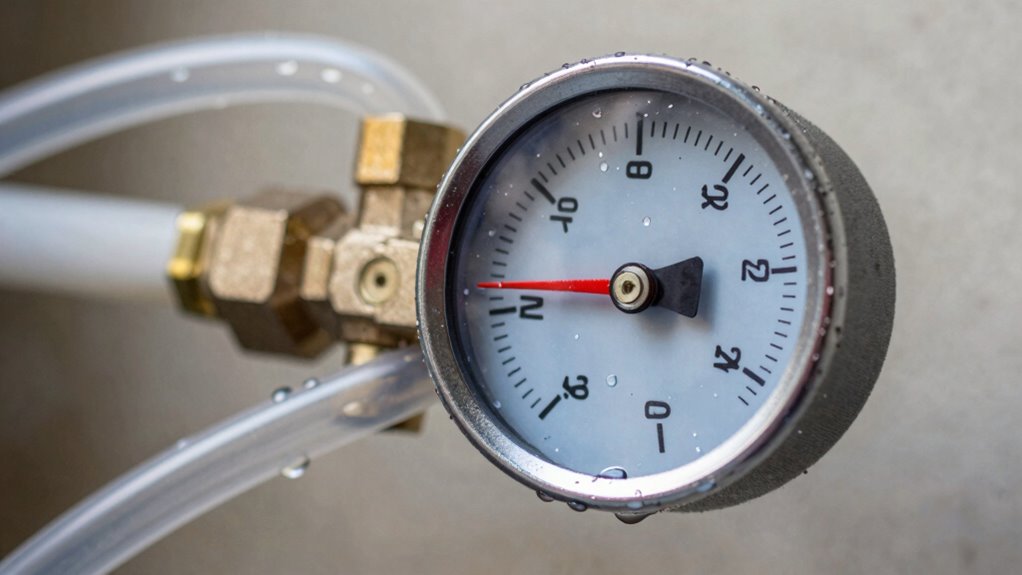
You use flow meters to measure flow rate and pressure gauges to check pressure levels in your plumbing system. Flow meters come in various types, such as turbine or electromagnetic, providing accurate readings of water movement. Pressure gauges attach directly to pipes or fixtures, showing real-time pressure data. Both tools help you identify issues, guarantee ideal performance, and prevent damage by maintaining proper flow and pressure levels.
Conclusion
By understanding the gentle dance between flow rate and pressure, you can navigate plumbing issues with confidence and ease. When you tune into these subtle differences, you’re quietly solving many common concerns before they become big problems. Think of it as a calming rhythm that keeps everything running smoothly, allowing you to enjoy a stress-free home. Embracing this knowledge makes your plumbing experience feel less like a challenge and more like a peaceful flow of everyday comfort.