TL;DR
Outdoor patio heaters warm people and nearby surfaces rather than heating an entire open patio, so sheltered placement and realistic coverage expectations matter. Choose propane for portability, natural gas for a fixed frequent-use spot, electric infrared for targeted warmth without on-site combustion, or wood for a fire-pit atmosphere with added smoke and fire considerations. Follow the exact model’s instructions for clearances, ventilation, and weather protection.
Outdoor patio heaters warm people and nearby surfaces; wind and exposure can carry warmth away.
Choose propane for portable placement, natural gas for a frequent fixed spot, electric infrared for targeted heat near a suitable supply, or wood for an attend…
Use coverage figures as estimates and plan around the seats where people spend time.
Follow the exact model’s ventilation, clearance, mounting, and storage instructions; never use an outdoor combustion heater indoors.
Compare local energy prices with the heater’s consumption and your expected hours of use.

Get pool and patio gear delivered free with Prime
- Fast, free delivery on millions of items
- Prime Video, Amazon Music and more included
- Member-only deals all year
Why a heater warms your seat better than the whole patio
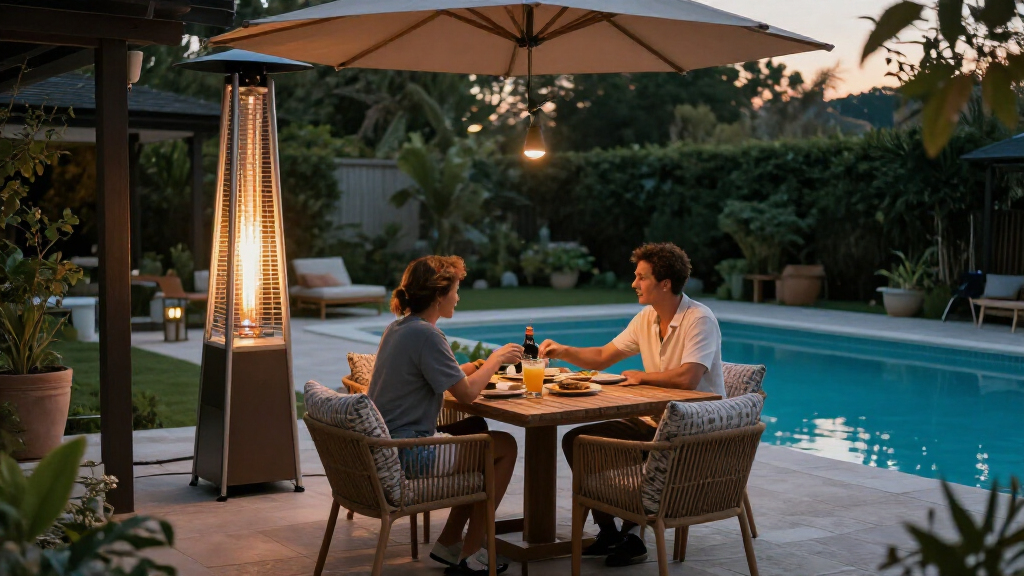
An outdoor patio heater warms people and nearby surfaces, rather than heating an entire open space. Radiant warmth can feel pleasant on your face and hands while the night air stays chilly a few steps away. Wind, seating distance, walls, and mounting height all affect what you feel.
Think of sitting near a patio heater like sitting in a patch of sunlight on a cool day. The air around you may still feel brisk, but your body and the chair or table in the heater’s path can feel warmer. On a still evening, a couple at a nearby table might stay comfortable; on a blustery deck, they may feel a draft even with a powerful unit running.
That difference has a practical consequence: the advertised coverage area does not promise that every seat within it will feel equally warm. Radiant heat reaches people and surfaces in its path, while wind can carry warmth away and distance reduces how much reaches each person. A sheltered patio with walls may retain a more comfortable feel than an equally sized open terrace, though walls and overhangs must still meet the heater’s clearance rules. If guests spread across a wide area, placing a heater near the seats where people linger may help more than positioning it at the edge and expecting it to heat the whole scene.
Before comparing models, notice where the cold reaches first: exposed backs, feet under a dining table, or a draft moving between buildings. Those details help you decide whether you need warmth directed at a particular seating zone or a different layout. Use the manual’s coverage and mounting directions as a starting point, then consider whether people will actually sit in the heater’s path at a safe distance.
Products Worth Considering

Philips Hue Smart Light Starter Kit with Bridge and 4 White and Color A19 Bulbs

Philips Hue Bridge Pro Smart Lighting Hub

Bose Smart Ultra Dolby Atmos Soundbar
As an affiliate, we earn on qualifying purchases.
Pick a fuel that fits how you use your space
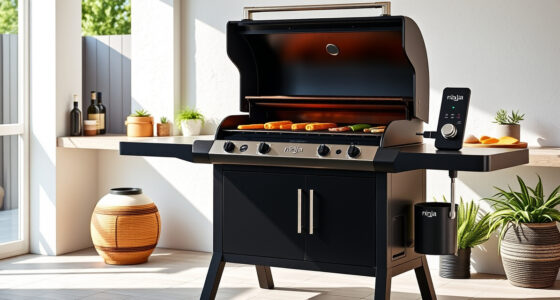
Propane suits flexible seating, natural gas suits a fixed frequent-use spot, and electric infrared can target warmth without on-site combustion. A wood fire brings a different appeal, with smoke, sparks, and more hands-on attention. No one option wins for every patio: convenience, installation, fuel supply, and the way heat reaches people all shape the choice.
For example, if you rearrange chairs for weekend gatherings, a portable propane model may be easier to position than a permanent heater. That flexibility can help you put warmth near the group as the layout changes, but it comes with cylinder handling and a need to store and secure the fuel as directed. If you dine outside most evenings in one spot and already have suitable gas service, a fixed natural-gas unit may feel simpler day to day because you do not need to replace a cylinder. The tradeoff is less flexibility and potential installation work; a qualified professional may be needed.
An electric infrared heater can make sense above a sheltered seating area where an appropriate electrical supply is available. It directs warmth toward people and objects without storing fuel at the patio, which can be useful when a group stays in one defined spot. Its position and mounting height matter because the warmth is targeted; it may not serve scattered seats well. The electricity cost depends on your local rate and the unit’s consumption, so electric does not automatically mean cheaper to run.
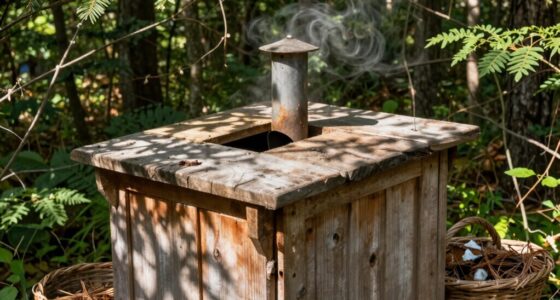
Wood-burning fire pits and chimineas make a lively focal point, with crackling logs and glowing embers. The fire can support a gathering in a way a mounted heater does not, but smoke may bother neighbors and sparks require close attention. Wood also means tending the fire and checking local restrictions, especially in dry conditions or where neighbors are close. Consider those responsibilities alongside the atmosphere before choosing it for regular warmth.
| Type | Good fit | Check before you choose |
|---|---|---|
| Propane | Flexible seating | Cylinder handling and ventilation |
| Natural gas | Frequent use in one location | Gas access and installation needs |
| Electric infrared | Targeted heat near a suitable supply | Electrical capacity and outdoor rating |
| Wood fire | Atmosphere and an attended gathering | Smoke, sparks, and local rules |
Size your heater around the chairs, not the product photo
Useful heater coverage depends on your layout, not just the number printed on a box. Wind can strip away warmth, while a roof or nearby walls can offer shelter; mounting height and seating distance also change how much heat reaches people. Use the maker’s coverage figure as an estimate and check the required mounting position. A model with a larger published area may still leave people cold if its warmth does not reach their seats or the site is exposed.
Picture a small bistro table for four beside a wall. A suitably rated heater placed as the manufacturer directs may serve that gathering better than a larger unit set too high or too far away. For an open deck with chairs on three sides, one heater may leave the far seats cold. You may need to rethink the layout or compare models intended for that arrangement; adding more heaters can increase energy use and create additional clearance and foot-traffic constraints.
Try this simple planning sequence before you shop:
- Mark the seating zone. Note where people sit longest, not every square metre of paving. This makes the coverage estimate relevant to the gathering you want to warm.
- Check exposure. Watch for wind between buildings and note roofs or walls that shelter the area. Shelter can improve comfort, but it does not replace the clearances and ventilation the heater requires.
- Read coverage and mounting guidance. Treat the stated area as a starting estimate, then check the unit’s specified clearances. The approved mounting position affects both how warmth reaches the seats and whether the setup is safe.
- Match the installation to your space. Decide whether portable placement or a fixed wall, ceiling, or post mount fits your use. Portable models adapt to changing layouts; fixed models can serve a consistent spot but limit where the warmth falls.
This keeps a coverage number in perspective. A restaurant owner adding a heater to a sheltered two-seat corner has a different job from someone trying to make a long, open deck comfortable. If people still feel a cold draft, shift the seating or heater only where the instructions permit; do not move a unit closer than its required clearances. Changing the seating position may be the safer and more effective adjustment.
Make comfort and safety part of the same setup
Safe placement starts with the exact model’s instructions. Outdoor combustion heaters need the ventilation and clearances specified by their makers, while portable units need a stable surface and appropriate foot traffic space. A product labeled for outdoor use is not automatically suitable beneath every roof, gazebo, or enclosed porch. Those limits matter because restricted airflow and nearby combustible materials can turn a comfortable setup into a fire or carbon monoxide hazard.
For instance, a heater near a café entrance may warm a waiting customer, but it can also sit in the path of staff carrying trays. Keep the unit away from curtains, furniture, overhangs, and busy routes, following its clearance requirements. A stable, unobstructed position reduces the chance of it being knocked or brushed, while keeping gas cylinders secured as directed helps protect their connections. Inspect hoses and connections for damage before use.
Never use an outdoor combustion heater indoors or in a garage. Do not leave a heater unattended, and keep children and pets away from hot surfaces. If children are at a patio gathering, an adult should actively supervise them; a hot heater or nearby fire pit can cause severe burns, and fire features also bring drowning risks if the outdoor area includes a pool or water feature. Maintain close, capable supervision around water and use appropriate barriers.
Before switching on, check that the unit stands securely and that people can move past it without brushing against hot parts. Follow local fire codes and manufacturer guidance. On a covered patio, confirm that the specific heater is approved for that setting and that the required ventilation and clearances can be met; the cover can limit airflow or put materials too close to the heat source. When in doubt, check the manual or ask a qualified installer.
Estimate running costs with your local energy prices
Running cost depends on energy prices, output, and operating time. A fuel label alone cannot tell you whether propane, natural gas, or electricity will cost less in your area. Compare the unit’s consumption rating with your local price and the hours you expect to use it. How efficiently its warmth reaches the occupied seats matters too: a heater running for a long time in an exposed area may provide less comfort per unit of energy than one aimed at a sheltered gathering.
Suppose you use a heater for two hours after dinner on Friday and Saturday. That schedule will cost less than leaving the same model on through every cool evening, whatever fuel it uses. Adjustable output, timers, and remote controls can make it easier to tailor warmth to the occasion, but check how the unit behaves at each setting rather than assuming a feature cuts costs by itself. Lower output may reduce consumption, but only if it still provides enough warmth for the people and conditions.
Electric infrared has no on-site combustion, but its total environmental impact depends in part on how the electricity is generated. Gas and wood burn fuel at the point of use, while electricity prices and local energy mixes vary. These are different considerations from running cost: a low bill does not by itself tell you the environmental impact, and a cleaner electricity supply does not guarantee the lowest cost. A couple who uses an electric unit for short, targeted sessions may have a different cost and impact from a restaurant that runs several heaters for long shifts.
Write down the heater’s rated consumption, your local energy price, and a realistic weekly schedule. That comparison gives you a useful estimate for your own routine, rather than a broad claim about which fuel is cheapest. Revisit it if fuel prices or local restrictions change, since availability, rules, and operating costs differ by location.
Keep the heater ready for the next cool evening
Routine checks help you spot damage before the next use. Keep the heater clean, inspect parts as the manufacturer directs, and turn it off and let it cool before maintenance. Storage needs depend on the model: weather resistance varies, so a product made for outdoor use may still need a cover or sheltered storage. Following those limits helps prevent weather exposure from damaging parts that affect safe operation.
For example, after a rainy weekend, check the manual before assuming a portable heater can stay exposed. The instructions may call for covering it, storing it dry, or checking a component before you switch it on again. Don’t guess about a wet electrical unit or damaged gas line; follow the maker’s guidance and arrange qualified service if the instructions call for it. Using a unit before checking can turn a hidden fault into an electrical or fuel hazard.
Before the season starts, look for visible damage to cords, hoses, controls, and the heater’s body. For gas units, check hoses and connections as directed, and have gas connections checked if needed. Keep debris away from hot parts and avoid improvised repairs, which can create new hazards. A damaged part may affect more than appearance, so use the manufacturer’s inspection and service guidance to decide whether the heater is ready.
These small habits matter most when a heater spends long stretches unused. A homeowner who checks a unit in early autumn has time to deal with a worn part before guests arrive on a chilly evening. Follow the model’s instructions for cleaning, inspection, and storage, and follow local rules for fuel and fire equipment.
Frequently Asked Questions
Do patio heaters actually work outdoors?
Yes, especially in calm or sheltered spots. They warm people and nearby surfaces, but wind can carry warmth away, so placement and exposure matter. A chair near a wall may feel more comfortable than one in the middle of an open deck.
Which is better: propane, natural gas, or electric?
It depends on your space and routine. Propane offers portability, natural gas can suit a fixed spot used often, and electric infrared targets people and objects without on-site combustion. Check fuel access, installation needs, local prices, and the model’s instructions before deciding.
How much area can a patio heater warm?
Start with the manufacturer’s coverage estimate, then account for wind, layout, mounting height, and how close people sit. Those factors can change comfort in practice. A sheltered table may feel warm while seats farther away stay chilly.
Can I use a patio heater under a covered patio or gazebo?
Only if the specific model is approved for that setting and you can meet its ventilation and clearance requirements. Check the manual before use; outdoor-rated does not mean suitable for every covered or enclosed space. Ask a qualified installer if the instructions or installation needs are unclear.
Can I use an outdoor patio heater indoors or in a garage?
Never use an outdoor combustion heater indoors or in an enclosed space. For electric models, follow the product’s instructions for its approved location and installation. A garage door left open does not make an indoor combustion setup safe.
Are electric patio heaters cheaper to run?
Not automatically. The cost depends on local electricity and fuel prices, the heater’s consumption, how long it runs, and how effectively its warmth reaches the people nearby. Compare those figures for the hours you expect to use it.
Can a patio heater stay outside in the rain?
Weather resistance varies by model. Follow its outdoor-use and storage instructions, including any guidance about covers or dry storage. Before using a unit after wet weather, check the manual for any required inspection.