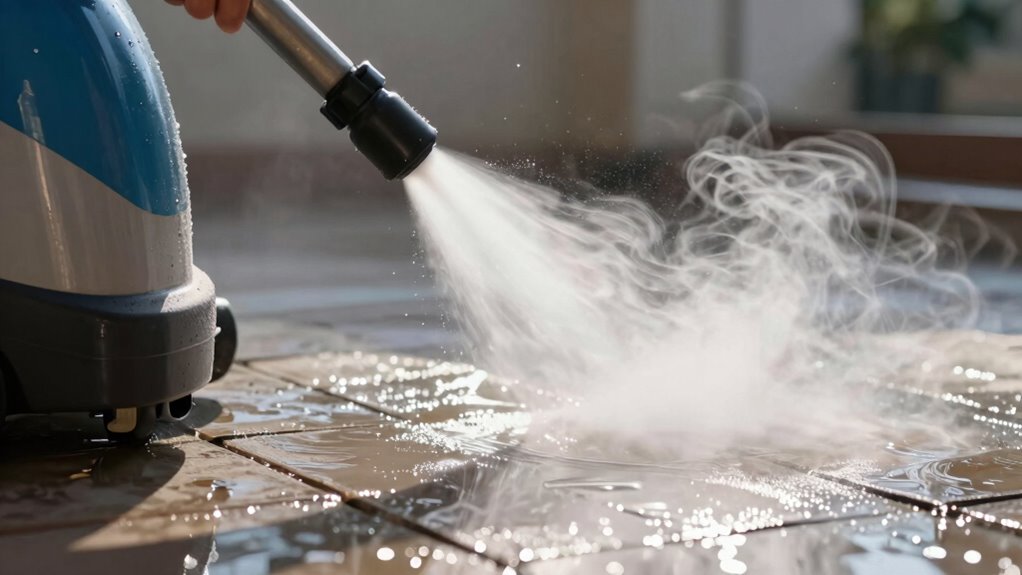

If you assume steam cleaning guarantees complete sanitation, you risk leaving germs behind. It’s vital to check if your surfaces are compatible since high heat and moisture can damage delicate materials and reduce cleaning effectiveness. Skipping surface tests or neglecting high-touch spots can compromise sanitation efforts. To avoid this mistake and maximize germ elimination, you need to understand proper techniques and surface compatibility. Keep going to discover how to perform safe, effective steam cleaning that truly sanitizes.
Key Takeaways
- Assuming steam cleaning alone guarantees complete sanitation can leave germs behind in uncleaned crevices or porous surfaces.
- Using steam on incompatible surfaces may cause damage, reducing the effectiveness of sanitation efforts.
- Failing to remove debris beforehand can hinder steam penetration, leaving microbes unaddressed.
- Not thoroughly covering all high-touch areas with steam can result in missed germ spots.
- Relying solely on steam without additional disinfectants in contaminated zones may leave harmful germs intact.
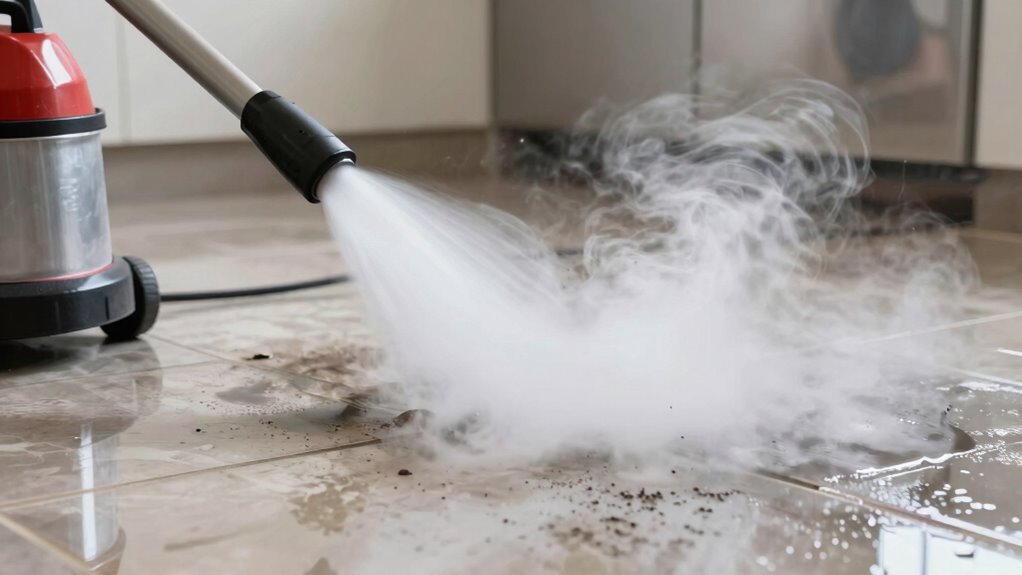
Steam cleaning has become an effective method for achieving thorough sanitation without the use of harsh chemicals. It’s a popular choice because it minimizes chemical residues left behind, which can sometimes cause skin irritation or allergic reactions. Unlike traditional cleaning methods that rely heavily on chemical disinfectants, steam cleaning uses high-temperature vapor to kill germs, bacteria, and viruses on contact. This approach not only promotes a safer environment but also reduces the risk of chemical buildup on surfaces, making it a more eco-friendly option. However, it’s important to understand that steam cleaning isn’t foolproof—if you don’t consider surface compatibility, you might inadvertently leave germs behind or damage your surfaces.
Many surfaces have different levels of tolerance to heat and moisture. For example, certain delicate materials like silk or some plastics can be damaged by the high temperatures or excessive moisture from steam. If you use steam on incompatible surfaces, you risk warping, discoloration, or deterioration, which could make sanitation efforts ineffective in the long run. On the other hand, using steam on surfaces that are compatible allows you to maximize its germ-killing power without risking damage. Before you start, always check the manufacturer’s guidelines or test a small, inconspicuous area to ensure the material can withstand the heat and moisture.
Additionally, surface compatibility is crucial because it directly impacts the effectiveness of steam cleaning and the longevity of your surfaces. Another common mistake is assuming that steam cleaning alone guarantees complete sanitation. While it’s excellent at reducing surface bacteria and viruses, some germs can hide in crevices, cracks, or porous materials where steam might not reach effectively. This mistake can lead to a false sense of cleanliness, leaving germs behind despite your efforts. To avoid this, combine steam cleaning with proper surface preparation—removing debris first—and ensure you’re covering all high-touch areas thoroughly. Also, follow up with disinfectants when necessary, especially in areas prone to contamination, like kitchens or bathrooms.
Frequently Asked Questions
Can Steam Cleaning Remove All Types of Bacteria and Viruses?
Steam cleaning can effectively eliminate many bacteria and viruses, but it doesn’t remove all types. You need high temperatures and proper technique to guarantee steam bacteria and virus elimination. However, some pathogens, like spore-forming bacteria or certain viruses, may require additional disinfectants. So, while steam cleaning is a powerful sanitation tool, it’s best to combine it with other cleaning methods for complete germ removal and peace of mind.
How Long Does Steam Cleaning Disinfect Surfaces Effectively?
Imagine you’re about to clean your kitchen counter; with proper steam duration and surface temperature, you can disinfect effectively in just 30 seconds. Typically, maintaining a steam temperature of at least 212°F (100°C) and keeping the steam on the surface for 10-15 seconds ensures germs are killed. For deep sanitization, a 20-30 second steam contact is recommended, but always check your equipment’s guidelines for best results.
Is Steam Cleaning Safe for All Kinds of Flooring Materials?
Steam cleaning is generally safe for many flooring types, but you should always check safety precautions first. For example, laminate and vinyl floors can sometimes be sensitive to heat and moisture, so use a lower steam setting. Ceramic tiles and sealed hardwoods usually tolerate steam well. Always test a small, inconspicuous area beforehand to prevent damage. Knowing your flooring types and following safety precautions guarantees effective, safe cleaning without risking your floors.
Do Steam Cleaners Require Special Maintenance for Sanitation Purposes?
Sure, your steam cleaner needs a little love to stay germ-free. You’ll want to do regular steam cleaner maintenance, like descaling and cleaning the sanitation-specific tools, or you might as well toss it in the trash. Think of it as giving your device a spa day—only then will it effectively kill germs and bacteria. Neglect this, and your “clean” machine becomes a germ factory. Happy cleaning!
Can Steam Cleaning Eliminate Allergens and Mold From Indoor Spaces?
Yes, steam cleaning can effectively eliminate airborne allergens and mold spores from indoor spaces. The high temperature of steam penetrates surfaces, killing mold and reducing allergens like pet dander and dust mites. You should use a powerful steam cleaner, move slowly, and cover all areas thoroughly. Keep in mind, for persistent mold, you might need additional cleaning methods, but steam cleaning is a great first step to improve indoor air quality.
Conclusion
So, next time you reach for that steamer, remember the mistake that could leave germs behind. It’s funny how a simple oversight can undo all your hard work, especially when sanitation is on the line. You might think you’re cleaning thoroughly, but missing a vital step could be the coincidence that lets germs slip through. Stay vigilant, double-check your process, and your home will truly be as clean and safe as you want it to be.