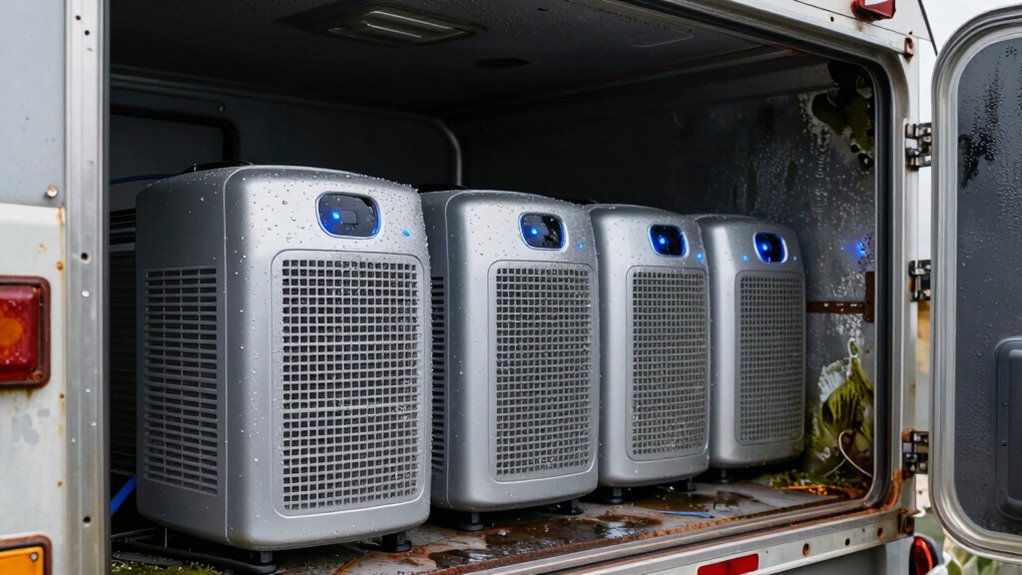
To prevent mold in your trailer, keep humidity levels below 50%, ideally around 30-40%. When moisture stays above this threshold, mold spores thrive and can cause damage and health issues. Regularly monitor humidity with a hygrometer, and use a dehumidifier to maintain proper moisture levels. If you want to discover more about ideal moisture control and how to protect your trailer, continue exploring these essential tips.
Key Takeaways
- Mold growth typically begins when indoor humidity exceeds 60%.
- Maintaining humidity below 50% significantly reduces mold development risk.
- Using a dehumidifier helps keep moisture levels within the safe threshold.
- Regular monitoring with hygrometers ensures humidity stays below mold-promoting levels.
- Proper dehumidifier placement and maintenance optimize moisture control and mold prevention.
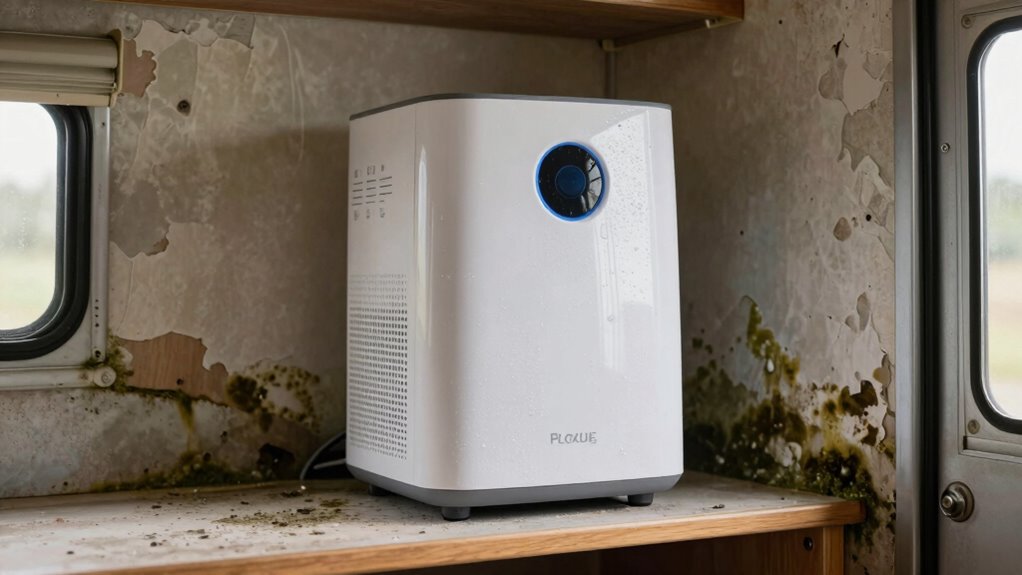
Dehumidifiers play a critical role in maintaining a comfortable and safe environment inside trailers, especially in humid climates or during damp seasons. If you’re trying to keep moisture levels in check, portable units are your best bet. They’re designed to be lightweight, easy to move around, and effective at reducing humidity where you need it most. These units can be placed in various spots within your trailer, helping to prevent excessive moisture buildup that can lead to mold growth. When choosing a portable dehumidifier, look for one with the appropriate capacity for your trailer’s size. Smaller trailers may only require a compact unit, while larger spaces might need a more powerful model.
Maintaining your dehumidifier is essential for its longevity and efficiency. Regular maintenance tips include emptying the water collection bucket frequently, especially during high humidity periods. If your unit has a continuous drain option, set it up to avoid manual emptying and guarantee constant operation. Keep the air filter clean by washing or replacing it as recommended by the manufacturer. This prevents dust and debris from clogging the system, which could impair performance. Also, check for any signs of leaks or damage to the unit, and keep the vents unobstructed for maximum airflow. Proper maintenance not only extends the life of your portable dehumidifier but also guarantees it performs at peak efficiency, protecting your trailer from excess moisture.
Regularly clean filters and empty water buckets to keep your dehumidifier running efficiently.
You should also be mindful of where you place your portable unit. Position it in areas prone to dampness, such as near windows, vents, or corners where moisture tends to collect. Avoid blocking the air intake or outlet vents, as this can reduce the unit’s effectiveness. Running your dehumidifier regularly during humid seasons or after activities that generate moisture—like cooking or showering—can greatly reduce the risk of mold. Remember, the goal is to keep indoor humidity levels below 50%, ideally around 30-40%, to inhibit mold growth and keep your trailer healthy.
Monitoring humidity levels with a hygrometer, which is often built into modern dehumidifiers or available as a separate device, is crucial for effective moisture control. Maintaining the correct humidity levels is essential because moisture thresholds can lead to mold development if exceeded. Monitoring helps you determine when to run your portable unit and when to turn it off, conserving energy and prolonging its lifespan. Consistent use of your dehumidifier, along with proper maintenance, ensures your trailer stays dry, mold-free, and comfortable, no matter the weather outside.
Frequently Asked Questions
How Often Should I Empty the Dehumidifier’s Water Reservoir?
You should empty the dehumidifier’s water reservoir every 1 to 3 days, depending on humidity levels and usage. Keep an eye on the water level indicator or check the reservoir regularly to prevent overflow. If the trailer feels damp or humid, you might need to empty it more often. Consistent emptying guarantees peak dehumidifier performance and helps prevent mold growth caused by excess moisture.
Can Dehumidifiers Operate Effectively in Extreme Cold Temperatures?
In a cold climate, your dehumidifier’s efficiency can stumble like a runner hitting icy patches. They struggle to operate effectively because low temperatures cause the compressor to freeze, halting moisture removal. To keep your space dry and mold-free, choose models designed for cold temperatures or consider supplementary heating. Remember, in freezing conditions, standard dehumidifiers may not perform well, so plan accordingly to protect your trailer’s interior.
Are There Specific Dehumidifier Models Best Suited for Trailers?
Yes, you should choose portable units designed for trailers, focusing on energy efficiency. Look for models with compact designs, adjustable humidity controls, and low power consumption to suit your space. These dehumidifiers effectively reduce moisture without overloading your trailer’s power supply. By selecting energy-efficient portable units, you keep your trailer dry and mold-free, ensuring comfort and safety during your travels or storage periods.
How Does Humidity Level Affect Trailer Insulation and Interior Materials?
High humidity levels in your trailer cause condensation buildup, which can lead to insulation degradation over time. As moisture seeps into walls and insulation, it weakens materials and reduces energy efficiency. You might notice mold or musty odors, indicating damage. Keeping humidity in check prevents these issues, preserves your insulation, and maintains a comfortable interior. Using a dehumidifier helps control moisture, protecting your trailer’s structure and interior materials effectively.
What Maintenance Is Required to Ensure Dehumidifier Longevity?
To guarantee your dehumidifier lasts, regularly clean or replace the filters to maintain airflow and efficiency. Keep an eye on power consumption; if it increases, it might need servicing. Additionally, inspect the unit for dust buildup and clear any obstructions. Proper maintenance not only extends its lifespan but also keeps it running at peak power consumption efficiency, preventing mold and moisture issues inside your trailer.
Conclusion
Imagine your trailer as a boat on a calm lake—adding a dehumidifier is like installing a steady hand on the rudder, steering clear of hidden storms. Just like too much moisture can suddenly sink your boat with mold, keeping humidity below 60% can keep your space mold-free. Don’t wait until dampness takes over; act now. A small dehumidifier can be your life raft, protecting your trailer—and your peace of mind.