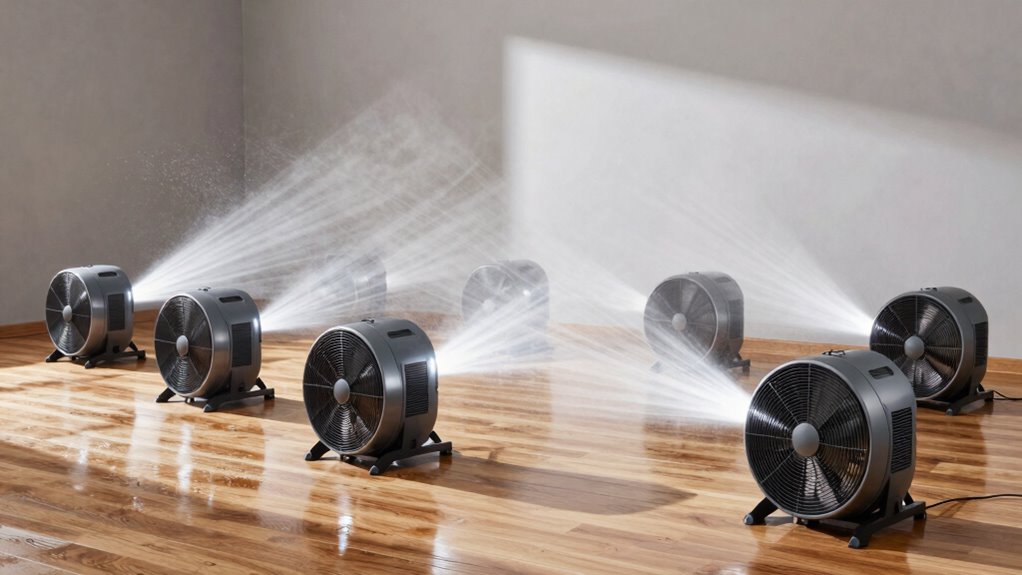
To cut drying time with air movers, position them strategically facing wet surfaces and avoid blocking airflow. Angling units towards walls, ceilings, or hidden areas helps improve circulation and speeds moisture removal. Use multiple units to create airflow pathways and adjust their placement as damp spots dry. Pairing air movers with dehumidifiers further enhances drying efficiency. Mastering this placement trick guarantees rapid, effective drying—keep going to discover how to optimize your setup even more.
Key Takeaways
- Position air movers to face wet surfaces directly for maximum moisture extraction.
- Angle airflow toward walls and ceilings to improve circulation and drying efficiency.
- Avoid blocking airflow by clear placement, ensuring unobstructed paths for air movement.
- Use multiple air movers strategically to create a network of airflow, speeding up moisture removal.
- Regularly adjust air mover placement as surfaces dry to target remaining damp spots effectively.
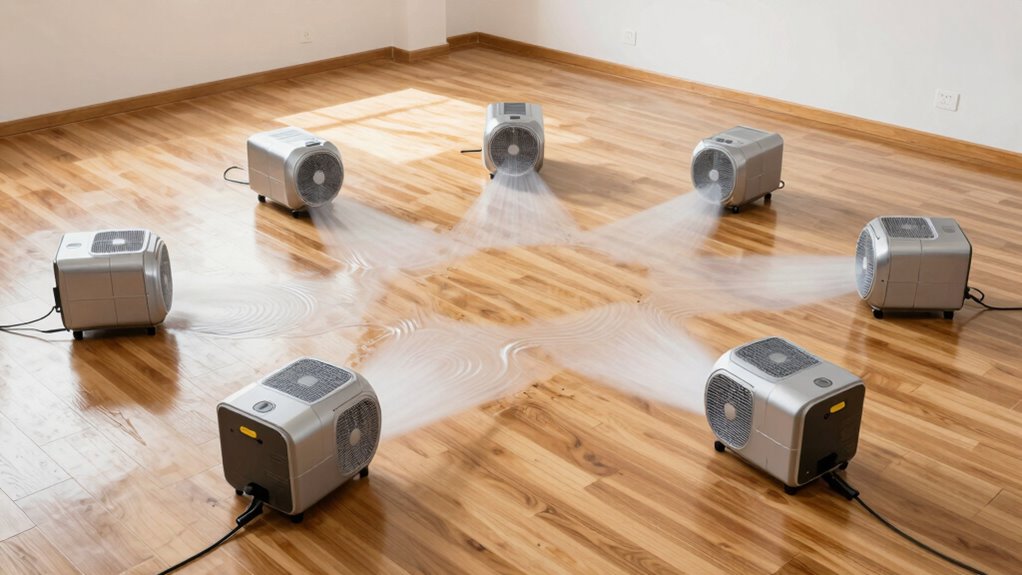
Have you ever wondered how water damage is quickly dried out and restored? The secret lies in effective drying techniques, particularly the strategic placement of air movers. These powerful devices are designed to enhance air circulation, which is essential in accelerating the drying process. When you position air movers correctly, you create a continuous flow of air that helps moisture evaporate faster from surfaces and materials. This is especially important in water-damaged areas where lingering moisture can lead to mold growth and structural issues. Proper placement isn’t just about pointing the air mover at wet surfaces; it’s about optimizing airflow to maximize moisture control and speed up the entire drying process.
By focusing on moisture control, you prevent excess humidity from settling in the affected area. When you place air movers correctly, you guarantee that moist air is constantly replaced with drier air, maintaining a steady flow that pulls moisture out of carpets, walls, and furniture. This steady airflow reduces the drying time markedly compared to just leaving fans or fans placed randomly. For effective moisture control, it’s best to position these devices so they face the wet surfaces directly, but also guarantee that the airflow isn’t blocked or diverted. Sometimes, angling air movers toward the wall or ceiling can help circulate air more evenly throughout the space, reaching hidden or less accessible areas.
Proper air mover placement ensures steady airflow and faster moisture removal from surfaces.
Another key trick is to use multiple air movers in tandem, creating a network of airflow paths that work together to dry out the area faster. You don’t want the air to stagnate, so adjusting the placement as drying progresses is fundamental. As moisture levels drop, move the air movers to target remaining damp spots. This dynamic approach keeps moisture from lingering, which is essential for preventing secondary damage like mold or warping. Additionally, pairing air movers with dehumidifiers enhances moisture control by removing the humid air that the fans produce, making the drying process even more efficient.
In essence, the placement of air movers isn’t just a minor detail; it’s the trick that makes all the difference in cutting down drying time. Focus on creating a well-ventilated environment where air circulation is maximized and moisture control is maintained. When you do this correctly, you’ll see faster results, less damage, and a safer, drier space in record time. Whether you’re dealing with minor leaks or severe flooding, mastering the placement of your air movers ensures that your drying efforts are effective and efficient. Proper airflow management is the key to achieving optimal drying conditions.
Frequently Asked Questions
How Do Air Mover Placement Strategies Vary for Different Materials?
You modify air mover placement based on material absorption and airflow optimization. For porous materials like drywall, position air movers directly facing the surface to maximize airflow. For less absorbent items like hardwood, place them at angles to promote circulation. Adjust placement to guarantee even drying, avoiding stagnation and hotspots. By tailoring your approach, you improve drying efficiency and reduce overall dry time.
What Safety Precautions Should Be Taken When Using Air Movers?
Stay safe with smart safeguards when using air movers. Prioritize electrical safety by inspecting cords and outlets for damage, avoiding overloading circuits, and keeping everything dry. Always wear personal protective equipment like gloves and goggles to protect against debris or sparks. Keep the area clear of obstructions, and ensure proper grounding. By following these precautions, you prevent accidents, protect yourself, and ensure efficient, effective drying without danger or disaster.
Can Multiple Air Movers Be Used Simultaneously for Faster Drying?
Yes, you can use multiple air movers simultaneously to speed up drying. To maximize air flow optimization and energy efficiency, position them strategically, ensuring they don’t blow directly into each other. Keep an eye on the power source and avoid overloading circuits. Proper placement helps distribute airflow evenly, reducing dry time while conserving energy. Always monitor the area to prevent overheating or damage, ensuring safe and efficient drying.
How Do Ambient Temperature and Humidity Affect Air Mover Effectiveness?
Think of ambient temperature and humidity as the unseen currents guiding your drying process. Higher temperatures boost air mover effectiveness by increasing evaporation, while low humidity helps moisture escape faster. Conversely, high humidity hampers drying, making humidity control essential. To maximize efficiency, keep ambient temperature moderate and reduce humidity around the area, ensuring your air movers work *best*. This balance accelerates drying and saves you time.
Are There Specific Maintenance Tips to Maximize Air Mover Lifespan?
To maximize your air mover’s lifespan, perform regular air mover maintenance by cleaning filters, vents, and blades to prevent dust buildup. Guarantee proper electrical connections and avoid overloading circuits. Check for unusual noises or vibrations, addressing issues promptly. Store units in a dry, cool place when not in use. Consistent maintenance not only extends your air mover’s lifespan but also keeps it running efficiently, saving you money and downtime.
Conclusion
By carefully placing your air movers, you gently guide moisture to exit more smoothly, making the drying process feel almost effortless. With a thoughtful touch, you create a balanced breeze that whispers away dampness, leaving your space refreshed and comfortable. Trust in the subtle art of placement, and you’ll find that drying becomes a seamless part of your routine—light, swift, and quietly effective. Sometimes, a small adjustment makes all the difference, turning a challenge into a simple breeze.