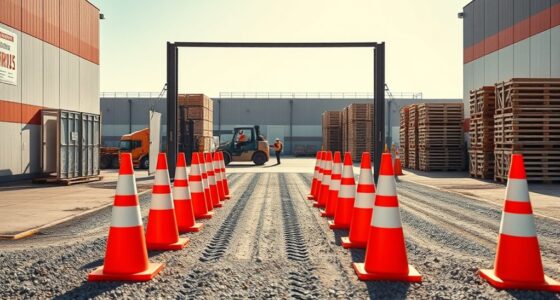
To safely haul large restroom trailers, you should carefully plan your route, checking clearance heights, road conditions, and traffic. Use heavy-duty equipment with secure tie-downs and padding to prevent shifting, and make certain your vehicle meets safety standards. Obtain necessary permits for oversized loads and coordinate with local authorities. Prioritize safety over speed and consider longer, safer routes when needed. For detailed tips to streamline your process, continue exploring trusted methods and best practices.
Key Takeaways
- Conduct thorough route planning, considering clearance, road conditions, and restrictions to ensure safe transit.
- Use specialized heavy-duty equipment with securement systems and padding to prevent movement and damage.
- Coordinate with authorities for permits, adhere to safety standards, and ensure proper lighting and signage.
- Evaluate traffic patterns and avoid congested or low-clearance routes, opting for longer but safer paths.
- Regularly inspect equipment and securement devices to maintain safety and compliance throughout transportation.
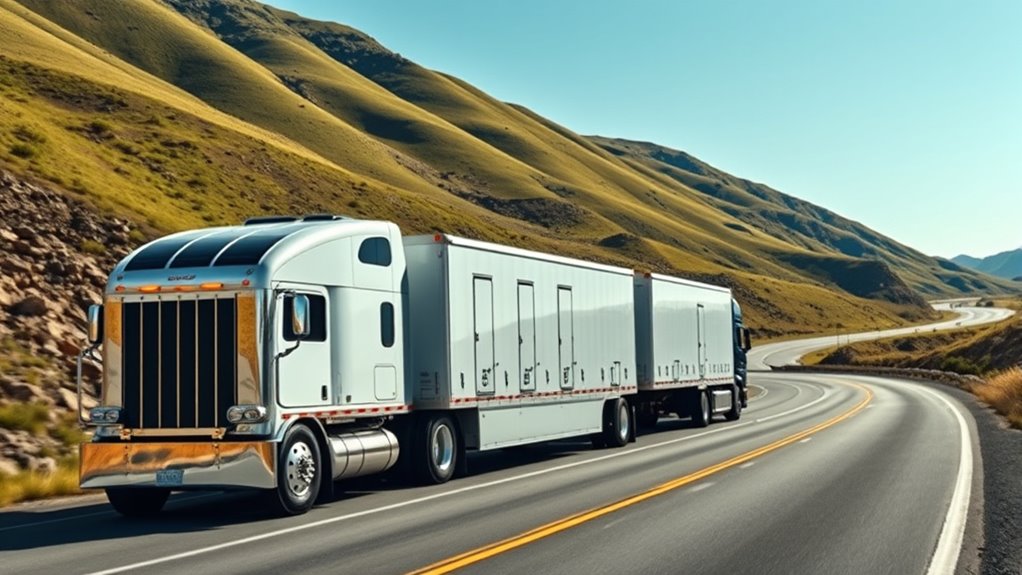
Have you ever wondered how products move seamlessly from manufacturers to your doorstep? When it comes to transporting large restroom trailers, the process involves more than just loading them onto a truck and hoping for the best. It’s a complex operation that requires careful planning to navigate routing challenges and meet specific equipment requirements. These factors are vital because improper handling or poor planning can lead to delays, damage, or safety hazards.
Routing challenges are among the biggest obstacles in hauling large restroom trailers. Unlike standard cargo, these trailers are bulky and sensitive to movement, so you can’t simply choose the shortest or most convenient path. Narrow roads, low bridges, tight turns, and weight restrictions can all complicate the route. You need to analyze each potential route thoroughly, considering not just distance but also clearance heights, road conditions, and construction zones. Sometimes, a longer route might be safer and more practical than a shorter, more congested one. You’ll also need to coordinate with local authorities or obtain permits if you’re crossing state lines or restricted areas. Proper planning guarantees that your trailer can travel without incident, minimizing the risk of getting stuck or causing damage.
Equipment requirements play a significant role in guaranteeing the safe and efficient transportation of these large trailers. You’ll need specialized equipment, such as heavy-duty flatbed trucks or trailers designed to handle the weight and dimensions of restroom trailers. These might include hydraulic lifts, securement systems, and custom tie-downs to keep the trailer stable during transit. The right equipment isn’t just about capacity; it also involves ensuring that the trailer is properly supported and protected. For instance, you may need additional padding or braces to prevent shifting or bouncing. Proper equipment also includes safety features like reflective tape, warning signs, and proper lighting for nighttime travel. Ensuring that your transport vehicle and equipment meet all regulatory standards is essential to avoid fines and legal issues, especially given the size and nature of the load.
Frequently Asked Questions
What Permits Are Required for Transporting Large Restroom Trailers?
When transporting large restroom trailers, you need to understand permit requirements to guarantee compliance. These permits vary by state and route, so you should plan your route carefully and obtain the necessary oversize or special permits beforehand. Check with local transportation authorities or freight agencies to get accurate information. Proper route planning and securing the right permits help you avoid delays, fines, and ensure safe delivery of your large restroom trailer.
How Do Weather Conditions Affect Trailer Transportation Safety?
Imagine hitting the road only to face unpredictable weather patterns—storm clouds gathering or sudden rain. These conditions can threaten your vehicle stability, making trailer transportation risky. You need to stay alert to how wind, rain, or ice might impact your journey. Adjust your speed, check your equipment frequently, and plan routes carefully. Weather can shift quickly, so always prioritize safety to prevent accidents and make certain your large restroom trailer arrives intact.
What Are the Insurance Considerations for Hauling Restroom Trailers?
When hauling restroom trailers, you need to prioritize insurance compliance and liability coverage. Make sure your policy covers large, specialized equipment and potential damages during transit. Verify that your insurance meets industry standards and state regulations to avoid legal issues. Also, consider adding extra liability coverage for accidents or damage caused by weather or handling errors, ensuring you’re fully protected throughout the transportation process.
How Is the Trailer Secured During Long-Distance Transport?
Like a seasoned captain, you guarantee the trailer stays put during long hauls. You check the trailer weight to confirm it’s within your vehicle’s capacity, then secure it with heavy-duty straps. These secure straps keep the restroom trailer stable and prevent shifting on the road. You double-check all connections and straps before departure, making sure everything is tight and secure — like tying a knot in a rugged rope.
What Are the Recommended Loading and Unloading Procedures?
When it comes to loading safety and unloading best practices, you should always inspect the trailer and equipment first. Use proper ramps and secure them firmly. Make certain the trailer is on a level surface, and unload slowly, keeping clear of pinch points. Communicate clearly with your team, and double-check that all straps and locks are secure before moving. Following these steps helps prevent accidents and ensures smooth loading and unloading.
Conclusion
Ultimately, handling large restroom trailers is like gently guiding a delicate dance—every step matters. By paying close attention to the details and respecting the equipment’s needs, you guarantee a smooth journey every time. With careful planning and a steady hand, you create a seamless experience that keeps everything running behind the scenes without a hitch. Remember, a little foresight goes a long way in making sure your transportation journey stays trouble-free and worry-free.