
To size water and waste tanks for a multi-day event, estimate your attendees’ daily water needs at 20-30 gallons per person, then multiply by the total number of attendees and event length. Add a 10-20% buffer for unexpected increases. Confirm tanks can handle the total water and waste produced, with extra capacity for safety, and plan for timely refills and waste removal. For detailed guidance, keep exploring to ensure seamless operations.

Get pool and patio gear delivered free — and shop member deals
- Fast, free delivery on millions of items
- Access to Prime Big Deal Days deals on October 6–7
- Prime Video, Amazon Music and more included
Key Takeaways
- Calculate total water needs based on attendee count, event duration, and a buffer for unexpected increases.
- Size water tanks to meet total water requirements plus an emergency capacity margin.
- Determine waste tank capacity by estimating waste generation and scheduling regular removal to prevent overflow.
- Ensure tanks are accessible for maintenance and include redundancy to handle supply or disposal disruptions.
- Plan logistics with nearby water sources, backup plans, and scheduled refills and waste removals to ensure smooth operations.
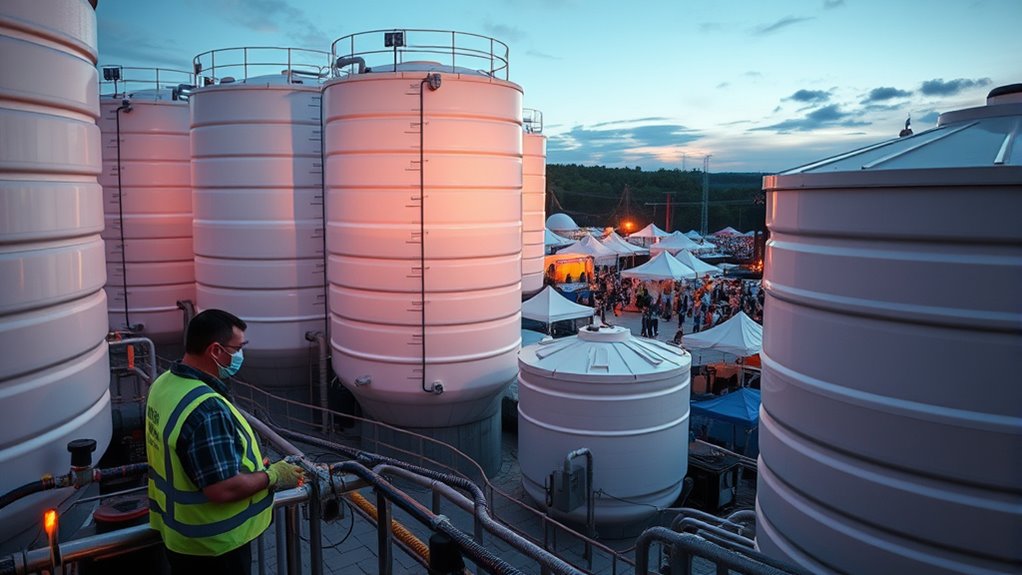
Planning for multi-day events requires careful consideration of water and waste tank sizes to guarantee smooth operations. When you’re organizing an event that spans several days, you’re responsible for ensuring that everyone’s water needs are met without interruption and that waste is managed efficiently. This begins with understanding the sizing considerations essential for both water tanks and waste containment systems. Proper planning strategies involve evaluating the number of attendees, expected water consumption, and waste generation rates, allowing you to determine appropriate tank capacities that prevent shortages or overflows.
Your first step should be to estimate daily water usage per person. On average, each individual consumes about 20 to 30 gallons of water daily for drinking, sanitation, and other needs. Multiply this by the anticipated number of attendees to get a rough daily total. Next, consider the number of days the event will last and add a buffer to account for unexpected increases in water use or delays in supply replenishment. This buffer might be around 10-20%, depending on the event’s nature and location. For waste tanks, the sizing considerations revolve around the same attendee count and usage patterns. You must ensure the capacity is enough to hold waste generated over the entire period without risking overflow, especially if waste removal services are scheduled less frequently.
Planning strategies involve more than just calculations. You should also incorporate redundant capacity and easy access for maintenance. For example, larger tanks can provide extra margin, preventing last-minute shortages or overflows. You’ll want to coordinate with waste management services to determine ideal waste removal schedules, ensuring tanks are emptied before reaching capacity. Additionally, consider the logistical aspects of refilling water supplies—are there reliable sources nearby? Is there a backup plan in case of unforeseen issues? These questions are essential to develop a complete plan that minimizes disruptions. Including proper tank sizing based on usage and waste rates is also critical to prevent operational hiccups during the event.
portable water tank for outdoor events
As an affiliate, we earn on qualifying purchases.
As an affiliate, we earn on qualifying purchases.
Frequently Asked Questions
How Do Weather Conditions Affect Tank Sizing for Outdoor Events?
You should consider rain impact and temperature fluctuations when sizing tanks for outdoor events. Heavy rain can increase water runoff, reducing the need for storage, but also risks overflows if tanks aren’t sized properly. Temperature fluctuations can cause water expansion or evaporation, affecting capacity needs. By accounting for these weather conditions, you guarantee your tanks are large enough to handle unexpected rain and temperature changes, avoiding shortages or overflows during the event.
What Safety Margins Should Be Included in Tank Capacity Calculations?
You should include safety margins in tank capacity calculations by conducting thorough contingency planning and risk assessment. Add extra capacity—typically 10-20%—to account for unexpected increases in water or waste needs, weather variations, or equipment failures. This guarantees you’re prepared for emergencies and fluctuating usage, minimizing the risk of shortages or overflows. Always review historical data and consult with experts to determine appropriate safety margins for your specific event.
How Can I Optimize Water Usage During Multi-Day Events?
To optimize water usage during multi-day events, focus on water conservation practices and usage monitoring. Encourage attendees to use water efficiently, install low-flow fixtures, and provide clear signage about conservation. Regularly check and track consumption data to identify wastage and adjust your strategies accordingly. These steps help extend your water supply, reduce waste, and ensure sufficient resources for the entire event duration.
Are There Specific Regulations for Water Tank Sizes in Different Venues?
You need to check venue specific regulations and guarantee local code compliance when sizing water tanks. Regulations vary by location and venue type, so it’s essential to consult local authorities or code officials beforehand. This helps you avoid penalties or safety issues. Always verify the minimum requirements for water storage and waste disposal, and adapt your tank sizes accordingly to meet legal standards and ensure smooth event operations.
What Are the Best Practices for Emergency Water Supply Planning?
You should prioritize contingency planning by guaranteeing sufficient water storage for emergencies. Always have extra water tanks on-site, enough to meet the event’s needs if regular supply is interrupted. Regularly review and update your emergency water plan, considering factors like event duration and attendee numbers. Train staff on emergency procedures, and keep clear access to water sources. This proactive approach ensures safety and smooth operations during unexpected disruptions.
Conclusion
Just like the explorers venturing into uncharted waters, you must carefully plan your water and waste tanks to navigate multi-day events smoothly. Proper sizing guarantees you won’t be stranded like a ship lost at sea, running out of resources or overflowing with waste. Remember, foresight is your compass—anticipate needs, plan ahead, and sail confidently through your event, turning potential challenges into calm waters. With the right setup, your event will be a true voyage of success.
Fall Picks
fall essentials
As an affiliate, we earn on qualifying purchases.