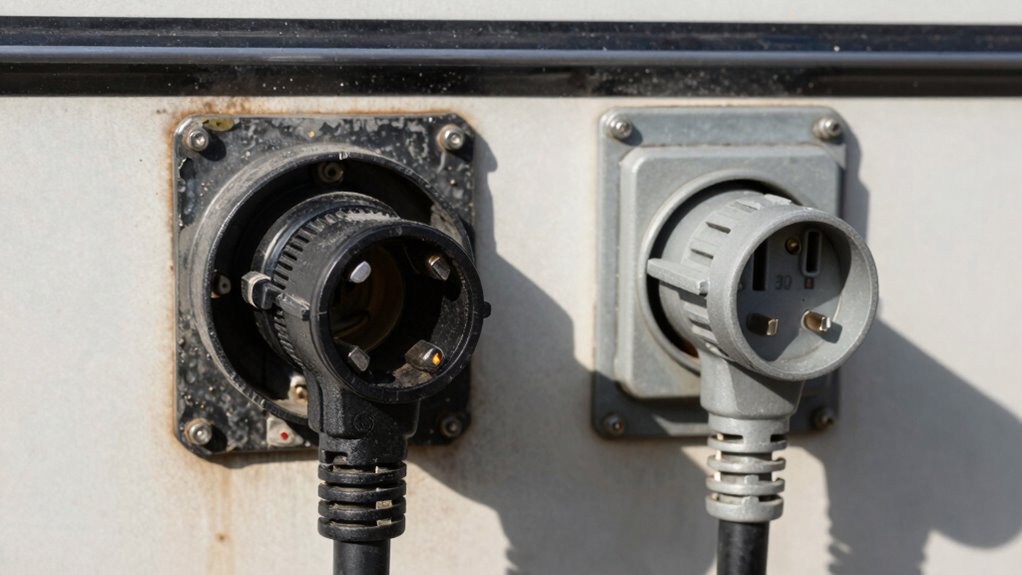

Choosing between 50 amp and 30 amp hookups depends on your trailer’s electrical needs. A 50 amp connection offers more power, allowing you to run multiple high-demand appliances safely, while a 30 amp is enough for lighter setups. Using the correct hookup safeguards your appliances and prevents circuit overloads. Understanding the key differences ensures you make a safe, cost-effective choice. Keep going to discover how these options impact your camping experience and long-term safety.
Key Takeaways
- 50 amp hookups deliver higher electrical capacity, supporting larger appliances and multiple devices simultaneously.
- 30 amp hookups are suitable for smaller trailers with minimal electrical needs, reducing unnecessary expenses.
- Compatibility of RV wiring with either hookup type ensures safe, efficient power delivery and prevents damage.
- Using the correct capacity minimizes overload risks, electrical fires, and equipment damage during operation.
- Choosing the right hookup balances cost, safety, and future electrical demands, protecting your trailer investment.
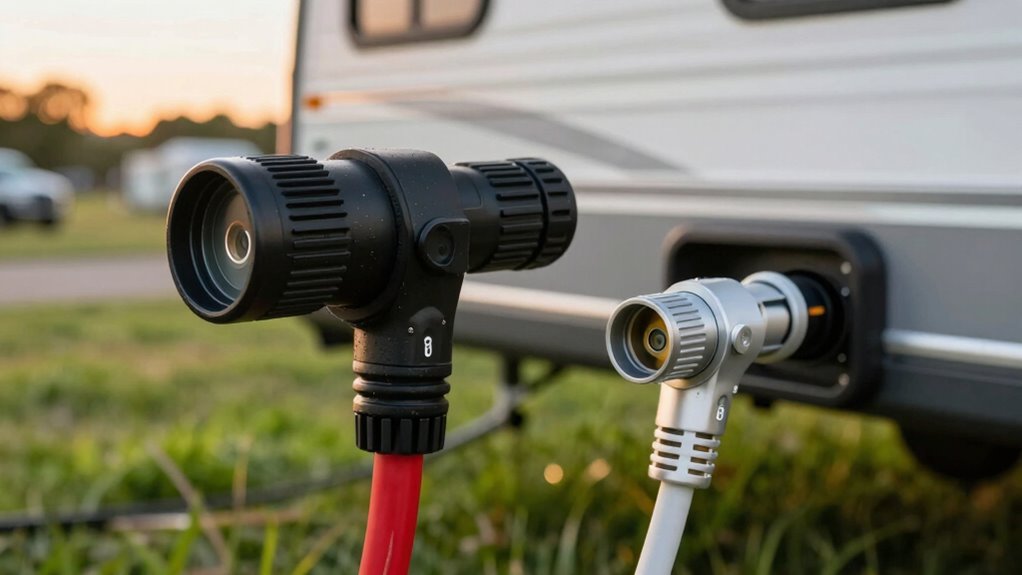
When choosing between a 50 amp and a 30 amp hookup, understanding their differences is essential for ensuring your electrical needs are met safely and efficiently. These hookups serve as the main connection point between your trailer and the power source, and knowing how they differ can prevent electrical issues and protect your equipment. The key factors to weigh are generator power and electrical capacity. A 50 amp hookup provides a higher electrical capacity, which means it can deliver more power to your trailer’s appliances and systems. This increased capacity is especially beneficial if you have multiple high-demand devices, such as air conditioners, microwaves, or RV refrigerators, all running simultaneously. The generator power supplied through a 50 amp connection is typically greater, allowing you to run larger appliances without worrying about overloads or power failures.
Choosing between 50 and 30 amp hookups depends on your power needs and device demands.
On the other hand, a 30 amp hookup is more common and suitable for lighter electrical loads. It offers less generator power and a lower overall electrical capacity, making it ideal for smaller trailers or those with minimal electrical requirements. If your setup mainly involves basic lighting, small appliances, and charging ports, a 30 amp connection might serve you well without the need for extensive wiring or higher capacity infrastructure. However, if you plan to upgrade your trailer or add more devices, the limited electrical capacity of a 30 amp hookup could become a bottleneck, forcing you to switch to a higher amperage connection later on.
It’s also important to weigh the compatibility of your electrical system with these hookups. Many modern RVs are designed to accommodate both 30 and 50 amp connections, but you’ll need the right adapters and wiring to connect safely. Remember, the difference in generator power between these two options isn’t just about convenience — it’s about safety. Overloading a lower-capacity hookup can lead to electrical fires, damage to your trailer’s wiring, or tripped circuit breakers. Conversely, overspending on a higher capacity hookup when it’s not needed can be an unnecessary expense.
Understanding the European cloud solutions and their role in sustainable energy efficiencies can also provide insights into optimizing your electrical setup for safety and performance. Ultimately, selecting the right hookup depends on your electrical capacity needs and the power demands of your generator. If you’re running multiple heavy-duty appliances, go for the 50 amp connection. If your needs are minimal or you’re conserving energy, a 30 amp hookup will suffice. Understanding these distinctions helps you make an informed choice, ensuring your trailer’s electrical system runs smoothly and safely, no matter where your adventures take you.
Frequently Asked Questions
Can I Use a 50 Amp Hookup With a 30 Amp Trailer?
You can’t directly connect a 50 amp hookup to a 30 amp trailer because of power outlet compatibility and electrical code requirements. Doing so could cause electrical damage or safety hazards. Instead, use a proper adapter or make sure your setup matches your trailer’s electrical needs. Always follow electrical code requirements and consult a professional to avoid risks. This way, you protect your trailer and stay compliant with safety standards.
What Appliances Need a 50 Amp Connection?
Think of a 50 amp connection like a high-capacity highway, perfect for powering large appliances. You’ll need this for RV air conditioners, electric stoves, or large water heaters. When using a generator, guarantee compatibility or consider plug adapter options to match your appliances’ needs. Smaller devices like microwaves or fridges typically only require a 30 amp hookup, so reserve the 50 amp for those heavy-duty essentials.
Is a 30 Amp Hookup Sufficient for Full-Time RV Living?
A 30 amp hookup can be sufficient for full-time RV living if your electrical capacity and power compatibility are managed carefully. It supports basic appliances and essentials, but you’ll need to prioritize power use and possibly limit high-demand devices. Keep in mind, if you plan to run multiple large appliances simultaneously, a 50 amp hookup provides more flexibility. Assess your power needs regularly to avoid overloads and make sure of safe, comfortable living.
How Do I Upgrade From 30 Amp to 50 Amp Service?
You can upgrade from 30 to 50 amp service by rewiring your RV’s electrical system, like upgrading the veins in a mighty river. Start with a professional inspection to guarantee generator compatibility and safety. Then, install a new breaker panel designed for 50 amps, and update your wiring accordingly. This upgrade supercharges your power, letting your trailer breathe freely and power all your adventures without worry.
Are There Safety Concerns Switching Between These Power Types?
Switching between 30 amp and 50 amp hookups does raise electrical safety concerns if you’re not cautious. You need to verify power compatibility to prevent overloads or damage to your trailer’s electrical system. Always verify that your trailer’s wiring and appliances can handle the new amperage. It’s best to have a professional inspect your setup to avoid hazards, ensuring safe and reliable electrical safety when making such upgrades.
Conclusion
Ultimately, understanding the difference between 50 amp and 30 amp hookups helps you avoid hassles and keep your trailer thriving. By choosing the correct connection, you safeguard your gear and stay smoothly sippin’ and settlin’. So, stay savvy, select smart, and steer your setup to success. Remember, a small switch can save your space, your sanity, and your trip’s tranquility. Stay sharp, stay secure, and enjoy every adventure ahead!