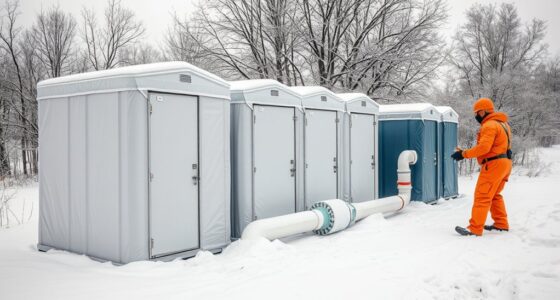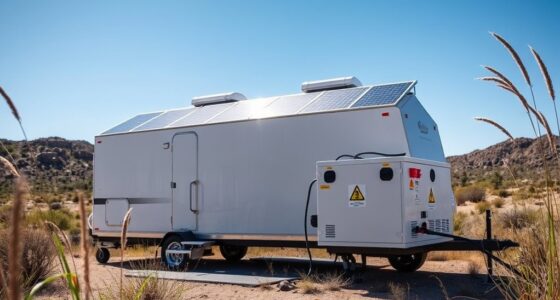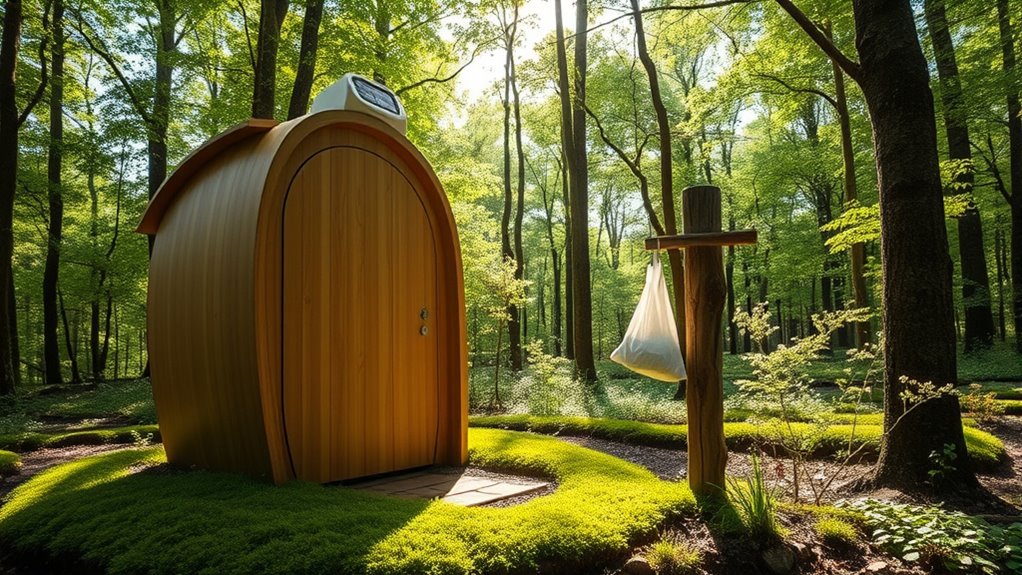

Using minimal-footprint restrooms helps you leave no trace while enjoying outdoor adventures. These eco-friendly units are self-contained, with sealed tanks that prevent groundwater pollution, and are quick to set up and maintain. They reduce environmental impact by eliminating plumbing and supporting reuse. Designed for easy use and minimal disturbance, they protect natural areas and promote responsible outdoor practices. Keep going to discover more about how these solutions can enhance your eco-conscious trips.
Key Takeaways
- Eco-friendly, self-contained units minimize environmental impact and prevent groundwater contamination during outdoor use.
- Lightweight, durable materials facilitate easy setup, transport, and reuse, supporting leave-no-trace principles.
- Sealed waste tanks ensure safe waste containment and disposal without disrupting natural settings.
- Incorporating eco-conscious features like hand sanitizers and minimal infrastructure reduces ecological disturbance.
- Promotes sustainable outdoor practices by providing practical, low-impact restroom solutions that respect wilderness areas.
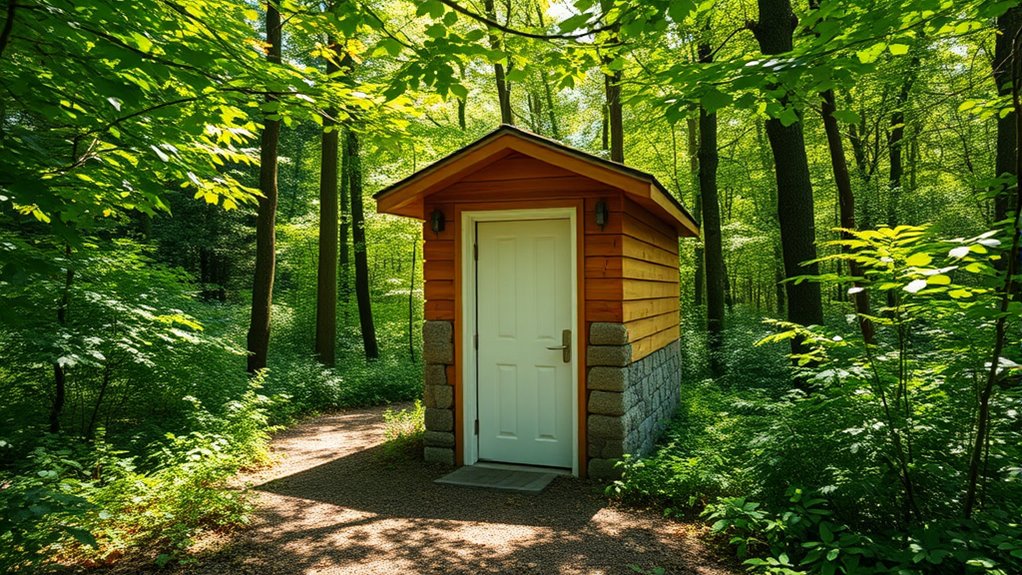
As sustainability becomes a top priority, minimal-footprint restrooms offer an innovative solution that reduces environmental impact without sacrificing functionality. When you’re out on a leave-no-trace adventure, managing waste disposal is vital. Traditional restroom setups can leave a significant environmental footprint, but portable sanitation options are changing that. These restrooms are designed to be compact, eco-friendly, and easy to transport, making them perfect for remote locations where environmental preservation is key. Instead of digging trenches or using invasive systems, you use these portable units, which contain waste safely and efficiently.
Minimal-footprint restrooms reduce environmental impact while providing eco-friendly, portable waste management for outdoor adventures.
You’ll notice that minimal-footprint restrooms often incorporate eco-conscious materials that are durable yet environmentally friendly. They’re built to be lightweight, which means less fuel consumption during transportation and a smaller carbon footprint. When it comes to waste disposal, these units typically feature sealed holding tanks that prevent leaks and odors, making them ideal for wilderness settings. You simply empty the tanks at designated disposal sites, guaranteeing that waste is handled responsibly and doesn’t contaminate the surrounding environment. This process minimizes the risk of groundwater pollution and preserves the natural beauty of your outdoor experience. Additionally, the use of portable units supports the concept of low-impact systems, which are essential for sustainable outdoor practices.
The design of these portable sanitation units emphasizes ease of use and minimal impact. You won’t need complex infrastructure or extensive setup—just position the unit, use it, and then follow proper waste disposal procedures. Many models include hand sanitizers and eco-friendly toilet paper to promote hygiene without adding waste. Because they’re self-contained, they don’t require connection to septic systems or plumbing, which reduces the need for invasive installations that could disturb the landscape. This independence supports the leave-no-trace principle, guaranteeing you leave the environment exactly as you found it.
Moreover, minimal-footprint restrooms are built to be reused and recycled, further reducing waste. When you finish using the restroom, you can quickly clean and disinfect the unit, readying it for the next use. This cycle of reuse helps cut down on disposable products and unnecessary waste. When it’s time to empty the waste, you follow environmentally responsible procedures, often at authorized disposal facilities. This careful management of waste disposal ensures that your outdoor adventure remains sustainable and eco-friendly.
In essence, these portable sanitation solutions empower you to enjoy nature without compromising your commitment to conservation. They provide a practical, effective way to manage waste disposal while respecting the environment. By choosing minimal-footprint restrooms, you’re supporting a sustainable approach that aligns with leave-no-trace principles, helping protect the wilderness for future adventures.
Frequently Asked Questions
How Do Minimal-Footprint Restrooms Handle Waste Disposal?
When you ask how minimal-footprint restrooms handle waste disposal, it’s all about waste containment and septic alternatives. You’ll find that these restrooms use sealed tanks or composting systems to contain waste safely. This approach minimizes environmental impact by preventing leaks and odors. You, as a user, help guarantee proper waste management by following guidelines, so waste gets properly contained and treated without harming the surroundings.
Are These Restrooms Suitable for All Weather Conditions?
You wonder if these restrooms are suitable for all weather conditions. They are designed with weather resilience in mind, making them durable and functional across various environments. Their seasonal adaptability guarantees they perform well in extreme cold, heat, or rain. You can trust that these restrooms will provide reliable facilities, whether you’re facing summer storms or winter chills, making them an excellent choice for all your outdoor adventures.
What Maintenance Is Required for Minimal-Footprint Facilities?
You’ll need to regularly maintain these facilities to guarantee odor control and hygiene. This means cleaning them frequently, especially after heavy use, and checking for any signs of wear or damage. Proper waste disposal is essential, and you should replenish supplies like hand sanitizer or toilet paper as needed. Consistent maintenance keeps the restrooms functional, odor-free, and environmentally friendly, ensuring a positive experience for all users.
Can These Restrooms Be Installed in Remote or Sensitive Areas?
You can install these restrooms in remote or sensitive areas, but you need to contemplate the ecological impact and construction challenges. These facilities are designed to limit environmental disturbance, making them suitable for delicate ecosystems. However, their installation might require careful planning to navigate access issues and minimize habitat disruption. With proper site assessment and planning, you can successfully implement them without compromising the area’s ecological integrity.
What Are the Cost Differences Compared to Traditional Restroom Setups?
You might think minimal-footprint restrooms cost more upfront, but the truth is, they often save you money long-term. The cost comparison shows lower installation expenses because they require less infrastructure and materials. Plus, they don’t need extensive plumbing or sewer connections, reducing maintenance costs. So, while initial investment could seem higher, these eco-friendly setups often prove more economical over time, especially in remote or sensitive areas where traditional facilities are costly.
Conclusion
By choosing minimal-footprint restrooms, you help protect our natural spaces. Did you know that traditional restrooms can generate up to 50,000 gallons of wastewater annually in remote areas? Using eco-friendly options reduces this impact considerably. When you opt for leave-no-trace solutions, you contribute to preserving the environment for future adventures. Every small step counts—so next time you’re out, embrace these simple changes and leave nature just as beautiful as you found it.