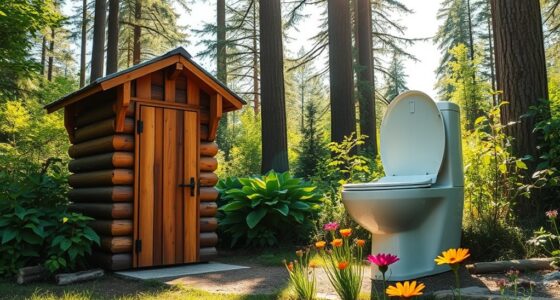
Greywater recycling systems for portable showers and toilets help you conserve water by reusing wastewater from sinks, showers, and laundry. They include collection tanks, filters, and distribution components to guarantee safe and efficient reuse for toilet flushing and irrigation. Proper maintenance and choosing the right filtration are vital for system longevity and hygiene. Keep an eye on key practices, and you’ll discover how to maximize your system’s efficiency and sustainability effectively.
Key Takeaways
- Integrate collection tanks and filtration systems to safely reuse greywater for portable showers and toilets.
- Use multi-stage filters to remove debris, hair, and contaminants, ensuring water quality for non-potable applications.
- Regularly maintain hoses, tanks, and filters to prevent clogs, odors, and bacterial growth.
- Optimize system efficiency by monitoring water usage habits and performing routine system inspections.
- Ensure proper sanitation and hygiene practices to maintain safe, effective greywater recycling in portable setups.

Have you ever considered how much water you waste daily from sinks, showers, and laundry? It’s easy to overlook the impact of your habits, but by implementing greywater recycling systems for portable showers and toilets, you can substantially reduce your water footprint. These systems capture wastewater from sinks, showers, and laundry, allowing you to reuse it for non-potable purposes like flushing toilets or watering plants. Not only does this cut down on your overall water consumption, but it also eases the strain on local water supplies, especially in areas prone to drought or with limited access to clean water sources.
When setting up a greywater recycling system, one of the most critical aspects to focus on is water filtration. Proper filtration ensures that the greywater is free from contaminants and debris, making it safe for reuse. You’ll want to select a filtration system tailored to your setup—some systems include multiple stages, such as coarse filters to catch hair and lint, followed by finer filtration media that remove smaller particles and bacteria. This step is essential for maintaining the quality of your recycled water and preventing clogs or damage to your portable shower and toilet components. Regularly checking and replacing filters is necessary to keep the system functioning efficiently. Neglecting water filtration can lead to buildup and reduced system performance, so make it a routine part of your system maintenance.
Additionally, understanding personal water usage habits can help optimize your greywater system’s efficiency and sustainability. System maintenance extends beyond just replacing filters. You should routinely inspect hoses, connections, and tanks for leaks or blockages. Keeping the greywater collection and distribution components clean helps prevent odors and bacterial growth. Additionally, maintaining proper sanitation protocols ensures that the recycled water remains safe for its intended use, especially when flushing toilets or watering edible plants. Establishing a maintenance schedule helps you catch potential issues early and prolongs the lifespan of your greywater system.
Frequently Asked Questions
What Certifications Should I Look for in Greywater Recycling Systems?
When choosing a greywater recycling system, you should look for certifications that guarantee water filtration efficiency and system durability. Certifications like NSF/ANSI standards indicate the system meets safety and performance benchmarks, giving you confidence in its water quality. Also, check for durability certifications to confirm the system withstands regular use and environmental conditions. These certifications help you select reliable systems that effectively recycle water while maintaining safety and longevity.
How Much Maintenance Do Portable Greywater Systems Require?
Your portable greywater system practically runs itself, but it still needs some TLC. You’ll want to regularly perform system cleaning to prevent buildup and guarantee peak performance. Filter replacement is essential to keep water quality high and avoid clogs. Usually, these tasks don’t take much time—maybe a few minutes each week—making maintenance manageable. Staying on top of it ensures your system works efficiently and lasts longer without breaking a sweat.
Are Greywater Systems Suitable for All Climate Conditions?
When considering climate adaptability, your greywater system’s suitability depends on how well it handles temperature fluctuations and environmental conditions. You should look for systems with durable materials that withstand extreme weather, such as UV-resistant plastics or corrosion-proof metals. These features ensure the system functions reliably across various climates, from hot, humid areas to cold, snowy regions. Proper material durability and climate adaptability make it easier to maintain performance wherever you are.
What Is the Typical Cost Range for Portable Greywater Recycling Units?
When you compare costs for portable greywater recycling units, you’ll find a range typically between $500 to $3,000, depending on feature options. A good cost comparison helps you identify units with the best features for your needs, such as filtration or capacity. Remember, investing in a more advanced system might cost more upfront but can save you money and hassle in the long run.
Can Greywater Recycling Systems Be Installed in Small or Irregular Spaces?
Imagine fitting a puzzle piece into a tricky corner—greywater recycling systems can do the same in small or irregular spaces. With compact installation options and flexible configurations, you can seamlessly integrate these systems where space is tight. They’re designed to adapt, ensuring you maximize efficiency without sacrificing functionality. So, even in challenging spots, you can enjoy sustainable water reuse, making the most of every inch.
Conclusion
By embracing greywater recycling systems for your portable showers and toilets, you not only save water but also become a true eco-hero, like a modern-day Leonardo da Vinci of sustainability. With a bit of ingenuity, you can turn your outdoor adventures into a sustainable journey, all while avoiding the pitfalls of a bygone era’s wastefulness. So, gear up and make your camping experience as green as an enchanted forest—no magic wand required!