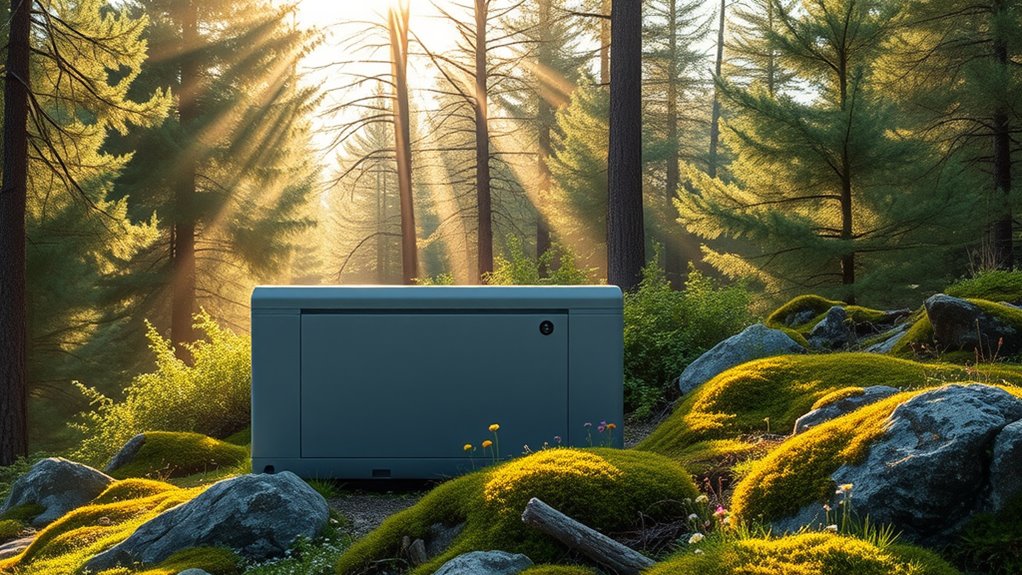

To achieve quiet power in wilderness settings, you should use soundproof enclosures designed to contain generator noise while providing proper ventilation. Upgrading your muffler with sound-absorbing technology can substantially reduce exhaust sound. Position your generator on vibration-absorbing surfaces and regularly maintain mufflers for peak performance. Combining these solutions ensures your power needs don’t disturb the tranquility of nature. Keep exploring to discover how these strategies work together for peaceful outdoor experiences.

Get pool and patio gear delivered free with Prime
- Fast, free delivery on millions of items
- Prime Video, Amazon Music and more included
- Member-only deals all year
Key Takeaways
- Use soundproof enclosures designed for outdoor use with proper ventilation to contain generator noise.
- Upgrade mufflers with sound-absorbing materials to significantly reduce exhaust noise.
- Position generators on vibration-absorbing surfaces to minimize ground noise transmission.
- Regularly inspect and maintain mufflers and enclosures to ensure optimal noise reduction.
- Combine enclosures and muffler upgrades for comprehensive, effective noise control in wilderness settings.
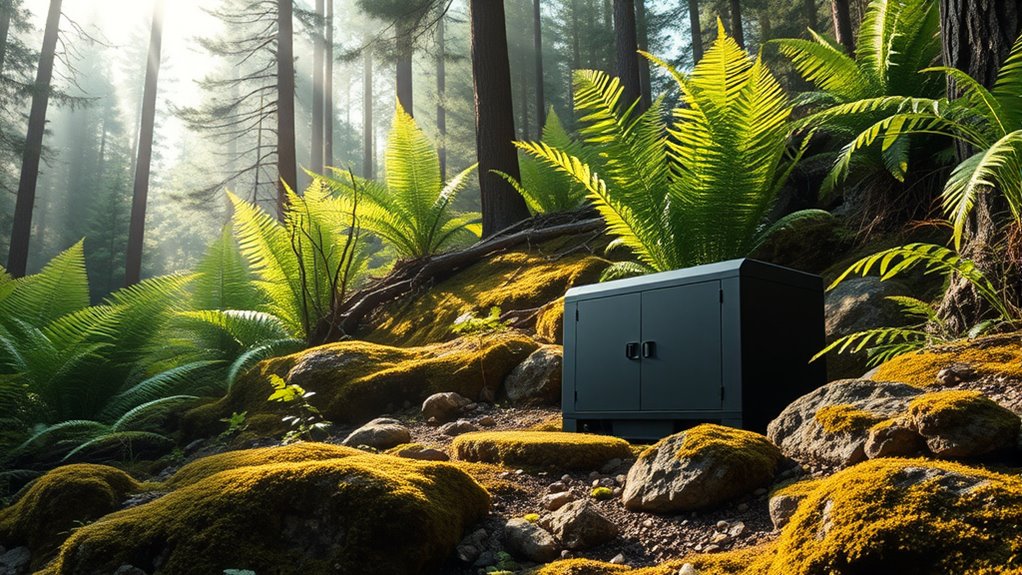
Generator noise can be a vital concern, especially in residential or quiet environments. If you’re in a wilderness setting or camping in remote areas, loud generator noise can disturb the peace and disrupt the natural ambiance. Fortunately, there are effective ways to minimize this noise, allowing you to enjoy the outdoors without unnecessary sound pollution. One of the most practical solutions is investing in soundproof enclosures. These enclosures are designed specifically to contain and absorb the noise produced by generators, making them ideal for outdoor use where discretion matters. By enclosing your generator, you prevent the sound waves from traveling freely into the environment, markedly reducing the noise level you and others experience.
In addition to soundproof enclosures, muffler technology plays a vital role in controlling generator noise. Modern mufflers are engineered to dampen the sound of exhaust gases, which is a primary source of noise in most generators. Upgrading or installing a high-quality muffler can make a noticeable difference in sound levels. Many mufflers are designed with sound-absorbing materials and special baffles that break up the exhaust sound waves, transforming loud roars into a much quieter hum. Combining muffler technology with a soundproof enclosure provides a two-pronged approach to noise reduction, ensuring your generator runs smoothly and quietly.
When choosing soundproof enclosures, look for models that are well-ventilated to prevent overheating, yet still capable of muffling noise effectively. Proper ventilation is essential because generators generate heat, and trapping that heat inside a sealed box can lead to performance issues. Many enclosures feature adjustable vents or silencers that balance noise reduction with airflow. You should also consider the placement of your generator; positioning it on a solid, vibration-absorbing surface inside the enclosure can prevent additional noise transmission through the ground and surrounding structures.
Maintaining your muffler is equally important. Regularly inspecting and cleaning it ensures it continues to perform at peak efficiency. Over time, mufflers can become clogged with carbon deposits, reducing their ability to dampen sound. Replacing a worn or damaged muffler with a newer, more advanced model can make your generator operate more quietly. Additionally, understanding the importance of soundproof enclosures and the role of mufflers helps in selecting the most effective noise control solutions. Together, soundproof enclosures and muffler technology give you a comprehensive approach to controlling noise levels, helping you preserve the tranquility of your wilderness experience. With these tools, you can enjoy reliable power without sacrificing the serenity of the natural environment around you.
outdoor generator soundproof enclosure
As an affiliate, we earn on qualifying purchases.
As an affiliate, we earn on qualifying purchases.
Frequently Asked Questions
What Are the Legal Noise Limits for Generators in Wilderness Areas?
You should know that legal noise limits for generators in wilderness areas typically range from 60 to 65 decibels at 50 feet, depending on local regulations. To stay compliant, you can use generator soundproofing and noise mitigation strategies like installing mufflers, using sound barriers, or choosing quieter models. These steps help reduce disturbance to wildlife and other visitors, ensuring you’re respecting wilderness protections while enjoying reliable power.
How Does Ambient Wildlife Noise Affect Perceived Generator Noise Levels?
Wildlife acoustics and ambient soundscapes considerably influence how you perceive generator noise. When natural sounds are loud or complex, your ears blend the generator’s hum into the environment, making it seem less intrusive. Conversely, in quiet settings with minimal wildlife sounds, the generator’s noise stands out sharply. To minimize disturbance, consider operating your generator during times when ambient soundscapes are naturally loud or masking the noise with wildlife sounds.
Are There Eco-Friendly Noise Reduction Technologies for Generators?
Did you know that eco-friendly noise reduction technologies can cut generator noise by up to 50%? You can use solar panels to power your generator, reducing reliance on loud engines, or opt for soundproof enclosures that contain noise effectively. These solutions are environmentally friendly, helping protect wilderness areas while ensuring your generator operates quietly. Embracing these technologies keeps nature undisturbed and your camping experience peaceful.
Can Generator Noise Impact Nearby Water Sources or Aquatic Life?
Generator noise can cause aquatic disturbance, disrupting fish and other aquatic life nearby. The vibrations and noise pollution may stress or displace wildlife, while exhaust emissions risk water contamination if they seep into water sources. You need to be mindful of your generator’s placement and noise level to protect aquatic ecosystems. Using quieter, eco-friendly generators can help minimize these impacts and preserve the health of nearby water sources.
What Are the Best Practices for Maintaining Low Noise Levels During Extended Use?
You might think loud generators are inevitable, but with proper maintenance techniques and soundproof enclosures, you’ll keep noise levels low during extended use. Regularly check for loose parts, change oil, and clean filters to prevent increased noise. Invest in quality soundproof enclosures, ensuring proper ventilation. These simple steps help you enjoy your wilderness stay quietly, proving that managing noise is more about effort than equipment, even if it’s easy to forget.
Conclusion
Ultimately, mastering generator noise control in wilderness settings echoes the silent strength of the mountains themselves—power held in restraint. Like the whisper of wind through the trees, your efforts preserve the serenity for future explorers. By minimizing noise, you honor the timeless balance of nature’s harmony, reminding us all that true power lies not in volume, but in respect. Embrace this quiet strength, and let your actions speak louder than any engine noise.
Columbus Day / Indigenous Peoples' Day Picks
long weekend sales
As an affiliate, we earn on qualifying purchases.