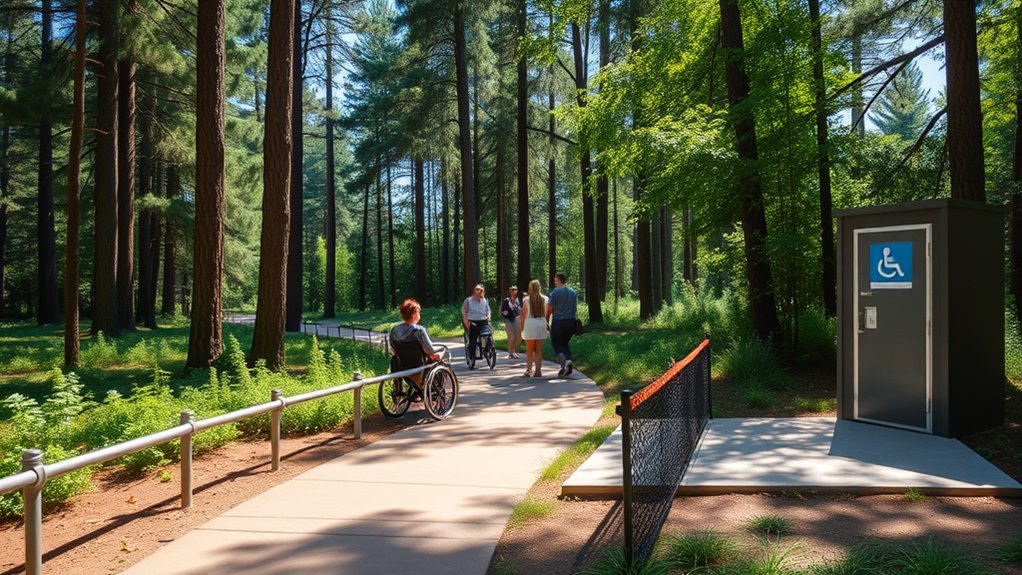

When planning accessible outdoor spaces, guarantee routes follow ADA guidelines by providing wide, smooth, and obstacle-free paths with clear signage and universal symbols. Restrooms should be conveniently located along main trails, with flat, wide pathways leading to them to make access easy for everyone. Proper signage and strategic placement help visitors navigate safely and comfortably. To discover more about creating inclusive outdoor environments, keep exploring how well-designed trails and amenities make outdoor adventures reachable for all.
Key Takeaways
- Ensure ADA-compliant routes are wide, smooth, and gently sloped, with clear signage indicating accessible pathways.
- Position restrooms and amenities near main trails, following ADA guidelines for accessibility and minimizing detours.
- Use high-contrast, large signage with universal symbols to guide visitors along accessible routes effectively.
- Incorporate adaptive equipment options along accessible paths to accommodate visitors with mobility challenges.
- Strategically plan trail and amenity placement to promote inclusivity, safety, and ease of navigation for all visitors.
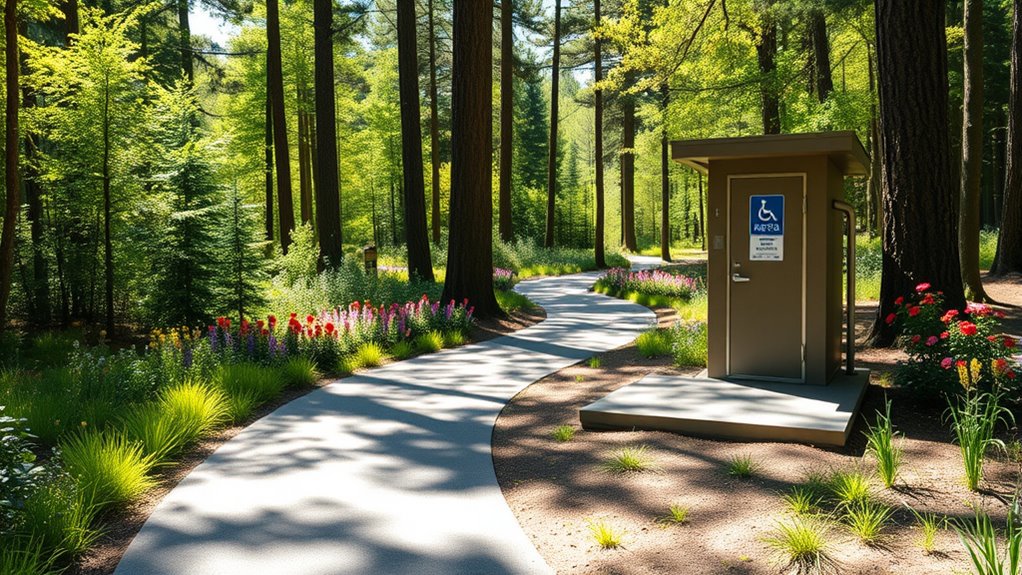
Access to the outdoors should be open to everyone, regardless of physical ability or mobility challenges. When planning accessible outdoor spaces, clear trail signage becomes essential. Well-designed signs provide critical information, including trail directions, difficulty levels, and accessible routes, making navigation easier and safer. Trail signage should use large, high-contrast lettering and universally recognizable symbols to accommodate those with visual impairments or cognitive challenges. Consistent and strategically placed signage helps visitors stay on accessible paths, reducing confusion and potential hazards. It’s also important that signs are durable and weather-resistant, guaranteeing visibility in all conditions.
Accessible outdoor spaces rely on clear, durable signage with high contrast and universal symbols for safe navigation.
In addition to signage, adaptive equipment plays an indispensable role in promoting inclusivity. Adaptive equipment includes tools and devices designed to assist individuals with mobility challenges, enabling them to enjoy outdoor activities comfortably and safely. For example, trail-specific wheelchairs or all-terrain mobility devices can traverse rougher surfaces that typical wheelchairs cannot handle. These specialized tools open up opportunities for many who might otherwise be excluded from outdoor adventures. When designing accessible routes, consider installing features like level pathways, smooth surfaces, and gentle slopes that facilitate the use of adaptive equipment. These modifications make the environment more welcoming and easier to navigate for everyone. Incorporating accessible trail surfaces can significantly improve the experience for users with diverse needs.
Placement of restrooms and other amenities should also follow ADA guidelines. Restroom locations need to be easily accessible from main trails, with clear signage indicating their positions. Pathways leading to restrooms should be wide, flat, and free of obstacles to accommodate mobility devices and those with limited stamina. Properly positioned amenities reduce the need for long detours, making outdoor spaces more user-friendly for people with diverse needs. When considering restroom placement, guarantee they are well-maintained and equipped with accessible features, such as grab bars, wider doors, and accessible sinks, so users can comfortably and independently use these facilities.
Ultimately, creating accessible outdoor spaces involves thoughtful planning and design. Incorporating clear trail signage guides visitors smoothly along accessible routes, while adaptive equipment broadens the range of outdoor activities available to everyone. Thoughtfully placed restrooms and amenities ensure convenience and dignity for all users. By focusing on these elements, you help foster an environment where everyone can connect with nature, regardless of physical ability. Accessibility isn’t just about compliance—it’s about opening doors to the outdoors for all, making sure that everyone has the opportunity to enjoy, explore, and experience the natural world without barriers.

Handicapped Accessible Sign with Braille, Blue, Self Adhesive Plastic ADA Building Sign, 6" x 6"
- ADA Compliant Design: Meets accessibility standards with Braille
- High-Contrast Visibility: Bold white icon and text on blue background
- Easy Installation: Self-adhesive backing for quick setup
As an affiliate, we earn on qualifying purchases.
As an affiliate, we earn on qualifying purchases.
Frequently Asked Questions
How Are ADA Routes Maintained During Harsh Weather Conditions?
During harsh weather conditions, you should check that ADA routes are maintained through regular seasonal maintenance and weather resilience efforts. Maintenance crews clear snow and ice promptly, repair any damage caused by storms, and guarantee paths remain accessible. They may also add traction or install temporary features to improve safety. By proactively managing these routes, you help keep them safe and accessible for everyone, regardless of weather challenges.
Are There Specific Guidelines for Restroom Proximity to Popular Trails?
You should find restroom placement that’s close to popular trailheads and accessible areas, ensuring trail proximity for convenience and safety. Guidelines recommend restrooms be within a reasonable distance, usually about 200 to 400 feet from major trail entrances, to accommodate all visitors, including those with disabilities. Proper trail proximity helps users access restroom facilities easily without disrupting their outdoor experience, making the outdoor space more inclusive and user-friendly for everyone.
How Is Accessibility Evaluated for New Outdoor Park Developments?
When evaluating accessibility for new outdoor park developments, you should focus on inclusive design and adherence to accessibility standards. You’ll assess whether pathways are navigable for all users, including those with disabilities, and ensure restrooms are conveniently located and accessible. Conduct walkthroughs and gather feedback from diverse users to identify barriers. Implementing these standards creates an inclusive environment where everyone can enjoy the park safely and comfortably.
Can Existing Outdoor Facilities Be Retrofitted for Better ADA Compliance?
You can definitely retrofit existing outdoor facilities for better ADA compliance, even if it’s a tall order. While retrofit challenges like space constraints and structural limitations exist, funding opportunities can help bridge the gap. You just need to plan carefully, prioritize key areas, and explore grants or partnerships. With determination, you’ll turn those old facilities into accessible spaces, proving that making accessibility a reality is worth the effort.
What Training Do Staff Receive to Assist Visitors With Disabilities?
You receive thorough staff training focused on disability assistance, equipping you with skills to support visitors with diverse needs. The training covers effective communication, proper use of assistive devices, and understanding accessibility features. You learn how to guide individuals safely, provide respectful assistance, and ensure an inclusive experience. This preparation helps you confidently address disability-related needs, making outdoor spaces welcoming and accessible for everyone.
Conclusion
As you navigate the outdoor world, remember that thoughtful accessibility is like a guiding star, illuminating the path for everyone. When routes and restrooms are thoughtfully placed, they become bridges connecting all explorers, symbolizing unity and inclusivity. Your awareness and action help turn the wilderness into a shared sanctuary, where barriers fade and everyone can find their way. Together, we craft a landscape that welcomes all travelers, ensuring no one is left in the shadows.