TL;DR

Get pool and patio gear delivered free with Prime
- Fast, free delivery on millions of items
- Prime Video, Amazon Music and more included
- Member-only deals all year
Horticultural guidance reviewed by Grow Organic describes rice hulls as a lightweight ingredient for potting mixes, garden beds and mulch, not a complete fertilizer. How they perform depends on processing and the rest of the growing mix; raw, parboiled, composted and carbonized hulls are not interchangeable.
Grow Organic’s guidance on rice hulls describes how the rice-milling byproduct can be used in potting mixes, garden beds and as mulch, while cautioning that it is not a complete fertilizer. The report cites extension and research sources on processed hulls, but says results depend on the hull type, the crop and the other ingredients in the growing medium.
Rice hulls, also called rice husks or rice chaff, are the protective coverings removed from rice grains during milling. According to Grow Organic, whole hulls can add pore space to growing media, allowing more air and water to move through a mix. Purdue Extension reports that parboiled hulls can increase drainage and air-filled pore space in peat-based media, making them a possible perlite alternative in suitable formulations.
The report distinguishes several products. Raw hulls may contain viable rice seeds, while Purdue Extension says parboiling helps eliminate viable seeds. Composted hulls break down into smaller particles and can contribute water-holding capacity, according to the University of Arkansas. Research published by the International Society for Horticultural Science found good drainage and high porosity in the particular carbonized hull material it studied; that finding does not establish that every carbonized product behaves the same way.
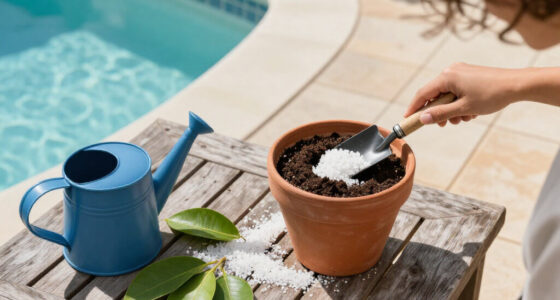
For containers, Grow Organic advises mixing processed hulls with ingredients such as peat, coir, bark or compost, using product directions or a tested recipe rather than a universal rate. As mulch, hulls can cover the soil surface, but their light weight means they may shift or blow away. The report also cites USDA research in which parboiled hulls used as nursery-container mulch suppressed bittercress and liverwort. It cautions that this result does not mean hulls control all weeds or remove established weeds.
Choosing Hulls for the Growing Medium
The practical value of rice hulls is that they can change a growing mix’s air space and drainage without being treated as a stand-alone soil cure. That may help gardeners select ingredients for containers where dense media stay too wet, or find a mulch option for protected pots. But using the wrong product or assuming all hulls have the same effect can lead to a mix that performs differently than expected.
The distinction matters for plant care and purchasing decisions. Whole hulls are generally used to create air space, while composted hulls have smaller particles that can hold water. Grow Organic says the complete mix determines performance and cautions against claims that hulls universally improve water retention. Gardeners should also keep nutrient management separate: hulls add organic material as they break down, but do not provide complete plant nutrition.
As an affiliate, we earn on qualifying purchases.
How Processing Changes Rice Hulls
Rice hulls begin as a byproduct of milling, but the gardening products described in the report undergo different processing. Parboiling uses heat and, according to Purdue Extension, helps eliminate viable seeds. Carbonization heats hulls under conditions that turn some of the material into char. Composting instead breaks hulls down into smaller particles. These processes produce materials with different roles, so one should not be substituted for another without considering the mix.
Much of the cited evidence concerns container growing media, not garden-bed soil. Grow Organic says results in beds may differ, and that research on one type of hull cannot automatically be applied to another. Rice husk ash is also distinct from ordinary hulls; the reviewed sources do not establish a universal benefit or application rate for ash in home gardens.
“Parboiled hulls can increase drainage and air-filled pore space in peat-based media.”
— Purdue Extension, as summarized in the Grow Organic report
Product Rates and Garden Results
The source does not set one recommended mixing rate or mulch depth for every crop and setting. It says the right amount depends on the product and the rest of the growing medium. Evidence described for containers may not predict results in garden beds, and the carbonized-hull findings apply to the material studied rather than all products sold under that name.
It also remains unclear from the reviewed sources how well rice-hull mulch performs across different outdoor conditions. The report notes that hulls can move in wind or irrigation and that weed suppression findings concern specific weeds in nursery containers. No general claim about controlling existing weeds or preventing all weeds is established. The source material does not provide a universal application rate for rice husk ash.
Check the Product Before Mixing
Gardeners considering rice hulls should identify whether a product is raw, parboiled, composted or carbonized, then follow its label or a tested recipe for the intended crop. For containers, they can evaluate the whole mix rather than treating hulls as a one-for-one replacement for another ingredient. For garden soil and fertilizer needs, the report recommends managing the full soil or media system and basing nutrient decisions on crop needs and testing.
Grow Organic’s article points readers toward further soil and growing-media guidance, but the source gives no announced follow-up study or change in official recommendations. Until product-specific directions or crop-tested rates are available, gardeners should treat the published uses as guidance tied to particular materials and conditions, not as a single formula for every garden.
Key Questions
Are rice hulls a fertilizer?
No. The report describes plain hulls as a growing-media or soil amendment, not a complete fertilizer. They add carbon-containing organic material as they break down, but do not supply all nutrients plants need.
Can rice hulls replace perlite?
Parboiled hulls may serve as a perlite alternative in suitable peat-based mixes. Purdue Extension’s finding concerns particular growing-media formulations; it does not establish a universal replacement ratio.
Should I use raw or parboiled rice hulls?
Processing matters. Purdue Extension says parboiling helps eliminate viable rice seeds, which may be present in fresh hulls. Check the product label and use a horticultural product appropriate for the intended application.
Can rice hulls work as mulch?
Yes. Parboiled hulls have suppressed bittercress and liverwort in USDA research on nursery containers, as summarized by Grow Organic. Hulls are light and may blow or wash away, and that research does not establish control of every weed.
Do rice hulls improve water retention?
That depends on the hull type and the other ingredients. The report says composted hulls can contribute water-holding capacity, while whole hulls are commonly used to add air space and drainage. A general claim that all hulls increase moisture retention is not supported.
Source: rss
Fall Picks
fall essentials
As an affiliate, we earn on qualifying purchases.