TL;DR

Get pool and patio gear delivered free with Prime
- Fast, free delivery on millions of items
- Prime Video, Amazon Music and more included
- Member-only deals all year
An Ideal Home gardening report outlines five steps for planting shrubs: soak the roots, prepare the soil, dig a wide hole, position the root ball at soil level, and water and mulch. Horticultural experts cited in the report recommend avoiding organic matter in the planting hole and keeping mulch away from the stems.
Ideal Home has published a five-step guide to planting shrubs, drawing on advice from horticultural experts about preparing roots and soil, setting the plant at the correct depth, and caring for it after planting. The advice matters because planting depth, drainage and moisture can affect how well a shrub establishes in its new position.
The report recommends starting by soaking the shrub’s roots thoroughly before planting. Paul Parker of J. Parker’s says this can help minimise stress to the plant. While the roots soak, gardeners can prepare the ground by removing perennial weeds and loosening compacted soil, as advised by Annelise Brilli, a horticultural expert at Thompson & Morgan.
Brilli cautions against adding organic matter directly to the planting hole as a routine measure. In heavy or poorly drained ground, she says, it may hold excess moisture around the roots; as it breaks down, the soil can settle and leave the shrub sitting too low. The report recommends instead preparing the surrounding ground and loosening soil beneath and around the hole.
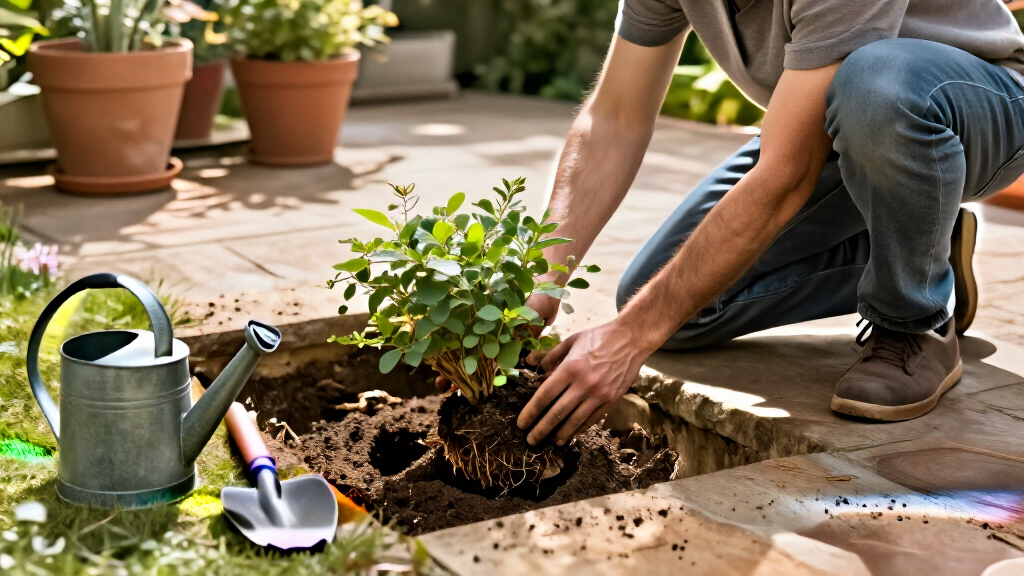
For the hole itself, Parker advises making it slightly deeper than the pot and about three times as wide. Once the shrub is removed from its pot, handle it carefully to avoid damaging the roots. Brilli recommends setting the top of the root ball level with the surrounding soil; a cane laid across the hole can help check the height. Backfill and firm the soil without pressing hard enough to harm the roots.
Planting Depth Shapes Establishment
The practical focus is on helping a shrub develop roots in the surrounding soil rather than leaving it exposed to avoidable stress. Planting too deeply can limit oxygen reaching the roots, while a root ball set too high may be more exposed and prone to drying out, Brilli says. A broad hole and loosened soil can give roots room to spread, while correct positioning helps keep the plant stable.
After planting, the report advises giving the shrub a thorough watering even if the ground is already damp, to settle soil around the roots. A layer of mulch spread in a wide circle can help conserve moisture and suppress weeds. Brilli says to leave a 10-centimetre gap around the base: mulch piled against stems can trap moisture and encourage stem rot.
Follow-up care remains part of the job. Brilli advises watering deeply when needed rather than giving small amounts frequently, and checking plants more closely during dry spells. She identifies hot, dry spring weather as a particular challenge because new leaves may need moisture before the roots have developed enough to support them.
As an affiliate, we earn on qualifying purchases.
Why Autumn Suits New Shrubs
The report presents October as a suitable planting time, saying the soil may still retain warmth from summer and be moister, while roots have time to establish before spring. These are the report’s seasonal reasons for planting in autumn; conditions can vary by location, soil and weather.
The advice is framed as general guidance for planting a shrub from a pot, not as a rule for every species or site. The report notes that some shrubs have specific requirements and focuses on preparation, planting depth and aftercare. It does not provide a species-by-species planting calendar or detailed instructions for particular soil types.
“Douse the shrub roots in water until completely soaked.”
— Paul Parker of J. Parker’s, as quoted in Ideal Home
Advice Depends on Site Conditions
The report gives general instructions but does not specify how recommendations should change for different shrub species, soil conditions or climates. It also does not set a fixed watering schedule or quantity; Brilli’s advice is to water deeply when needed and pay closer attention during dry spells. The appropriate frequency will depend on conditions around the plant.
The source does not provide independent trial results comparing the methods or quantify how much they improve a shrub’s chances of establishing. Its recommendations are attributed to the experts quoted in the report, and individual plants may have specific care requirements.
After Planting, Monitor Moisture
The next step for gardeners is to check the shrub as it settles in, keeping the soil around it adequately moist without relying on frequent, shallow watering. Watch conditions during dry spells, especially in spring when new leaf growth may appear before the root system is fully established. Keep mulch in a broad ring, with the advised gap around the stems.
The report does not announce a follow-up study or a scheduled update. Gardeners choosing a particular shrub should check its species-specific care guidance and adapt the general steps to their site and local conditions.
Key Questions
When does the report recommend planting shrubs?
It identifies October as a suitable time, citing soil that may remain warm and moist after summer and time for roots to establish before spring. Local weather and the shrub’s requirements can affect timing.
How wide should the planting hole be?
Paul Parker advises digging a hole about three times as wide as the pot and slightly deeper. The report also recommends loosening soil around and beneath the hole.
Should organic matter go into the planting hole?
Not as a routine step, according to Annelise Brilli. She warns it may hold excess moisture in heavy or poorly drained soil and can settle as it breaks down, potentially leaving the shrub too deep.
How should mulch be placed around a new shrub?
Spread it in a wide circle to conserve moisture and suppress weeds, but leave a 10-centimetre clear gap around the base. The report warns that mulch against the stems can trap moisture and encourage stem rot.
How often should a newly planted shrub be watered?
The report does not give a fixed schedule. Brilli recommends watering deeply when needed rather than little and often, and monitoring the shrub more closely during dry spells.
Source: rss
Halloween Picks
halloween
As an affiliate, we earn on qualifying purchases.