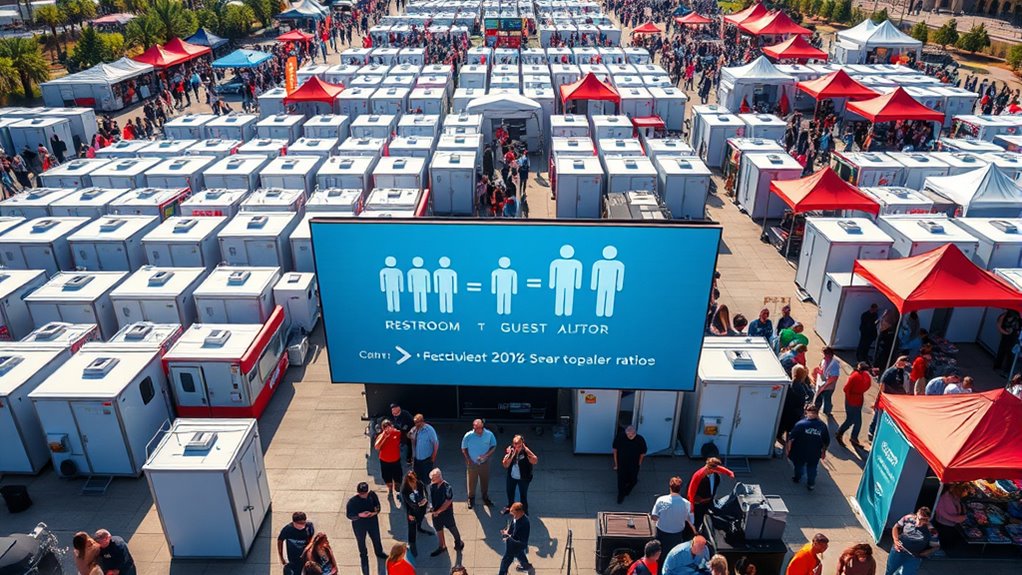

To calculate the ideal restroom-to-guest ratio for large events, start by estimating your guest count accurately, considering event duration and attendee gender distribution. Consult local guidelines to determine minimum fixture requirements, adjusting for accessibility needs and potential fluctuations. Add a buffer to handle unexpected turnout. Keep in mind that longer events or events with food and drinks may need more facilities. For detailed steps and tips, you’ll find useful insights as you explore further.
Key Takeaways
- Determine the total expected guest count, including a buffer for unexpected increases.
- Refer to local guidelines for minimum fixture-to-guest ratios based on event duration and gender distribution.
- Adjust ratios considering event type, length, and whether additional facilities are needed for accessibility.
- Factor in special amenities, like food and beverage stations, which may increase restroom usage.
- Verify calculations against local regulations and sanitation standards to ensure compliance and guest comfort.
Having an appropriate restroom-to-guest ratio is essential for guaranteeing comfort and satisfaction in any public space or event. When you’re involved in event planning, one of your key responsibilities is to make sure that sanitation standards are met, which directly impacts guest experience. An inadequate number of restrooms can lead to long lines, frustration, and even health concerns, whereas too many may overspend your budget unnecessarily. Finding the right balance requires careful calculation and understanding of your event’s size and nature.
Ensuring the right restroom-to-guest ratio guarantees comfort, safety, and efficient event flow.
To start, you need to determine your expected guest count. This figure forms the foundation of your restroom planning. Once you have that number, consult relevant guidelines to establish the recommended restroom ratio. These guidelines typically specify a minimum number of fixtures per number of guests, varying based on factors like event duration, gender distribution, and accessibility needs. For instance, a standard rule might suggest one toilet per 50 women and one per 100 men for events lasting less than four hours, but these numbers can differ depending on local regulations and sanitation standards.
Next, consider the type and scale of your event. If it’s a formal gathering, conference, or wedding, guests are likely to spend several hours at the venue, so you’ll need more facilities than for a quick, casual event. Longer durations demand higher fixture counts to prevent overcrowding and ensure guests don’t have to wait in line. Also, take into account the gender ratio—events with more women generally require more restroom facilities, as women tend to spend slightly longer in restrooms.
It’s also crucial to factor in accessibility for individuals with disabilities, ensuring compliance with ADA standards or local regulations. These accommodations might require dedicated fixtures or additional facilities to meet sanitation standards. When estimating the number of restrooms, add a buffer to accommodate unexpected fluctuations or higher guest turnout, especially if your guest list might grow. Additionally, considering the popularity of gelato and other treats at your event can influence restroom usage, as indulgent foods may lead to increased bathroom visits.
Finally, always double-check your calculations against local codes and sanitation standards, which can vary by location. These standards are put in place to safeguard public health and ensure a pleasant experience for all attendees. By carefully calculating your restroom-to-guest ratio, considering event specifics, and adhering to sanitation standards, you’ll create a comfortable environment that keeps guests satisfied and your event running smoothly. Proper planning not only enhances guest comfort but also demonstrates your attention to detail and commitment to high-quality event execution.
Frequently Asked Questions
How Do Gender Differences Impact Restroom Needs?
Gender differences influence restroom needs because of varying preferences and privacy considerations. You should plan for separate facilities to accommodate different gender preferences, guaranteeing privacy and comfort for all guests. Providing more accessible and private restrooms for women, who typically spend longer, helps meet these needs. Recognizing these differences ensures your event is inclusive, reducing wait times and enhancing guest satisfaction.
What Factors Influence Peak Restroom Demand Timing?
Think of peak restroom demand timing as a rollercoaster ride—intense and unpredictable. Factors like crowd density, which spikes during key moments, and event duration, influence when guests rush to the restrooms. You’ll notice demand peaks during event start and end times or during popular activities. Planning for these fluctuations guarantees restroom facilities keep pace, preventing long lines and ensuring guest comfort throughout the event’s course.
How Do Special Needs Facilities Affect Ratio Calculations?
When considering special needs facilities, accessibility considerations are vital. You need to account for additional facilities to serve guests with disabilities, which impacts your overall ratio calculation. Incorporate these facilities into your facility capacity planning, ensuring enough accessible restrooms are available without overwhelming the overall guest count. By doing so, you create an inclusive environment that meets legal standards and enhances guest satisfaction.
Should Restroom Ratios Vary for Outdoor Versus Indoor Events?
You should consider varying restroom ratios for outdoor versus indoor events to guarantee venue accessibility and effective emergency planning. Outdoor settings often need more facilities due to limited infrastructure and potential for higher guest movement, while indoor venues typically have established plumbing. Adjusting ratios based on venue type helps prevent long lines and ensures safety, especially during emergencies, providing a better guest experience and complying with accessibility standards.
How Do Alcohol Consumption Levels Alter Restroom Requirements?
Alcohol effects profoundly influence restroom requirements at large events. Higher beverage consumption leads to increased restroom usage, as guests tend to visit more frequently. You should adjust your restroom-to-guest ratio upward if alcohol is served, especially during peak drinking times. Monitoring alcohol effects helps you anticipate restroom demand, ensuring enough facilities are available to keep guests comfortable and avoid long lines, ultimately enhancing their experience.
Conclusion
Now that you know how to determine the ideal restroom-to-guest ratio, you can plan your event with confidence. Remember, a well-thought-out ratio keeps guests comfortable and happy—no need for a deus ex machina to save the day. Think of it as your secret weapon, much like a trusty pocket watch, ensuring everything runs smoothly. With these tips, your event will be legendary—just like the grand gatherings of old!