
When designing restrooms with cultural and religious norms in mind, you should include features like gender-specific or unisex facilities, privacy-enhancing partitions, and clear signage in multiple languages. Be sure to accommodate religious practices, such as prayer spaces or washing areas, and select materials that reflect cleanliness standards. Incorporate accessibility features to meet diverse needs and consider cultural sensitivities. If you want to guarantee your restroom setup respects all these considerations, you’ll find helpful insights ahead.
Key Takeaways
- Incorporate gender-specific and gender-neutral facilities to respect diverse cultural and individual identities.
- Design privacy features like secure partitions and strategic layout to align with cultural norms and religious sensitivities.
- Include designated prayer areas or washing stations for religious rituals where applicable.
- Use culturally sensitive signage and multilingual instructions to accommodate diverse user populations.
- Select materials and maintain cleanliness standards that reflect cultural and religious expectations of purity and respect.
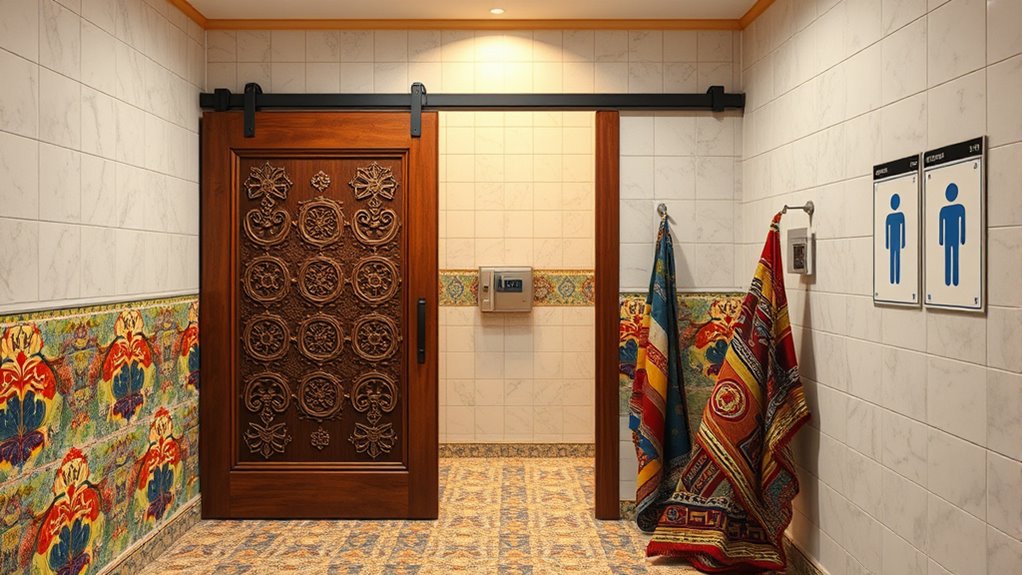
Setting up a restroom might seem straightforward, but thoughtful planning can make a significant difference in functionality and comfort. When contemplating cultural and religious factors, you need to pay close attention to how your restroom design aligns with diverse beliefs and customs. One key aspect is the inclusion of gender-specific facilities, which cater to different needs based on gender identity or cultural norms. For example, some communities prefer separate facilities for men and women to uphold modesty and privacy standards. In other cases, gender-neutral or unisex options are necessary to accommodate transgender or non-binary individuals, ensuring everyone feels comfortable and respected.
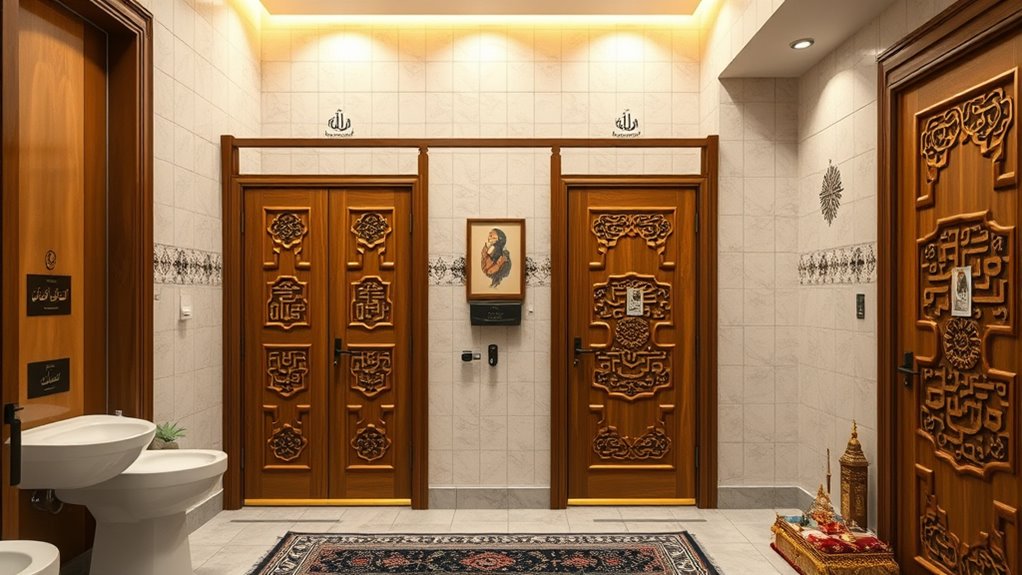
Privacy requirements are equally essential when designing these facilities. Many cultures and religions emphasize privacy, especially regarding bodily functions. You should ensure that restroom partitions, doors, and enclosures are sturdy and secure, preventing any unintended exposure. Additionally, some cultures prefer the placement of sinks, changing areas, and entrances to maximize privacy. It’s important to contemplate these preferences early in the planning process to meet community expectations and avoid discomfort or embarrassment among users.
Prioritize sturdy, secure partitions and thoughtful placement to respect cultural privacy preferences.
Furthermore, think about the overall layout. In certain cultures, separate entrances for different gender-specific facilities help maintain privacy and modesty. If your setup is in a multicultural environment, providing clear signage and instructions in multiple languages can help users navigate the space easily and respectfully. Accessibility also plays a role—designing facilities that are inclusive for people with disabilities shows cultural sensitivity and complies with legal standards. This might include wider stalls, handrails, and accessible sinks, all while respecting the privacy requirements of users with different needs.
You should also be aware of religious practices influencing restroom use. For example, some faiths require specific washing rituals or designated prayer spaces nearby. Incorporating these elements can enhance the user experience and demonstrate respect for their religious customs. Additionally, the materials and cleanliness standards you employ should reflect cultural sensitivities, ensuring the space feels welcoming and hygienic. Incorporating cultural considerations into the design process can further improve user comfort and acceptance.
Frequently Asked Questions
How Do Different Cultures View Gender-Neutral Restrooms?
Different cultures have varied views on gender-neutral restrooms. Some embrace gender inclusivity, seeing them as essential for equality and comfort, while others may view them as challenging cultural sensitivities or traditional norms. You should consider local attitudes and respect cultural differences when implementing these facilities. By understanding these perspectives, you can create inclusive spaces that honor cultural sensitivities while promoting gender inclusivity.
What Religious Restrictions Affect Restroom Cleanliness Practices?
Religious restrictions like purity laws and ritual washing practices substantially influence restroom cleanliness. You might need to guarantee separate facilities for ritual washing or provide access to water and soap for purification before prayer. These practices require maintaining high hygiene standards, and you should design restrooms that accommodate such needs, respecting religious customs. By doing so, you help ensure compliance and comfort for users observing these religious restrictions.
Are There Specific Symbols Preferred in Religious Restroom Signage?
Think of restroom signage as a universal language, guiding everyone smoothly. You’ll often find symbols like a standing figure for men, a woman for women, and a unisex icon for inclusive spaces. These symbol preferences align with signage standards, ensuring clarity and respect across cultures. Keep signs simple, universally recognizable, and respectful of diverse religious symbols, so all users feel comfortable and understood without confusion or offense.
How Should Restrooms Accommodate Pilgrims During Religious Events?
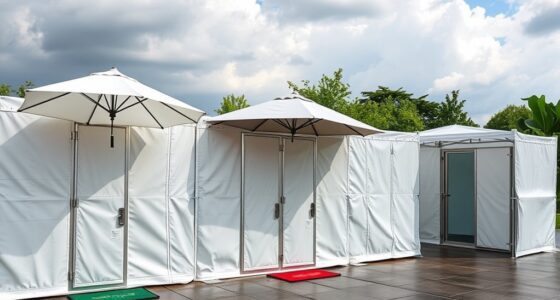
You should guarantee restroom accessibility for pilgrims by providing clear signage and easy access routes. Set up ceremony-specific facilities that cater to the needs of different religious practices, such as separate areas or special fixtures. Consider installing temporary restrooms close to event sites and ensuring they’re well-maintained. By prioritizing convenience, cleanliness, and respectful accommodations, you help pilgrims participate comfortably and safely during religious events.
What Are the Privacy Expectations in Religious Communities Regarding Restrooms?
You should respect the privacy norms and religious restroom etiquette of the community. Expect that individuals value modesty and may prefer private, segregated facilities. Ascertain doors lock securely and stalls are private, maintaining dignity. Avoid unnecessary exposure or intrusion, and follow any specific guidelines or customs related to restroom use. By adhering to these practices, you demonstrate respect and sensitivity toward the community’s privacy expectations.
Conclusion
When designing restrooms, consider cultural and religious sensitivities to create inclusive spaces. For example, over 60% of Muslims prefer gender-segregated facilities, emphasizing the importance of thoughtful planning. By respecting these diverse needs, you foster comfort and respect for all users. Remember, small adjustments can make a big difference in inclusivity, ensuring everyone feels safe and respected in your restroom setup. Prioritizing these considerations helps build a more understanding and accommodating environment.