
To manage waste logistics effectively, you need to develop carefully planned pump-out schedules based on waste volume and disposal deadlines. Choosing access routes requires considering truck size, road conditions, and avoiding low-clearance bridges or crowded areas. For hazardous materials, prioritize safety by following designated routes and coordinating with authorities. Properly scheduled pumps and safe routes help make certain of compliance, protect the environment, and enhance safety—continue exploring to learn more about optimizing your waste transport systems.
Key Takeaways
- Develop pump-out schedules based on waste volume, capacity, and disposal deadlines to prevent overflows and environmental hazards.
- Analyze traffic patterns and road conditions to design safe, efficient access routes for waste collection trucks.
- Select routes that avoid low-clearance bridges, narrow streets, and sensitive areas to ensure safety and regulatory compliance.
- Implement special protocols and designated routes for hazardous waste, coordinating with authorities for permits and safety standards.
- Prioritize safety, efficiency, and environmental protection through strategic route planning, scheduling, and emergency response preparedness.
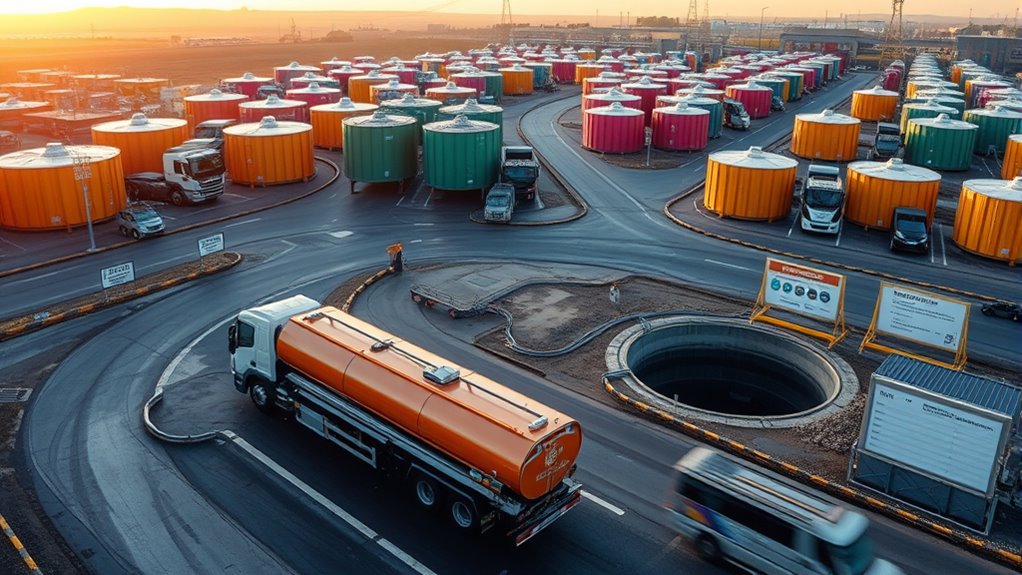
Have you ever wondered how waste moves efficiently from its source to disposal or recycling facilities? It’s a complex process that hinges on meticulous planning and coordination. Central to this process is transportation planning, which ensures that waste, especially hazardous materials, is handled safely and efficiently. When you’re managing waste logistics, understanding how to develop effective pump-out schedules and access routes becomes essential. These schedules determine when waste is collected, preventing overflows and environmental contamination, while access routes ensure smooth, timely transportation.
Transportation planning for waste isn’t just about choosing the shortest path; it involves analyzing traffic patterns, road conditions, and regulatory restrictions. When hazardous materials are involved, planning takes on an added significance. You need to identify routes that minimize risk, avoid heavily populated areas, and reduce the potential for accidents. This might mean designating specific routes for hazardous waste trucks, ensuring they follow established safety protocols, and are equipped to handle emergencies. Proper planning also involves coordinating with local authorities to secure permits and adhere to regulations, which can vary depending on the type of waste and regional laws.
Effective waste transportation requires route analysis, safety protocols, and coordination with authorities.
Developing pump-out schedules is another critical element. These schedules are designed based on the volume of waste generated, storage capacity, and disposal deadlines. If you don’t plan carefully, tanks might overflow or release pollutants prematurely, leading to environmental hazards and regulatory violations. Regularly scheduled pickups help maintain a steady flow, preventing backups and ensuring that waste is transported before it becomes a problem. For hazardous materials, these schedules are even more precise, often requiring specialized equipment and trained personnel to handle waste safely during collection and transportation.
Access routes must be carefully mapped out to facilitate efficient waste movement. You need to consider the size and weight of trucks, the condition of roads, and the presence of low-clearance bridges or narrow streets. When hazardous materials are involved, routes should avoid densely populated areas and sensitive ecosystems whenever possible. This not only minimizes risk but also streamlines logistics, saving time and reducing costs. Properly planned access routes also help in emergencies, allowing quick evacuation or containment if an incident occurs. Additionally, implementing proper signage and communication throughout the route enhances safety and coordination during waste transportation.
In essence, effective waste logistics hinges on thorough transportation planning and well-coordinated pump-out schedules and access routes. When you prioritize safety, efficiency, and compliance, you ensure that waste, especially hazardous materials, moves smoothly from source to disposal, protecting communities and the environment along the way.
Frequently Asked Questions
How Are Emergency Waste Situations Handled Efficiently?
When faced with emergency waste situations, you act swiftly by following your spill response plan for hazardous waste. You quickly identify the spill, contain it to prevent environmental damage, and notify your emergency response team. You prioritize safety, use proper protective gear, and coordinate with local authorities if needed. Your efficient response minimizes hazards and guarantees proper disposal, keeping everyone safe and reducing environmental impact.
What Are the Environmental Impacts of Waste Logistics?
You should know that waste logistics considerably impact the environment, with an estimated 30% of emissions from transportation contributing to overall carbon footprints. These activities can lead to habitat disruption, affecting local ecosystems and wildlife. By optimizing pump-out schedules and access routes, you can reduce these environmental footprints, minimize habitat disturbances, and promote more sustainable waste management practices. This proactive approach helps protect our environment for future generations.
How Is Waste Data Securely Managed and Stored?
You securely manage and store waste data by implementing digital encryption to protect sensitive information from unauthorized access. Additionally, you use data anonymization techniques to guarantee personal or confidential details aren’t exposed, maintaining privacy and compliance. Regular backups and restricted access controls further safeguard the data. By combining these methods, you ensure waste data remains confidential, protected from breaches, and easily recoverable if needed, supporting responsible waste management practices.
What Training Is Required for Waste Logistics Personnel?
To excel in waste logistics, you need thorough training that emphasizes hazard identification and certification requirements. You should learn how to identify potential risks safely, handle equipment properly, and meet industry standards. This training ensures you’re prepared for real-world challenges, maintaining safety and compliance. Regular updates and refresher courses help you stay current with evolving regulations, so your skills remain sharp and your workplace stays secure.
How Do Regulatory Changes Affect Waste Pump-Out Scheduling?
Regulatory changes can substantially impact your pump-out scheduling by requiring stricter compliance measures. You need to stay updated on new regulations to avoid violations, which might necessitate schedule adjustments. These adjustments ensure your operations meet regulatory compliance, prevent penalties, and protect the environment. Regularly reviewing regulations and coordinating with waste management teams helps you adapt your pump-out schedules efficiently, maintaining smooth waste logistics and ensuring ongoing compliance.
Conclusion
Mastering pump-out schedules and access routes is your secret weapon to flawless waste logistics. When you stay ahead, you’ll navigate obstacles faster than a lightning storm, ensuring smooth operations every time. Remember, a well-planned waste management system isn’t just important — it’s the heartbeat of your entire operation. So, keep your schedules tight and routes clear, and you’ll run a waste logistics system that’s unstoppable, like a freight train barreling through the night!