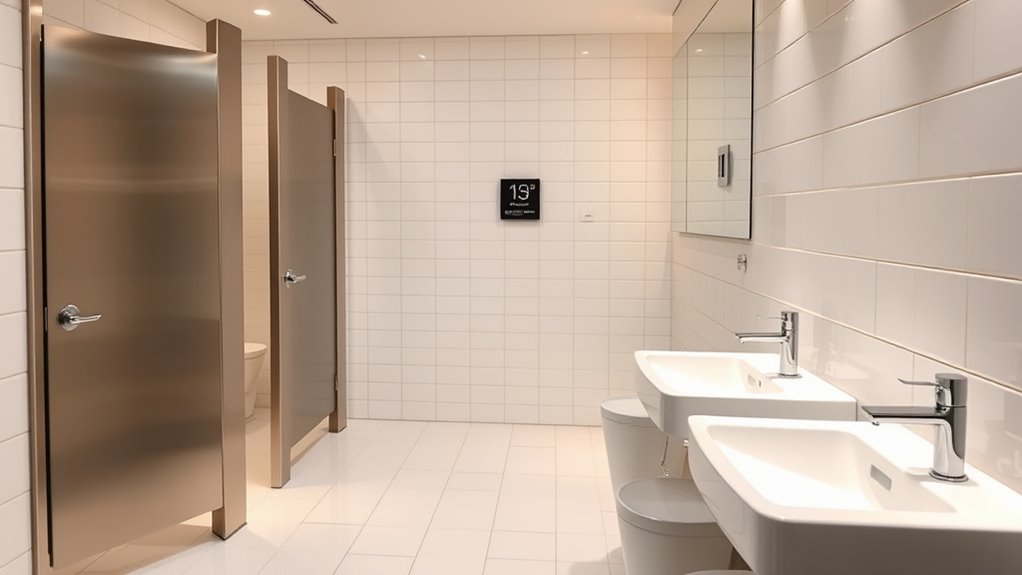

Tracking restroom usage helps you understand when and where people need facilities most. By counting uses with sensors or counters, you can identify peak times and high-traffic areas. This data allows you to optimize restroom placement, reduce wait times, and improve user satisfaction. Incorporating regional insights and sustainable design principles guarantees your facilities are efficient and effective. Keep exploring to discover how this information can transform your restroom planning even further.
Key Takeaways
- Monitoring restroom usage patterns identifies peak times and high-traffic areas for strategic facility placement.
- Counting uses with sensors or counters provides data to optimize restroom capacity and reduce wait times.
- Analyzing usage data guides resource allocation, ensuring efficient facility deployment aligned with demand.
- Data-driven insights help design sustainable restrooms with appropriate fixtures and energy-efficient systems.
- Regional and user behavior analysis ensures restroom placement meets specific community needs and enhances user satisfaction.
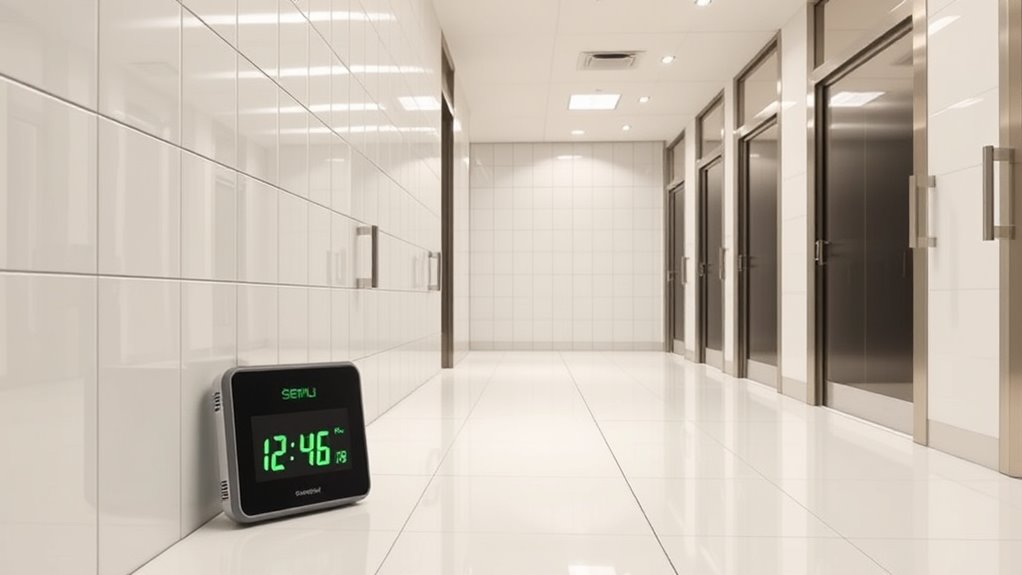
Restrooms are an essential part of daily life, yet their usage patterns and features often go unnoticed. When you start paying attention, you realize how vital understanding these patterns is to creating efficient, user-friendly spaces. One of the key ways to achieve this is through user behavior analysis, which involves studying how people interact with restroom facilities. By observing when and how often restrooms are used, you can identify peak times and adjust their placement accordingly. This data-driven approach ensures that facilities are available when needed most, reducing wait times and increasing overall satisfaction.
Understanding restroom usage patterns helps optimize placement and improve user satisfaction.
Incorporating sustainable design into restroom planning plays a significant role in optimizing usage. When you analyze usage data, you can design facilities that not only meet demand but also minimize environmental impact. For example, if data shows high traffic in a specific area, you might install low-flow fixtures or motion-activated lighting to conserve water and energy. Conversely, in less-frequented restrooms, energy-efficient systems can help reduce waste without sacrificing user comfort. Sustainable design isn’t just about eco-friendliness; it’s about making the most of available resources while maintaining high standards for hygiene and convenience.
User behavior analysis is at the heart of effective restroom management. By collecting data through sensors, usage counters, or manual observations, you can identify patterns that inform decisions about placement and capacity. For example, you might discover that restrooms near high-traffic entrances experience more congestion, prompting you to add facilities or redesign layouts to improve flow. Conversely, areas with sporadic use might benefit from smaller, more efficient facilities. This targeted approach ensures you’re not wasting resources on overbuilt spaces or leaving high-demand areas underserved.
Furthermore, analyzing user behavior helps you adapt to changing needs over time. As populations grow or shift, your restroom facilities should evolve accordingly. Regular data collection allows you to plan upgrades or relocations proactively, avoiding overcrowding and ensuring hygiene standards are maintained. When you combine user behavior analysis with sustainable design principles, you create restrooms that are not only functional but also environmentally responsible. This synergy leads to smarter placement, better resource management, and an overall improved experience for users.
In addition, understanding regional differences and local resources can help tailor restroom solutions to specific areas, ensuring that facilities meet the unique demands of each community. When you incorporate local knowledge and regional insights, your planning becomes more precise and effective. When you combine user behavior analysis with sustainable design principles, you create restrooms that are not only functional but also environmentally responsible. This synergy leads to smarter placement, better resource management, and an overall improved experience for users.
In essence, understanding how people use restrooms through data collection and analysis enables you to make informed choices. It empowers you to optimize placement, enhance sustainability, and deliver a more efficient, user-centric facility. Restroom data isn’t just about counting uses; it’s about using that information to shape smarter, greener, and more accessible spaces for everyone.
Frequently Asked Questions
How Often Should Restroom Usage Data Be Collected?
You should collect restroom usage data regularly, ideally weekly or bi-weekly, to accurately track restroom frequency and usage patterns. Frequent data collection helps you identify peak times and adjust placement accordingly. By monitoring these patterns consistently, you can optimize restroom locations, reduce wait times, and improve overall user experience. Adjust your data collection schedule based on traffic flow and seasonal changes to maintain accurate, actionable insights.
What Technology Is Best for Tracking Restroom Use?
Tracking restroom use is like having a reliable compass, so you’ll want to choose sensors with high accuracy. Infrared or occupancy sensors are popular, but make certain they have proven sensor accuracy to avoid false readings. Prioritize technology that respects data privacy—use anonymized or encrypted data to protect user identities. This way, you get precise insights without compromising privacy, helping you optimize restroom placement effectively.
Can Data Predict Future Restroom Demand?
Yes, data can predict future restroom demand through predictive modeling and demand forecasting. By analyzing past usage patterns, you can identify peak times and busy periods, helping you plan restroom placements accordingly. Leveraging this data allows you to anticipate fluctuations in demand, optimize maintenance schedules, and improve user satisfaction. With accurate predictions, you make smarter decisions that save resources and ensure restrooms are available when most needed.
How Do Privacy Concerns Affect Data Collection?
Privacy concerns create barriers to collecting restroom data, as you might worry about personal information exposure. To address this, you can implement data anonymization techniques, ensuring individual identities remain protected. By anonymizing data, you maintain privacy while gathering useful usage patterns. This approach reassures users and stakeholders that privacy is prioritized, allowing you to optimize restroom placement effectively without compromising personal information.
What Are Cost-Effective Methods for Data Analysis?
You can analyze restroom data cost-effectively by strategically placing sensors where they’ll gather the most useful information, like high-traffic areas. Use simple data integration tools, such as spreadsheets or free software, to combine sensor data for insights. This approach minimizes costs while maximizing accuracy. Regularly review the data to identify patterns, helping you make informed decisions about restroom placement and improving user experience without breaking your budget.
Conclusion
By tracking restroom usage, you’re like a skilled gardener tending your landscape, knowing exactly where to nurture growth. This data helps you spot patterns and optimize placement, ensuring each facility serves its purpose efficiently. When you understand how people move and use spaces, you create a smoother flow—like a well-oiled machine. Embrace this insight, and watch your space flourish, making every visit a seamless experience for everyone involved.